Energy price cuts to help curb inflation, boost growth: experts

The Government's decision to cut the average retail electricity price by 2% and reduce the petrol excise taxes to zero percent from November 1 is expected to ease cost pressures on consumer prices and support economic activity, particularly for businesses facing high input costs.

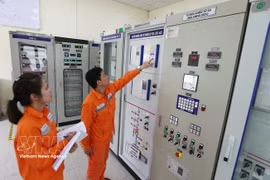
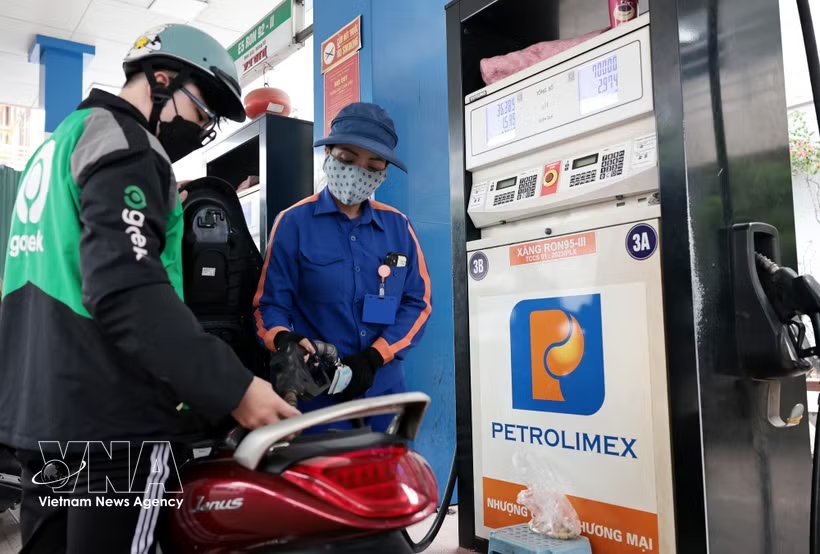
Cutting the excise tax on petrol is expected to help reduce costs for households and businesses. (Illustrative photo: VNA)

Hanoi (VNA) – Cuts in the excise tax on petrol and the average retail electricity price, both effective from November 1, 2026, will help reduce costs for households and businesses, support production and business activities, curb inflation and sustain economic growth in the remaining months of the year, said insiders.

Easing costs and supporting production


According to the National Statistics Office (NSO) under the Ministry of Finance, the consumer price index (CPI) increased 4.52% in the first nine months of 2026, exceeding this year's ceiling inflation target of 4.5%. Inflationary and moderating factors are expected to continue to intertwine in the remaining months, posing challenges to economic governance.

Against this backdrop, the Government's decision to cut the average retail electricity price by 2% and reduce the petrol excise taxes to zero percent from November 1 is expected to ease cost pressures on consumer prices and support economic activity, particularly for businesses facing high input costs.

Nguyen Tien Thoa, Chairman of the Vietnam Valuation Association, said the electricity price reduction, implemented by the Ministry of Industry and Trade (MOIT) and Vietnam Electricity (EVN), will have considerable spillover effects, helping stabilise the macro-economy, control inflation, support production and reduce household expenses.

The cut is expected to lower the CPI directly and indirectly while reducing production costs in energy-intensive industries. Estimates show that costs could fall by around 0.12% in steel, 0.3% in cement and 0.2% in textiles, giving businesses more room to reduce product prices.

Meanwhile, bringing the excise tax rate on petrol to zero percent is set to reduce domestic petrol prices by approximately 1,500–1,700 VND per litre, helping lower production costs and contain inflation.

Assoc. Prof. and Dr Ngo Tri Long, an economic expert, warned that failure to control energy prices in the final two months of the year could add considerable pressure to inflation. He identified petrol and electricity prices as key factors that could be addressed through policy measures.

As essential inputs for production and daily life, lower energy prices would help ease living costs, strengthen purchasing power and support macroeconomic stability and growth, he said.

More support for economic growth to accelerate

Long said lower energy prices will benefit both businesses and consumers by reducing production costs and easing price pressures on goods and services. The 2% electricity price cut will also help ease household expenditure pressures.

For businesses, cheaper petrol and electricity will reduce input costs, improve competitiveness and facilitate production, particularly amid deeper economic integration and growing competition.

Assoc. Prof. and Dr Nguyen Thuong Lang of the National Economics University said the immediate impact will be lower overall economic costs as electricity and petrol are essential inputs for many industries. This will help businesses improve operational efficiency.

Lower energy expenses could also reduce product prices, strengthen competitiveness and improve cash flow, he noted, adding that businesses with strong orders and expansion plans could use the savings to invest in machinery and equipment or recruit more workers.

For consumers, lower electricity, petrol and transport costs will increase real disposable income, enabling households to spend more on other goods and services and supporting market demand.

Lang stressed that energy price reductions should be part of a broader package of economic measures. Combined with faster public investment disbursement, efforts to encourage private investment and sustained trade growth, they could help generate fresh momentum for the economy./.

VNA

See more

A production line at Yadea Vietnam’s smart manufacturing plant, which has an investment of more than 100 million USD, in Tan Hung Industrial Park, Bac Ninh city (Photo: VNA)

Improving FDI quality to strengthen growth momentum

Rapid growth in registered capital is encouraging, but unless these commitments are promptly converted into implemented projects and productive capacity, their contribution to economic growth will remain constrained.

At a workshop of Vietnam Precision Industrial No. 1 Co., Ltd (Photo: VNA)

Vietnam well-positioned to attract high-quality European investment: insiders

Vietnam has established a considerable manufacturing and export base, giving it an advantage in attracting investment from European corporations. However, amid the restructuring of global supply chains, the key objective is not merely to attract more investment, but also to enhance the quality of investment and the value it generates.

Speakers at a discussion on prospects for cooperation in developing new value chains in the context of a changing global landscape (Photo: VNA)

Vietnam, EU shape future of green economy, new value chains

In his remarks Deputy Minister of Industry and Trade Luong Hoang Thai said the ninth edition of the forum serves as an effective channel for regular exchanges between government agencies and business communities on policies, market development, trade connectivity and investment.

Ho Chi Minh City hosts five international industrial exhibitions (Photo: VNA)

Five industrial exhibitions open in Ho Chi Minh City

The five exhibitions comprise the 17th International Water Supply, Sanitation, Water Resources and Purification Exhibition and Conference (Vietwater 2026); Vietnam Energy Week; an international exhibition on refrigeration, air conditioning and smart buildings; Vietnam Supporting Industry Fair (VSIF); and the Vietnam Data Centre & Cloud Confex.

State Bank of Vietnam (SBV) Deputy Governor Pham Thanh Ha speaks at the Government’s regular press briefing in Hanoi on November 4. Photo: VNA

Commercial banks cut listed deposit rates by 0.5 percentage points

In October, the State Bank of Vietnam directed credit institutions to mobilise all available resources, cut operating costs, share profits and step up efforts to lower interest rates. Under its directive, banks were required to cut listed deposit rates and rates on newly mobilised deposits by 0.5 percentage points per year for tenors of six months or longer, while reducing lending rates by 1.5-2 percentage points per year for production, business activities and priority sectors.

OCOP items are on display at Go!Hanoi supermarket (Photo: VNA)

Vietnam’s AI-led export boom meets FDI dependence, inflation test

Despite global AI-bubble risk, heavy FDI dependence and inflation pressure, Vietnam still has solid macro drivers. If it proactively clears internal bottlenecks, it has enough position and strength to weather short-term volatility and hit its double-digit growth target in the coming time.

Delegates cut the ribbon at the inauguration ceremony of the FPT Poland office. (VNA published)

Tech giant FPT expands operations in Europe

The opening of the FPT Poland office in Gdansk was not only a milestone in the corporation's development but also demonstrated the technological capabilities and international integration of Vietnamese businesses, said Vietnamese Ambassador to Poland Ha Hoang Hai