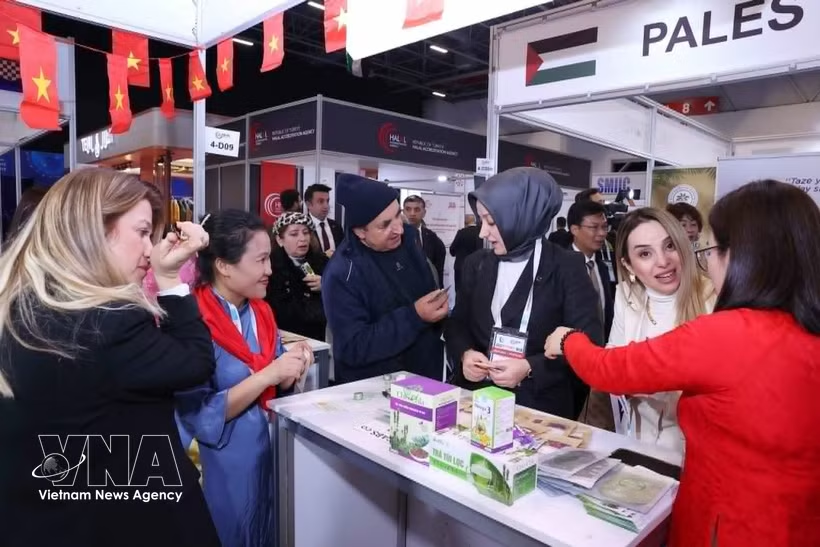
Hanoi (VNA) – The rapidly expanding global Halal market, valued at trillions of US dollars and serving nearly 2 billion consumers, is opening up significant opportunities for Vietnamese businesses to boost exports while accelerating their transition towards greener and more transparent and sustainable production practices.
According to Vu Ba Phu, Director of the Ministry of Industry and Trade’s Trade Promotion Agency, the global Halal economy is estimated at 2.5–3 trillion USD annually and is forecast to reach around 10 trillion USD by 2028. Halal is no longer confined to food products but has expanded into cosmetics, pharmaceuticals, fashion, logistics, finance, tourism and other services.
The market’s appeal extends beyond Muslim consumers. As demand grows for food safety, product traceability, green production and ethical business practices, Halal-certified products are increasingly attracting non-Muslim consumers as well.
Imam Abbas Mieu, Chairman of Halal Vietnam, described Halal as a symbol of transparency, ethics in supply chains and international trust. Experts noted that the greatest opportunity Halal offers Vietnam lies not only in export revenues but also in encouraging enterprises to upgrade production chains in line with international standards on traceability, transparent governance, environmental sustainability and social responsibility.
The Middle East, a major pillar of the global Halal economy, imports 85–90% of its food demand, creating substantial opportunities for agricultural and food-processing exporters such as Vietnam.
Many of Vietnam’s key export products, including rice, coffee, cashew nuts, pepper, seafood, processed fruits and vegetables, and packaged foods, are well-positioned to meet rising demand in Muslim markets. International experience shows that non-Muslim countries such as Australia, Canada and Brazil are among the world's largest Halal exporters, suggesting Vietnam could also build a strong reputation in the sector.
Vietnam is considered well placed to integrate more deeply into global Halal value chains thanks to its political stability, strong manufacturing base and favourable relations with Muslim countries. The country could also serve as a bridge linking ASEAN production capacity with major Halal consumer markets in the Middle East.
However, experts warned that the development of a comprehensive domestic Halal ecosystem remains a major challenge. Many enterprises still regard Halal as merely a certification label, while in reality it encompasses standards governing the entire value chain, from raw materials and production to logistics and distribution.
Vietnam also lacks an integrated Halal value chain. Raw material sourcing, processing, logistics, warehousing and certification systems remain fragmented, making it difficult for businesses to meet international standards and gain recognition in major Muslim markets.
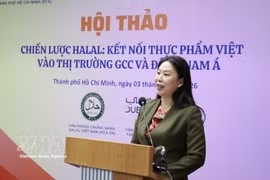
Ho Thi Quyen, Deputy Director of the Investment and Trade Promotion Centre of Ho Chi Minh City (ITPC), said only about 0.2% of Vietnamese enterprises currently have Halal-certified products, highlighting the gap between market potential and actual participation.
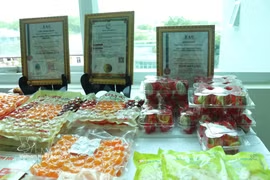
Despite these challenges, positive signs are emerging. Several Vietnamese firms have successfully entered demanding Halal markets. One example is My Phuong Food Co., Ltd. in Da Nang, which has exported to Malaysia and Israel while exploring opportunities in Saudi Arabia, the United Arab Emirates, Egypt and India.
Experts stressed that Halal should be viewed as a long-term investment rather than a niche market. At the national level, they called for a comprehensive Halal development strategy encompassing policy support, logistics, trade promotion, workforce training and national branding, alongside stronger international cooperation on Halal certification recognition.
Beyond access to a multi-trillion-dollar market, Halal presents Vietnam with an opportunity to restructure supply chains, improve growth quality and strengthen its national brand through higher standards of transparency, sustainability and social responsibility./.