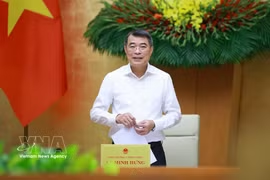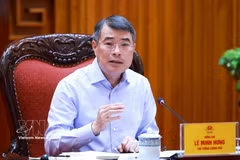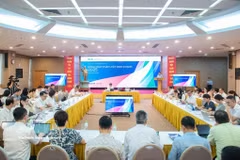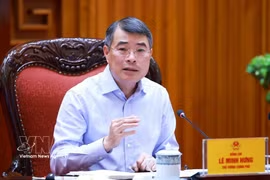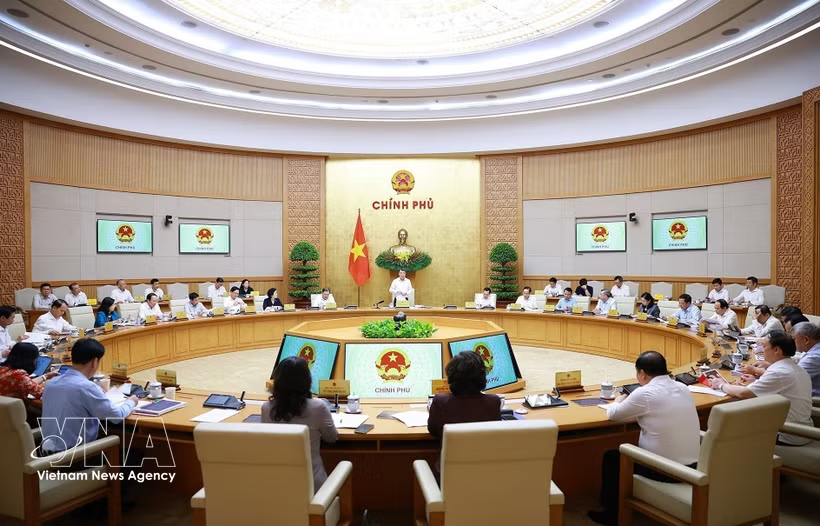
Hanoi (VNA) – Prime Minister Le Minh Hung called on ministries, sectors and localities to intensify efforts to accelerate economic growth and maintain macroeconomic stability, with the goal of achieving double-digit growth in 2026.
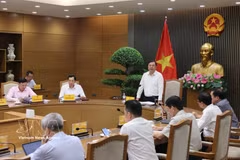
Concluding the Government’s regular meeting for May on June 3, the Prime Minister stressed the need for coordinated and decisive actions to promote growth, accelerate institutional reform, speed up public investment disbursement, and advance science and technology, innovation and digital transformation.
He pointed to several challenges, including slower-than-targeted growth in some sectors, sluggish public investment disbursement, inflationary pressures driven by rising energy and input costs, and delays in resolving long-standing projects and issuing implementing regulations.
He underscored that the tasks ahead remain demanding as the Government pursues a growth target of more than 10%. Ministries, agencies and localities were therefore instructed to closely follow the resolutions and conclusions of the Party Central Committee, the Politburo, the National Assembly (NA) and the Government, and implement comprehensive measures to stimulate growth in line with the maintenance of macroeconomic stability and the protection of major economic balances.
Institutional reform must remain a key and breakthrough task, he emphasised, requiring ministries and sectors to strengthen discipline in law-making, promptly address overdue legal documents and prevent delays in issuing regulations needed to implement newly adopted laws and resolutions.
Relevant ministries and agencies must accelerate the implementation of 11 Government resolutions on reducing and simplifying administrative procedures and business conditions, while advancing decentralisation and delegation of authority, and reviewing and abolishing outdated and inappropriate regulations in order to create a more transparent and conducive investment and business environment for citizens and enterprises.
On macro-economic management, the Government leader directed the State Bank of Vietnam to operate monetary policy proactively and flexibly, ensure liquidity, stable interest rates and exchange rates, and facilitate access to credit for businesses and households. Fiscal policy, meanwhile, should remain appropriately expansionary and targeted, including continued support measures for enterprises and citizens.
The Government leader also called for stronger efforts to develop science, technology, innovation and digital transformation as new engines of growth. He stressed the importance of building integrated national databases, promoting strategic technologies and products, and fostering closer cooperation among the State, research institutions, universities and businesses.
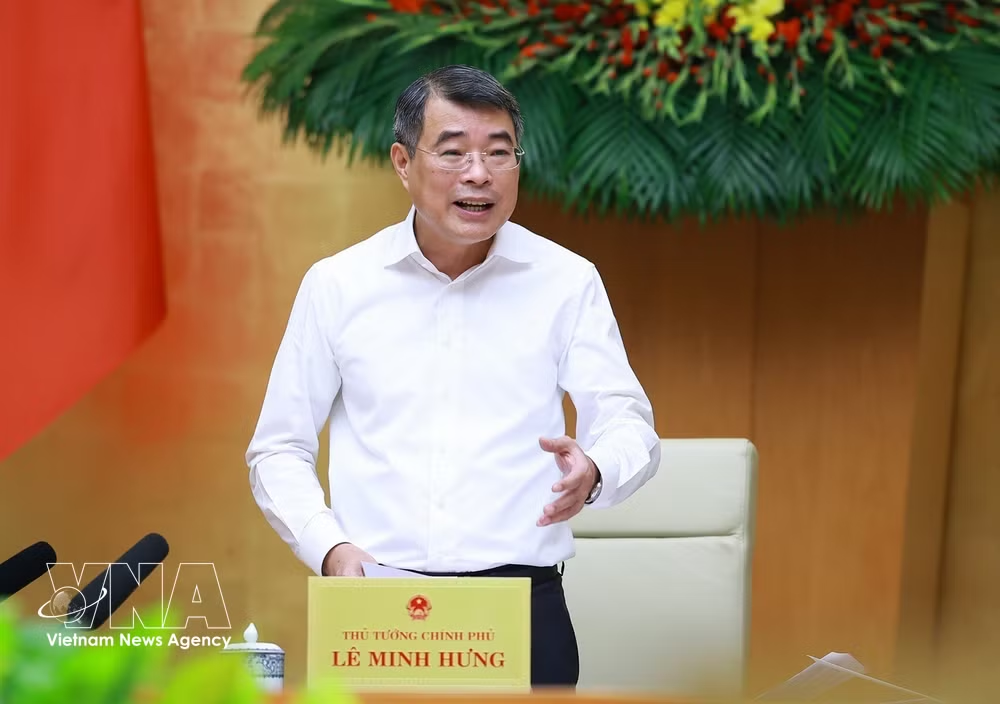
PM Hung underscored the importance of accelerating public investment disbursement, directing the Ministry of Finance to promptly submit to the Government a proposal on the allocation of the medium-term public investment plan for the 2026–2030 period within June. He urged ministries and localities to remove bottlenecks related to land clearance, construction materials and investment procedures, and accelerate strategic infrastructure projects, including Long Thanh International Airport, the North–South expressway network and preparations for the North–South high-speed railway.
The Ministry of Public Security was tasked with leading and coordinating with ministries, agencies and localities to expedite the integration and synchronisation of national and sectoral databases with the National Data Centre, with completion targeted for the third quarter of 2026. The ministry was also instructed to accelerate the integration of ministries’ and agencies’ centralised administrative procedure processing systems with the National Public Service Portal through the National Data Centre.
The Prime Minister called on relevant parties to make thorough preparations for the 2026 national high school graduation examination, review and reorganise the school network, make more effective use of teaching personnel, and strengthen the training of high-quality human resources.
The Ministry of Health was directed to conduct a comprehensive review of healthcare services, improve mechanisms for the supply of medicines and medical equipment, and submit to the Government proposals to streamline intermediary procedures in order to reduce costs for the public.
The Ministry of Culture, Sports and Tourism was assigned to step up the implementation of strategies for the development of cultural industries and tourism, strengthen promotion efforts to attract international visitors, particularly from key Asian markets, and enhance the effectiveness of policy communications to build public consensus on major Party and State policies.
The Ministry of National Defence, the Ministry of Public Security and the Ministry of Foreign Affairs were requested to closely monitor and assess international, regional and domestic developments, and proactively advise on measures to safeguard a peaceful and stable environment conducive to national development.
He concluded by urging the entire administrative system to demonstrate greater determination, responsibility and effectiveness in removing obstacles to production and business activities, unlocking new growth drivers and striving to fulfil socio-economic development goals at the highest possible level in 2026.
Despite a complex and unpredictable global environment, Vietnam has maintained macroeconomic stability, kept inflation under control and recorded encouraging socio-economic results in the first five months of the year.
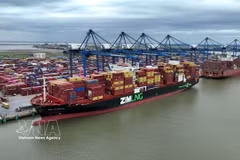
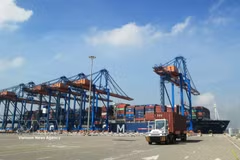
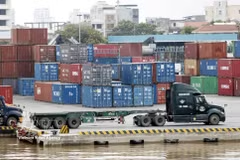
State budget revenue reached an estimated 1.34 quadrillion VND (50.8 billion USD), equal to 53% of the estimate, while public investment disbursement was estimated at 219.4 trillion VND, or 21.6% of the plan, exceeding the level recorded during the same period last year. Industrial production, retail sales and international tourism also posted positive growth./.