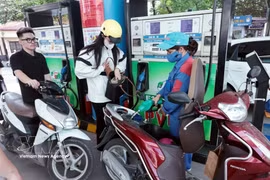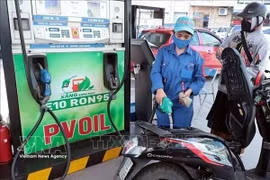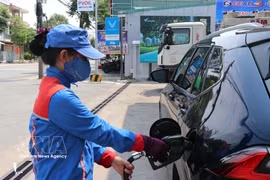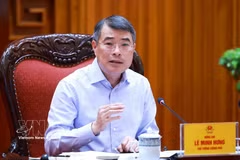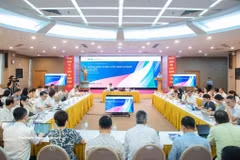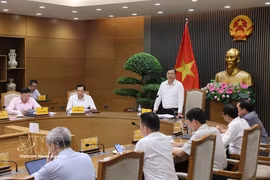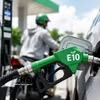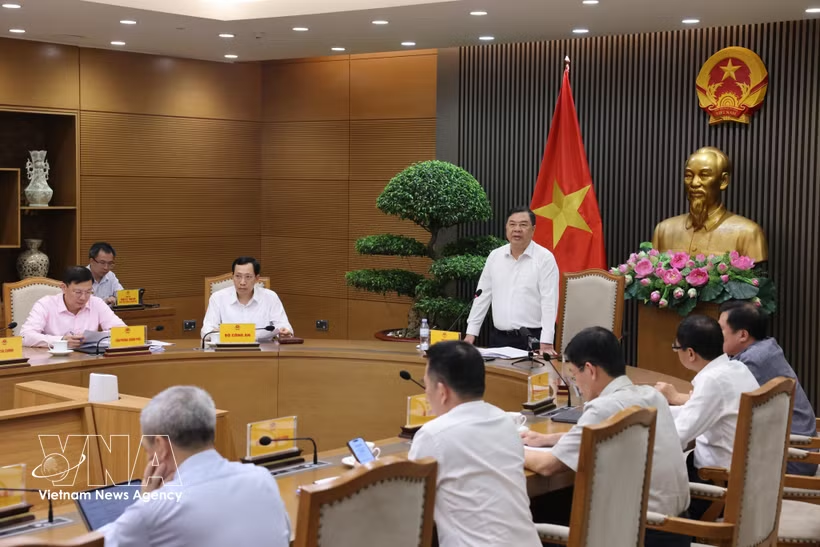
Hanoi (VNA) – Permanent Deputy Prime Minister Pham Gia Tuc highlighted consumer interest as a top priority as he chaired a June 2 review of the nationwide introduction of E10 biofuel.
Expanding outreach to build social consensus
Tuc said preparations have been systematic, drawing ministries, local authorities, major petroleum wholesalers, fuel distributors, retail networks, industry associations, biofuel producers, and international organisations, including the US Grains & BioProducts Council and the Global Centre for Green Fuels, plus engine and fuel experts.
According to him, public communication in recent months has not been comprehensive or fast enough, leaving lingering concerns among some consumers over E10 biofuel.
He stressed the need for a shared understanding of E10, a blend of 90% conventional gasoline blended with 10% fuel ethanol made mostly from corn, sugarcane, and cassava, calling its rollout a sound policy consistent with Vietnam’s national energy development strategy.
Replacing a portion of conventional gasoline with biofuel cuts fossil fuel consumption by 10%, lowers pollutant and carbon emissions, diversifies energy supply, reduces dependence on fossil fuels, and strengthens national energy self-sufficiency, thus shoring up the country’s energy security, he said.
Developing biofuels also stokes demand for agricultural commodities, advances the circular economy, underpins the biofuel industry and lifts domestic value chains, Tuc added.
According to him, the single biggest prerequisite for a successful rollout is guaranteeing fuel quality and strict compliance with technical standards and regulations.
After two days of nationwide sales, E10 supply has been largely smooth, with ample volumes and stable distribution. Consumers have broadly backed the fuel for its environmental and emission benefits, while oil companies proactively managed supply chains to avert disruptions or shortages.
He directed the Ministry of Industry and Trade (MIT) to coordinate a comprehensive review of the introduction with other agencies, closely monitor market movements and ensure sufficient supply, fuel quality and an effective distribution system.
Authorities must openly disclose information on E10 standards, quality, vehicle compatibility and consumer protections, while aggressively pushing back against misinformation and unverified claims, he said.
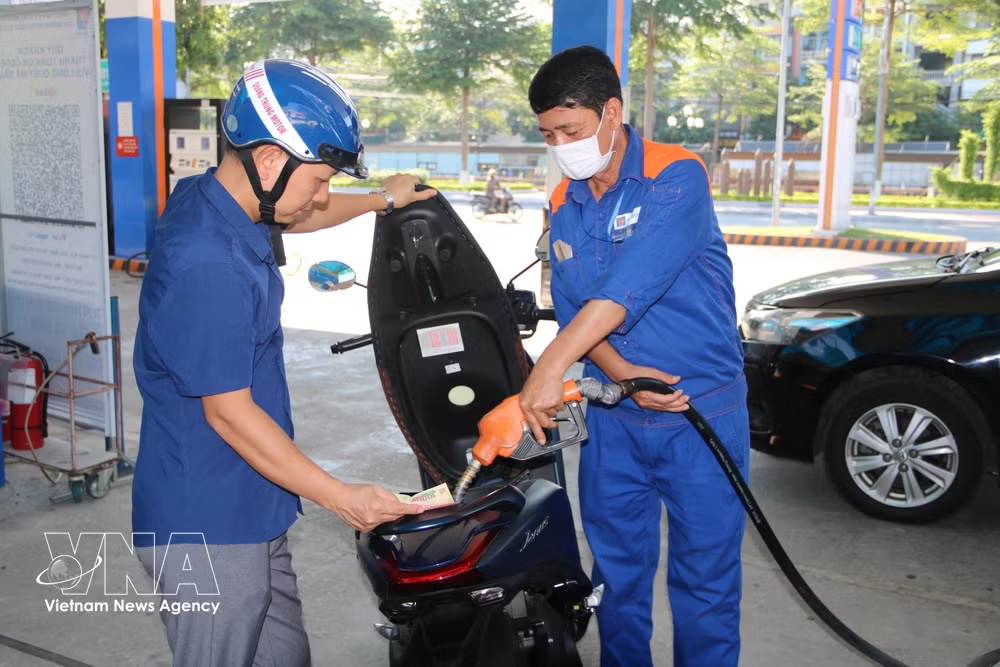
Tuc further assigned specific responsibilities to ministries and agencies. Accordingly, they must review tax, fee, and financial policies to encourage biofuel production, distribution, and use; improve technical standards and regulations, promote low-emission fuels in transport as part of the green energy transition roadmap, develop domestic feedstock areas; and step up enforcement against violations in fuel production, blending, transportation, and trading, including counterfeit or substandard fuels, hoarding, market manipulation, and policy abuse.
Tightening biofuel quality control
Deputy Minister of Industry and Trade Nguyen Sinh Nhat Tan reported that as of May 30, 13 of Vietnam’s 26 petroleum wholesalers had invested in biofuel blending facilities. Seven of them have combined blending capacity of about 1.1 million cu.m per month. Wholesalers, distributors and retail stations are now largely prepared in terms of infrastructure to supply biofuel.
Deputy Minister of Science and Technology Le Xuan Dinh said updated technical regulations for diesel and biofuels took effect on April 30. As of June 1, the ministry issued E10 blending facility registration certificates to eight wholesalers covering 31 blending sites.
The Vietnam Register recommended keeping E5 RON 92 gasoline available during the transition as a safe fallback for older vehicles. It also urged the MoIT to work with other agencies to review and supplement E10 technical requirements, tighten quality control across the supply chain, and mandate fuel station infrastructure upgrades, including ventilation, moisture control and vapor recovery systems to protect vehicles in use./.