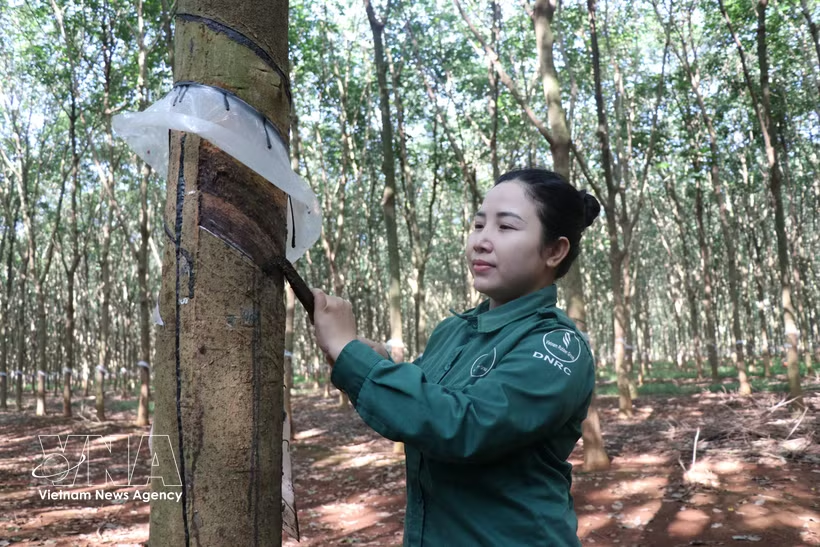
Hanoi (VNA) – Rising geopolitical tensions and tightening supply are driving the strongest rally in global rubber prices since 2017, creating favourable conditions for Vietnam’s rubber industry. However, experts say domestic exporters need to diversify markets and strengthen compliance with sustainability standards to fully capitalise on emerging opportunities.
Geopolitical tensions fuel rubber price rally
Rubber prices on major exchanges in Japan, Thailand and China rose between 3.3% and 7.8% during the first 20 days of May, reflecting mounting pressure on global raw material supply chains.
Natural rubber prices climbed to a nine-year high in mid-May as escalating tensions between the US and Iran pushed global oil prices higher. Higher oil prices have increased production costs for synthetic rubber, prompting manufacturers to shift demand toward natural rubber.
The global rally has quickly filtered through to Vietnam’s domestic market, where latex purchasing prices are now at their highest levels in years.
According to the Ministry of Industry and Trade’s Agency of Foreign Trade, natural rubber prices continued to rise throughout May and at times reached their highest levels in nearly a decade. The increase has boosted domestic latex prices and helped many rubber companies record significant profit growth.
The department attributed the upward trend to a combination of factors, particularly stronger demand for natural rubber as manufacturers seek alternatives to more expensive synthetic rubber.
Market analysts also noted that speculative investment has amplified the rally. Expectations of supply shortages have encouraged commodity funds to increase long positions on futures exchanges, accelerating price gains over a short period.
Diversification and value-added products remain crucial
Despite the positive outlook, industry experts warn that Vietnam’s rubber sector remains vulnerable because of its heavy reliance on the Chinese market.
Data from the Vietnam Rubber Association (VRA) show that China imported more than 292,000 tonnes of Vietnamese natural rubber in the first four months of 2026, accounting for over 69% of the country’s total natural rubber export value.
The association cautioned that such market concentration leaves exporters exposed to shifts in Chinese demand and policy. Planned preferential import tariffs for some African countries could intensify competition and erode Vietnam’s market share in the medium and long term.
Another challenge comes from increasingly stringent trade and sustainability requirements in major import markets. The European Union’s Deforestation Regulation, expected to be implemented between 2026 and 2027, will require comprehensive traceability throughout supply chains. Failure to comply could limit Vietnam’s access to the EU market.
VRA Chairman Le Thanh Hung said the industry still has considerable opportunities if it embraces sustainable development. Key priorities include promoting green transformation and traceability, adopting technologies that reduce emissions, strengthening cooperation with local authorities and smallholders, diversifying export destinations and expanding the production of value-added rubber products.
Hung noted that the 2026 - 2030 period is expected to bring new growth opportunities, including rising demand from the Middle East, India and Africa, further tariff reductions under free trade agreements and continued supply chain shifts across the region. These trends, he said, may help the industry reduce dependence on traditional markets while enhancing long-term competitiveness./.
Agro-forestry-aquatic product exports up over 9% in first five months
Vietnam’s agro-forestry-aquatic product exports maintained positive growth momentum in the first five months of 2026, with turnover estimated at 30.69 billion USD, up 9.2% year-on-year.