Hanoi (VNA) – The transition to electric vehicles (EVs) is considered inevitable. To ensure this process is both smooth and sustainable, comprehensive infrastructure must be in place, from technical systems to regulatory frameworks. Taking the lead, the capital city of Hanoi is rolling out the scheme in phases.
Planning charging infrastructure
According to Phan Truong Thanh, head of the Department of Investment and Finance under the Hanoi Department of Construction, preliminary surveys show that within the Ring Road No. 1 area, there are around 600,000 residents and approximately 450,000 motorbikes. The city’s policy to prohibit petrol-fuelled motorbikes from circulating within this zone starting July 1, 2026 will also impact commuters from outside the area, many of whom rely on access to this central zone for work or business.
Thanh emphasised that collecting detailed data on residents and vehicles is a crucial first step to designing effective solutions.
In response to Prime Minister’s Directive No. 20/CT-TTg dated July 12, 2025, Hanoi is implementing a phased transition plan. This includes assessing affected populations both within and outside Ring Road No. 1, followed by policy reforms to manage vehicle usage and traffic demand, support residents and businesses, and investment in infrastructure. Priority will also be put on enhancing overall transportation systems, especially public transport.
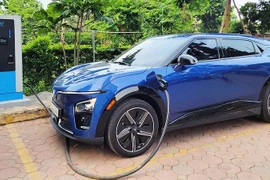
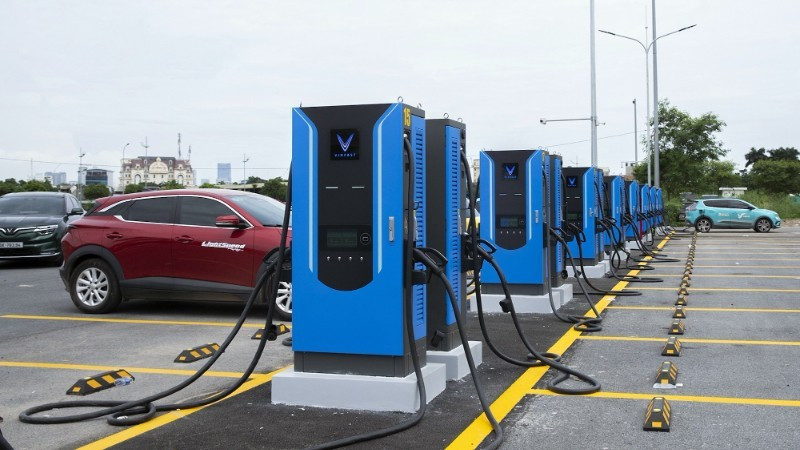
Charging stations are a key element of EV infrastructure. Addressing public concerns over the number and capacity of these facilities, Thanh noted that there are currently around 1,000 charging points citywide, catering to public buses, private cars, motorbikes, and electric bicycles.
The Hanoi People’s Committee has instructed a thorough review to produce a clear charging station development plan. This will allow businesses and investors to identify appropriate sites for installing chargers.
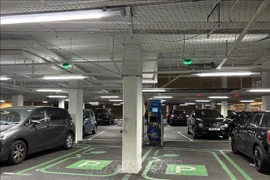
Authorities are currently inspecting parking spaces within and along Ring Road No. 1 for potential installation locations. Efforts are also underway to increase parking capacity in the surrounding corridor to allow for park-and-ride options.
In older residential complexes, demand assessments are being conducted to identify suitable public locations for community charging stations. At the same time, efforts are underway to tighten technical standards for private charging stations.
Advancing battery technology and standards
Experts have pointed out the urgent need for technical standards to guide charging station development, thus ensuring consistency and providing clear direction for investors.
According to Nguyen Van Khoi, head of the Standards Division at the Directorate for Standards, Metrology and Quality under the Ministry of Science and Technology has finalised a draft National Technical Regulation for EV charging stations. The draft is based on international standard IEC 61851-1:2017, widely adopted globally, and tailored to Vietnam’s specific socio-economic conditions.
The draft regulation outlines several key technical requirements. These include protection against electric shock, overload and short-circuit cut-off devices, electromagnetic compatibility (EMC), standardised plug types, and protocols for data exchange between vehicles and chargers. Integrated electricity metering systems within charging stations must also be verified to ensure transparency in electricity transactions and protect consumer rights.
While batteries for electric bikes and motorbikes are regulated, Vietnam currently lacks standards for EV car batteries. Experts urge the adoption of international practices to develop national regulations.
In addition, a legal framework is needed for the collection, recycling and disposal of EV batteries at the end of their life cycle, as well as for managing battery quality throughout the supply chain to ensure safety, protect the environment and support the sustainable growth of the EV industry.
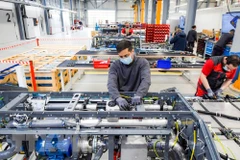
Associate Professor Dr Nguyen The Luong from the Centre for Power Sources and Autonomous Vehicles at Hanoi University of Science and Technology said that beyond standardising charging infrastructure, Vietnam must gradually develop its own battery technology - from material structures to recycling and waste treatment. Relying solely on imported batteries, he warned, would leave the country unable to control technology, costs or safety.
Many countries leading in EV adoption such as the Republic of Korea, China, Thailand, and India have policies to support domestic battery production alongside EV development goals.
In Vietnam, research into battery recycling and reuse remains basic, mainly focusing on extracting valuable materials. Although several universities and research institutions have developed processes to recover and reuse battery materials, the efficiency and purity levels remain insufficient for new battery production.
Scientists argue that Vietnam needs stronger policies to support research that enhances material recovery efficiency and purity. Furthermore, a battery waste management system should be established, defining the responsibilities of manufacturers, importers, and consumers to ensure safe collection and processing./.