Hanoi’s French-style villas: Preservation should align with urban image

Preserving Hanoi's ancient French-style villas has been a topic of discussion for some time, but few projects have been carried out methodically due to difficulties and obstacles.
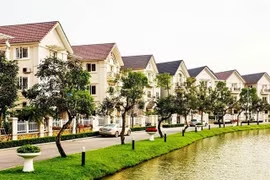
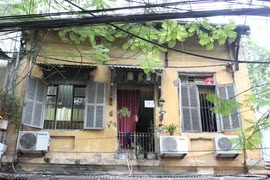
Hanoi’s French-style villas: Preservation should align with urban image ảnh 1A French-style villa at 49 Tran Hung Dao street in Hoan Kiem district. (Photo: hanoimoi.com.vn)

Hanoi (VNA) – Preserving Hanoi's ancient French-style villas has been a topic of discussion for some time, but few projects have been carried out methodically due to difficulties and obstacles.

To preserve the precious architectural heritage, experts have suggested the format of adaptive conservation - a model that has been implemented and promoted effectively in many countries.

Hanoi currently has 1,216 villas with French architecture built before 1954, including 367 state-owned villas, 732 villas under mixed ownership between the State and households or between households, and 117 privately owned villas.

Those villas are valuable in terms of cultural history, urban landscape, and architecture, but many of them have seen serious deterioration in recent times. 

According to architect Thai Vu Manh Linh from the Times Mirror International Architecture Joint Stock Company, with the change of institutions and the actual needs of the villa users, the villas are being severely damaged.

Hanoi’s French-style villas: Preservation should align with urban image ảnh 2A well-preserved French-style villa in Chu Van An Highschool. (Photo: hanoimoi.com.vn)

Architect Dr. Truong Ngoc Lan, deputy dean of the Faculty of Architecture and Planning at Hanoi University of Civil Engineering said that different owners do not fully understand the value of the heritage. Many architectural works have changed much compared to their original form.

When it comes to conservation, experts often judge through the value of the work. The French-style villas in Hanoi have great value in terms of economy, culture, society, and urban landscape. However, not much attention has been paid to promoting such value to serve today's demand.

Lan said that to preserve the work and exploit its socioeconomic potential, Hanoi should follow the adaptive conservation model.

“Preserving and protecting architectural value by the actual conditions and circumstances of society is a very good solution that we should learn,” he said, adding that it is a matter of "survival" as it relates to a treasure of huge, unique architectural works amid the hustle and bustle of contemporary life.

Architect Tran Ngoc Chinh, Chairman of the Vietnam Urban Development Planning Association also said that the adaptive conservation model can help people exploit socioeconomic efficiency from the works while preserving the core part of the architecture. 

For French-style architecture, conservation must adapt and flexibly respond to each street block to match the unique nature of each site. This is important in places such as residential areas, public works, and mixed streets. Accordingly, in public streets, it prioritises the conservation and embellishment of public works and public areas and creates a connection with the surrounding landscape spaces. Preserve and embellish the shape and facade of the work to keep the originality of the work. In areas with both houses and public structures, it should be flexible in the renovation process so as not to affect the values to be preserved.

Legal and practical orientation both lead to a lesson that conservation needs to be associated with exploitation and value promotion. According to the experience of many countries around the world, to deal with the rich and diverse heritage in Hanoi, while resources are limited, the city needs to properly identify the value and classify the heritage to have suitable conservation and renovation scenarios, said architect Dao Ngoc Nghiem, Vice Chairman of the Vietnam Urban Development Planning Association. 

According to him, many heritages need to be kept as original, and other structures require preservation in style, while others should be transformed completely.

Architect Thai Vu Manh Linh said that when it comes to the preservation of Hanoi’s French-style villas, "material - objects" value is talked about more than "spiritual - intangible" value. Meanwhile, in developed countries, urban architectural heritage has always been understood as the core element that creates the soul of the city, bearing great value that cannot be quantified.

Therefore, adaptive conservation is also to make the community understand properly and join hands in heritage conservation./.
VNA

See more

Singer Dang Duong is among the artists featured in the national concert Proud to Be Vietnamese 2026. (Photo of the organisers)

Concert to celebrate unity and pride

The programme carries profound political, cultural and social significance, helping promote historical values and the Vietnamese tradition of paying tribute to the past generations, while nurturing love for the homeland and country and strengthening bonds among generations of Vietnamese people.

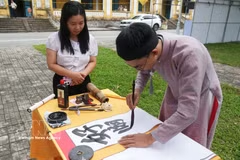
A visitor watches a calligraphy demonstration at the first Vietnam Calligraphy Festival 2026. (Photo: VNA)

Vietnam Calligraphy Festival celebrates national cultural heritage

The festival features more than 100 exhibition booths, bringing together calligraphy clubs from across the country, calligraphers, artisans, culture researchers, businesses and representatives of traditional craft villages. Exhibitions, exchanges, discussions and hands-on activities celebrate calligraphy and promote Vietnam’s cultural values.

Tourists experience writing calligraphy through virtual reality at Hanoi's Temple of Literature. (Photo: VNA

Hanoi works to unlock heritage resources

When innovation deepens understanding of traditional values rather than replacing them, heritage becomes not only something to preserve but also a resource for sustainable tourism, economic development and reinforcement of Hanoi’s position as a UNESCO Creative City.

Following the launch ceremony, the 100-motorbike convoy travels from Dong Van across Ma Pi Leng Pass, taking in spectacular mountain scenery and the Nho Que River before finishing at Pa Vi Ha in Meo Vac commune. (Photo: VNA)

100 motorbikes conquer Ma Pi Leng Pass to promote safe travel

A convoy of 100 motorbikes set off on a journey across Ma Pi Leng Pass on October 21 as part of a roadshow campaign to promote safe motorcycle travel in the northern province of Tuyen Quang, home to the Dong Van Karst Plateau UNESCO Global Geopark.

The work "Khong gian cua nui" (The Space of Mountains) by Le Lang Luong. (Photo: Published by VNA)

Vietnam-Japan sculpture exhibition to bring artists together in Kanagawa

The “Dialogue” exhibition in Japan's Kanagawa prefecture from November 8-11 will feature more than 30 works by artists from both countries, including 26 pieces by 13 contemporary Vietnamese sculptors from different generations. These artists have developed distinctive artistic languages and made their own marks on Vietnam’s contemporary art scene.

A performance at the event (Photo: VNA)

Vietnamese in Hungary stage first Great National Unity Festival

The event also served as a showcase for Vietnamese culture, customs, cuisine and traditions, in step with Vietnamese Culture Day. It encouraged Vietnamese of all generations to hold onto their cultural identity while spreading the image of Vietnam and its people among Hungarians, adding to people-to-people exchanges and mutual understanding between the two countries.

An ao dai fashion show at the festival. (Photo: VNA)

Vietnamese culture shines at festival in RoK

A celebration marking the seventh founding anniversary of the Vietnamese Migrant Women’s Association (VMWA) in Ansan, Gyeonggi province, the Republic of Korea, took place on October 18, featuring cultural exchanges and activities to mark Vietnamese Women’s Day (October 20).

Vietnam harnesses culture as growth driver

Vietnam harnesses culture as growth driver

Under a March 17, 2026 action plan from the municipal Party Committee, which follows the Politburo’s Resolution 80-NQ/TW dated January 7, 2026, on Vietnamese cultural development, the city is moving beyond preservation alone. It is now upholding heritage values while developing cultural products, spaces and markets tied to innovation and global integration.

The Ao dai parade passes through Bankstown Plaza and Bankstown Station before returning to the Bryan Brown Theatre. (Photo: VNA)

Sydney hosts first Vietnamese Ao dai street parade

Colourful traditional Vietnamese Ao dai (traditional long dresses) brought a festive touch to the streets of Bankstown, Sydney, on October 17, as more than 20 Vietnamese people from different generations took part in an Ao dai street parade held as part of the Viet Soul 3 Festival.