Hanoi (VNA) – Hanoi aims to ensure that all industrial solid waste from its hi-tech parks, industrial parks and industrial clusters is collected and treated in line with regulations under a new plan to strengthen waste management and tighten control on scrap collection, storage and recycling facilities across the capital.
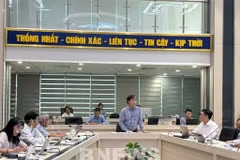
Under Plan No. 354/KH-UBND recently signed by Vice Chairman of the municipal People’s Committee Bui Duy Cuong, Hanoi seeks to establish a synchronous management mechanism for waste and facilities involved in scrap collection, storage, sorting, preliminary processing and recycling.
The plan aims to prevent the illegal discharge of solid waste and scrap into the environment, promote waste sorting and recycling to return materials to production chains, and ensure compliance with environmental technical standards and fire safety requirements.
The city also targets placing 100% of scrap collection, storage, and recycling facilities and sites on management and monitoring lists.
Under the plan, authorities will review the legal status of each facility, including its business registration, land use, construction, environmental protection, and fire prevention and fighting conditions. Facilities will be classified according to their operational status and risks of environmental pollution and fire, with inspections and action taken against violations and unlicensed operations.
Inspections will focus on manufacturing, business, and service establishments generating industrial solid waste, as well as scrap collection and recycling facilities operating in residential areas, using land for improper purposes or failing to meet environmental and fire safety requirements. Particular attention will be paid to sites where scrap is stored, burned, heated, or recycled in ways that cause pollution or pose high fire risks, as well as illegal waste discharge and burial.
Violators must rectify all infractions related to environmental protection, land management, construction, fire safety, occupational safety, and electricity use.
Facilities that fail to meet operating requirements, are located in unsuitable areas, or pose pollution and safety risks may be suspended, relocated, or subject to other legal measures. Serious or repeated violations, deliberate non-compliance, or suspected criminal offences will be referred to competent authorities.
Commune- and ward-level authorities are tasked with strengthening local oversight, detecting newly established scrap collection sites and preventing large-scale, spontaneous collection and recycling facilities from emerging in residential areas or locations inconsistent with planning. They must also monitor previously penalised facilities to ensure compliance and prevent repeat violations.
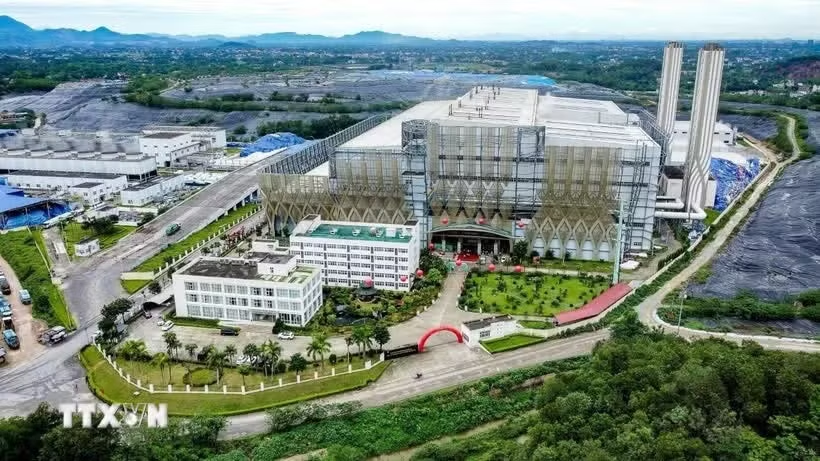
The plan encourages investment in industrial solid waste treatment and recycling projects, circular economy models, and advanced, environmentally friendly recycling technologies. It also calls for research and application of waste treatment technologies, particularly for waste from the renewable energy industry, based on reducing, recovering, reusing, and recycling waste.
The municipal People’s Committee will strengthen coordination among management agencies, develop and update a database of scrap collection, storage, and recycling facilities, and step up communication and guidance to help businesses comply with regulations on the environment, land use, construction, and fire safety./.