Healthcare service in Mekong Delta improved

More than 600,000 people at risk of poverty in the Mekong Delta have been given 1.5 million USD to buy optional health insurance thanks to a regional healthcare project.
More than 600,000 people at risk ofpoverty in the Mekong Delta have been given 1.5 million USD to buyoptional health insurance thanks to a regional healthcare project.

Since it kicked off in September 2007, the project, which is beingcarried out by the Health Ministry and is the first of its kind usingofficial development assistance (ODA), has also helped more than 16,900needy patients pay for their treatment.

These results were reported at a mid-term meeting held in the MekongDelta city of Can Tho on Sept. 24 by the Health Ministry and the WorldBank to review the project and discuss plans for the four remainingmonths of this year and the 2010-2011 period.

The 85 million USD project aims to improve the healthcare system in theMekong Delta, and increase the public’s access to, and use of,reasonably-priced healthcare services--particularly the poor.

By the end of 2011, the project plans to help support the payment ofhospital fees in 13 provinces and cities in the region for the poor aswell as for those at risk, and those with special difficulties, saidthe meeting.

It also plans to invest in high-tech equipment for hospitals in theseareas in order to help low-incomer earners access advanced medicaltechnology, and also assist 11 medical colleges and high schools in theregion with medical equipment and fellowships.

Additionally, the project plans to enhance the quality of services athealthcare establishments, meeting the demand for health check-ups andtreatment among people in the region as well as encouraging those atrisk of poverty to join the optional healthcare insurance programme./.
See more

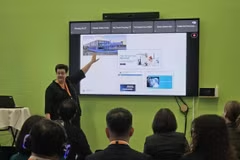
A speaker delivers presentations at the conference (Photo published by VNA)

Vietnam, Denmark expand cooperation in high-tech healthcare

Ambassador Nguyen Le Thanh called on Vietnamese and Danish partners to identify priority areas and promote research and training programmes, knowledge transfer and technology application in line with Politburo's Resolution No. 57-NQ/TW on breakthroughs in science – technology development, innovation and national digital transformation.

Ho Chi Minh City has favourable conditions for developing the ecosystem, including a large population, diverse healthcare needs and an extensive public and private medical network. (Illustrative photo: VNA)

Ho Chi Minh City develops multi-tier elderly care network amid population ageing

Dr. Huynh Minh Chin, Deputy Director of the department, said rising elderly care needs are putting pressure on traditional family-based care, as older people increasingly face multiple chronic illnesses, mobility problems, malnutrition, dementia and depression, requiring continuous support and closer coordination among hospitals, grassroots healthcare facilities, families and social support institutions.

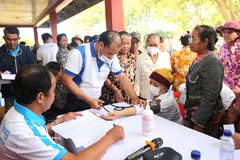
Local residents in Mondulkiri province, Cambodia, receive free medical check-ups and health consultation. (Photo: VNA)

Free medical examinations provided to remote communities in Cambodia

Vietnamese Ambassador Nguyen Minh Vu said the programme has been jointly organised by the embassy and the hospital annually in various Cambodian localities to provide healthcare support to disadvantaged households and contribute to the Cambodian Government’s efforts to improve public health. The initiative also reflects close cooperation in healthcare and the strong bonds between the people of Vietnam and Cambodia.

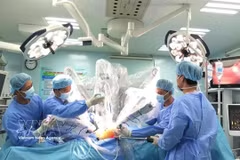
With the assistance of robotic-assisted laparoscopic surgery, doctors successfully perform a complex operation (Photo: VNA)

Vietnam advances towards high-quality, specialised healthcare

Recent developments in Hanoi and other localities highlight efforts to develop specialised treatment, standardise professional practices and apply artificial intelligence (AI) and advanced medical techniques, towards a more modern healthcare system.

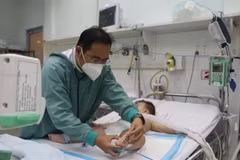
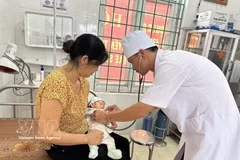
Collecting a sample from a pediatric patient for influenza testing (Photo: VNA)

Ho Chi Minh City acute respiratory infections surge over 64%

According to the Ho Chi Minh City Centre for Disease Control (HCDC), influenza viruses are are among the fastest-rising pathogens, with 151 positive samples in a single week. Influenza A is the dominant strain, with A/H1N1pdm09 in 116 samples, or nearly 77%.

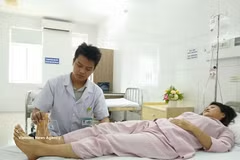
A doctor at Trung Nguyen Medical Station in Te Lo commune, Phu Tho province, examines a child patient. (Photo: VNA)

Phu Tho builds hospital culture to improve patient satisfaction

In recent years, alongside efforts to improve the quality of medical examinations and treatment, Phu Tho province’s health sector has focused on creating civilised, friendly hospital environments and strengthening healthcare workers’ sense of responsibility and service-oriented attitudes, with the aim of earning patients’ trust and satisfaction.

An overview of the meeting between Deputy Prime Minister Pham Thi Thanh Tra and César Louis-Philip Marseille, Managing Director of VAMED Engineering GmbH of Austria and member of the Board of Directors of VAMED+WWH Group of Germany,in Hanoi on October 7. (Photo: VNA)

Deputy PM suggests studying long-term development of hospital ship model

Vietnam is one of VAMED’s important partners in Southeast Asia. The group plans to invest 1.2 billion EUR in Vietnam over the next five years, creating jobs for thousands of workers and promoting knowledge and technology transfer. It also wishes to expand cooperation through preferential credit projects, public-private partnerships (PPPs) and partnerships with private enterprises; and supply medical products from Austria and Germany for Vietnamese partners.