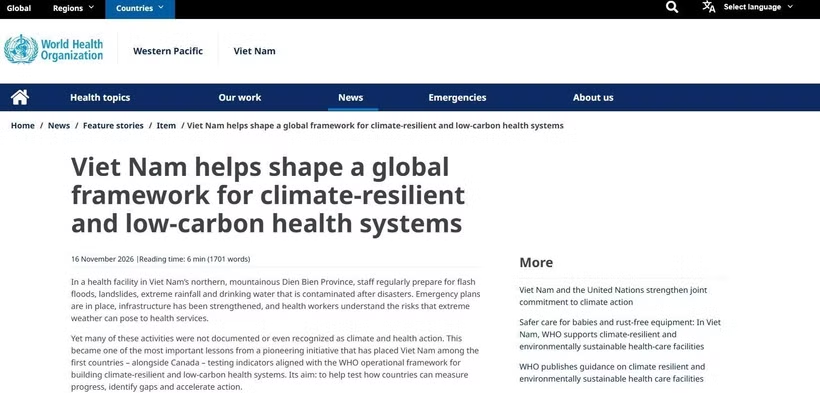
Hanoi (VNA) - The World Health Organization (WHO) has published an article highlighting one of the most important lessons from a pioneering initiative that has placed Vietnam among the first countries – alongside Canada – testing indicators aligned with the WHO operational framework for building climate-resilient and low-carbon health systems.
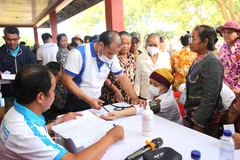
Titled “Vietnam helps shape a global framework for climate-resilient and low-carbon health systems,” the article wrote that in a health facility in Vietnam’s northern, mountainous Dien Bien province, staff regularly prepare for flash floods, landslides, extreme rainfall and drinking water that is contaminated after disasters. Emergency plans are in place, infrastructure has been strengthened, and health workers understand the risks that extreme weather can pose to health services.
Yet many of these activities were not documented or even recognized as climate and health action, it noted.
The initiative aims to help test how countries can measure progress, identify gaps and accelerate action.
According to WHO, climate change is already affecting health, health infrastructure and the delivery of services around the world. As countries work to strengthen resilience and reduce emissions, they need practical tools to assess progress and identify priorities for action. The WHO indicator framework was developed to help meet that need.
Explaining why Vietnam was selected, WHO said Vietnam's selection reflects both its vulnerability to climate change and its leadership on climate and health. The country has established a strong policy foundation through initiatives including the Health Sector Climate Change Action Plan 2019-2030, the National Climate Change Strategy and its commitment to achieve net-zero emissions by 2050. The Ministry of Health has also been actively working with partners to strengthen climate resilience across the health sector.
The pilot offered an opportunity not only to assess progress within Vietnam, but also to ensure the framework itself works in real-world settings before wider global implementation.
It assessed 20 indicators covering climate resilience and greenhouse gas mitigation, drawing on policy reviews, provincial surveys, expert consultations and field visits in Dien Bien, Can Tho and Gia Lai.
The results highlighted both encouraging progress and important opportunities for improvement.
WHO Representative in Vietnam Dr Angela Pratt said, “What impressed us most was not only what the pilot measured, but what it revealed. Across Vietnam, many activities were already helping to build more climate-resilient health services, yet they were often not being recognised or tracked in a systematic way.
This pilot showed that measuring progress is not simply about accountability. It is about making existing efforts visible, identifying opportunities to do more and helping countries take smarter, evidence-based action.
“By helping test these indicators, Vietnam is making an important contribution to global knowledge of how countries can move from ambition to action, using evidence to build health systems that are better prepared for climate change and more environmentally sustainable.”
The pilot was implemented through close collaboration between the Vietnam Administration of Disease Prevention (VADP), WHO, provincial authorities, academic institutions and development partners. It also contributes to the work of the Alliance for Transformative Action on Climate and Health (ATACH), of which Vietnam is a member. The pilot was supported by the partnership between the Prudence Foundation and the WHO Foundation, advancing WHO's work on climate and health resilience in Vietnam./.
VNA