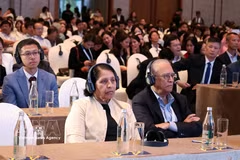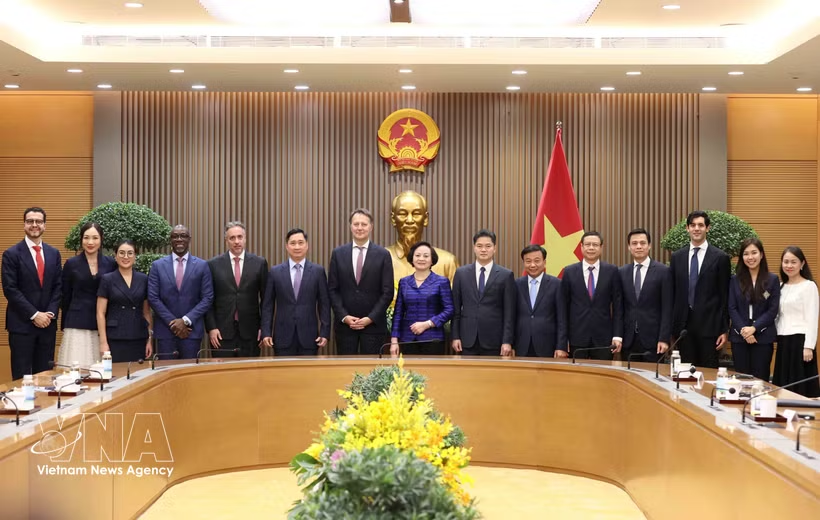
Hanoi (VNA) – Deputy Prime Minister Pham Thi Thanh Tra received Marc Gailhardou, President of the Intercontinental Region at pharmaceutical group MSD (Merck Sharp & Dohme), and a senior delegation from the company in Hanoi on the afternoon of November 18, on the occasion of MSD's 30th anniversary of operations in Vietnam.
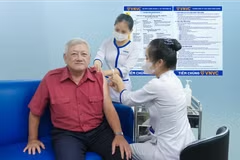
At the meeting, the Deputy PM affirmed that the Government will create the most favourable conditions for MSD's investment and cooperation projects. She called on the group to regard Vietnam as a stable and reliable strategic partner, move ahead with plans to invest in a pharmaceutical and vaccine manufacturing plant, and accelerate the transfer of HPV vaccine technology to Vietnam Vaccine Joint Stock Company (VNVC).
Gailhardou said that Vietnam was among the group's 10 largest markets in the region.
In 2025, MSD supplied medicines and vaccines to more than 400 million people worldwide, including 2.3 million in Vietnam. He spoke highly of Vietnam's focus on disease prevention, as reflected in the Law on Disease Prevention and the inclusion of four vaccines, including the HPV vaccine, in the National Expanded Programme on Immunisation through 2030.
Earlier that morning, MSD and VNVC announced a cooperation plan on technology transfer, manufacturing and localisation of strategically important vaccines, contributing to stronger vaccine security and Vietnam's self-reliance.
Tra acknowledged MSD's contributions over the past 30 years. She noted that the group had introduced around 20 advanced medicines and vaccines to Vietnam and pioneered the introduction of Keytruda cancer immunotherapy for Vietnamese patients. The drug now has 28 approved indications across 14 tumour types.
MSD has supported around 7,500 cancer patients, providing medicines worth approximately 4 trillion VND (155.41 USD) and covering up to 75% of treatment costs. It has also invested trillions of VND in clinical research and pledged an additional 40 million USD in 2026. The group has further provided HPV vaccines at preferential prices through the United Nations-backed Gavi vaccine alliance mechanism until the end of 2027.
The Deputy PM said Vietnam was now enjoying an unprecedentedly favourable policy and institutional environment. Politburo Resolution No. 72-NQ/TW dated September 9, 2025, on breakthrough solutions to strengthen public health protection, care and improvement, shifts the focus towards preventive healthcare, with the goal of providing people with basic free medical services within their health insurance coverage by 2030, following an appropriate roadmap.
The Pharmaceutical Industry Development Strategy through 2030 aims to make Vietnam a high-value pharmaceutical manufacturing hub in ASEAN, with the domestic market projected to reach approximately 10 billion USD in 2026 and grow by an average of 8-10% annually. The HPV vaccine is officially included in the National Expanded Programme on Immunisation on July 1, 2026.
Regarding the transfer of HPV vaccine technology between MSD and VNVC, the Deputy PM welcomed the cooperation and expressed the Government's expectation that technology transfer would extend beyond manufacturing and packaging to encompass pharmaceutical technologies and next-generation technologies, in full compliance with Vietnamese law.
She called for a review of treatment outcomes and health economic effectiveness to update the list of medicines covered by health insurance, ensuring transparency and maintaining the financial balance of the Health Insurance Fund. The Deputy PM also said the Government would undertake a comprehensive revision of the Law on Pharmacy to establish a more enabling regulatory framework.
The Deputy PM urged MSD to consider investing in a pharmaceutical and vaccine manufacturing plant in Vietnam.
She also proposed that MSD act as a focal point to help Vietnam negotiate directly with pharmaceutical groups, reducing intermediaries to ensure reasonable and transparent pricing./.
VNA