All residents set to have electronic health records integrated into VNeID by June 30, 2027

The Ministry of Health, in coordination with the Ministry of Public Security, is tasked with completing the integration of electronic health records into the VNeID system for 100% of the population before June 30, 2027, according to a notice issued by the Party Central Committee’s Office.

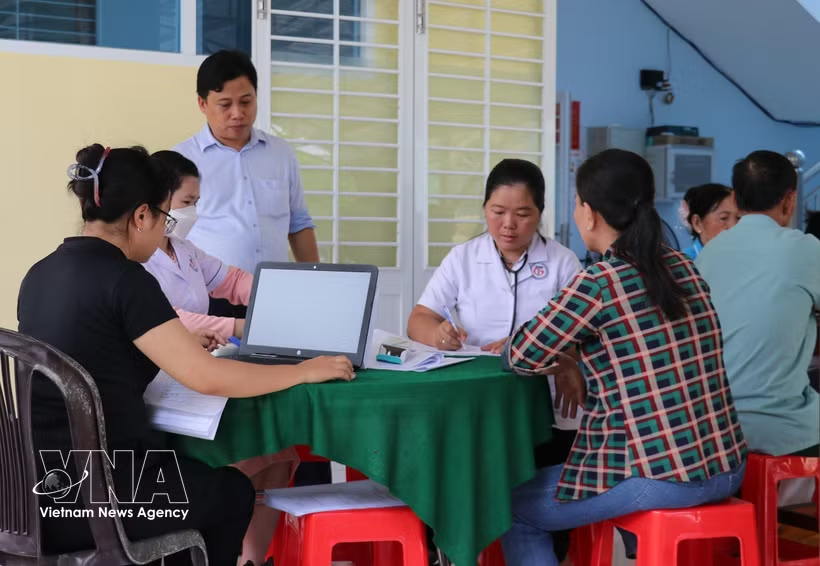
The An Thanh Thuy commune Health Station in Dong Thap province provides consultation and assistance to residents in updating their electronic health records on the VNeID application (Photo: VNA)

Hanoi (VNA) – The Ministry of Health, in coordination with the Ministry of Public Security, is tasked with completing the integration of electronic health records into the VNeID system for 100% of the population before June 30, 2027, according to a notice issued by the Party Central Committee’s Office.

The notice conveys the conclusions of the Standing Member of the Party Central Committee’s Secretariat at a October 22 conference reviewing the one-year implementation of the Politburo’s Resolution No. 72-NQ/TW, dated September 9, 2025, on breakthrough solutions to strengthen the protection, care and improvement of public health.

At the event, after hearing a report by the Secretary of the Party Committee of the Ministry of Health and opinions from delegates, the Standing Member of the Party Central Committee’s Secretariat concluded that this is a resolution of strategic, comprehensive and long-term significance.

It must be implemented in a coordinated, consistent and continuous manner as part of the overall implementation of the 14th National Party Congress Resolution, conclusions of Party Central Committee meetings, thematic resolutions of the Politburo and directives from General Secretary of the Communist Party of Vietnam Central Committee and President To Lam.

To ensure successful implementation of Resolution No. 72-NQ/TW and bring about substantive improvements in public health protection, care and improvement, committees, ministries, sectors and localities are requested to focus on a number of key tasks, including renewing thinking and strengthening responsibility for public health protection, care and improvement; completely addressing shortages of medicines, vaccines and medical supplies; and removing obstacles in procurement, bidding, supply and healthcare financing. These tasks must be completed in the fourth quarter of 2026.
vnanet_potal-phu-tho-day-manh-tao-lap-cap-nhat-so-suc-khoe-dien-tu-9067313.jpg
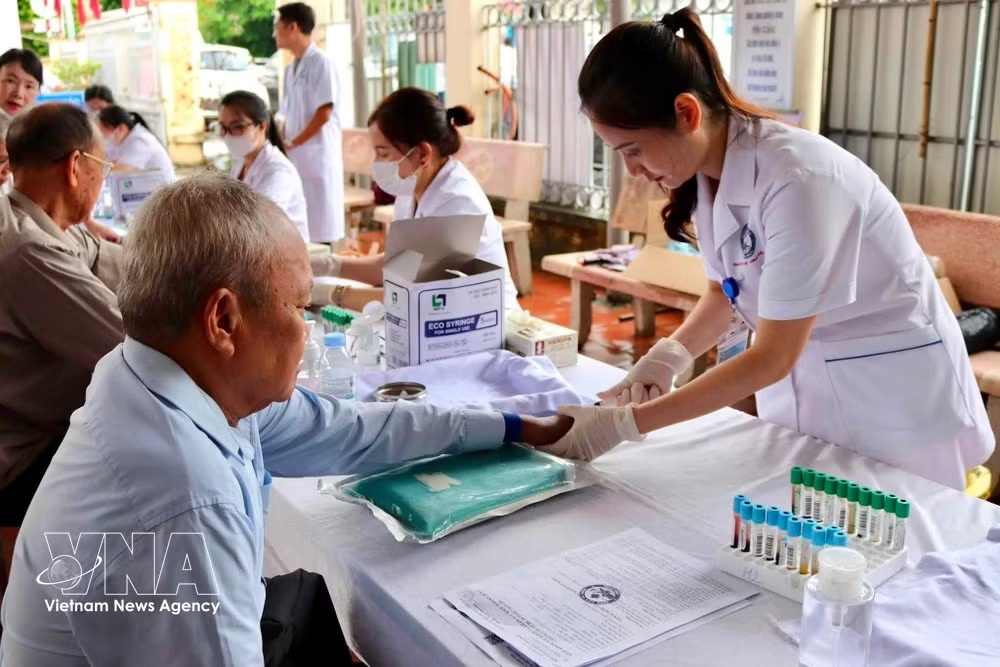
The Ministry of Health, in coordination with the Ministry of Public Security, is tasked to complete the integration of electronic health records into the VNeID system for 100% of the population by June 30, 2027 (Photo: VNA)

At the same time, it is necessary to improve the quality and operational capacity of grassroots healthcare, which is a key task that will determine the success of universal healthcare goals.

The notice highlights the necessary to continue improving the institutional framework and enhance the effectiveness and efficiency of implementation, along with improving the quality of the healthcare workforce, promoting the application of information technology and digital transformation in the healthcare sector.

In 2026, all hospitals meeting the required standards must complete the interconnection of test results and diagnostic imaging data. Hospitals must not deliberately repeat tests to charge patients without legitimate medical reasons.

In the notice, the Standing Member of the Party Central Committee’s Secretariat stressed the need to strengthen information and communications work to raise public awareness and foster a culture of health./.


VNA

See more

With the assistance of robotic-assisted laparoscopic surgery, doctors successfully perform a complex operation (Photo: VNA)

Vietnam advances towards high-quality, specialised healthcare

Recent developments in Hanoi and other localities highlight efforts to develop specialised treatment, standardise professional practices and apply artificial intelligence (AI) and advanced medical techniques, towards a more modern healthcare system.

Collecting a sample from a pediatric patient for influenza testing (Photo: VNA)

Ho Chi Minh City acute respiratory infections surge over 64%

According to the Ho Chi Minh City Centre for Disease Control (HCDC), influenza viruses are are among the fastest-rising pathogens, with 151 positive samples in a single week. Influenza A is the dominant strain, with A/H1N1pdm09 in 116 samples, or nearly 77%.

A doctor at Trung Nguyen Medical Station in Te Lo commune, Phu Tho province, examines a child patient. (Photo: VNA)

Phu Tho builds hospital culture to improve patient satisfaction

In recent years, alongside efforts to improve the quality of medical examinations and treatment, Phu Tho province’s health sector has focused on creating civilised, friendly hospital environments and strengthening healthcare workers’ sense of responsibility and service-oriented attitudes, with the aim of earning patients’ trust and satisfaction.

An overview of the meeting between Deputy Prime Minister Pham Thi Thanh Tra and César Louis-Philip Marseille, Managing Director of VAMED Engineering GmbH of Austria and member of the Board of Directors of VAMED+WWH Group of Germany,in Hanoi on October 7. (Photo: VNA)

Deputy PM suggests studying long-term development of hospital ship model

Vietnam is one of VAMED’s important partners in Southeast Asia. The group plans to invest 1.2 billion EUR in Vietnam over the next five years, creating jobs for thousands of workers and promoting knowledge and technology transfer. It also wishes to expand cooperation through preferential credit projects, public-private partnerships (PPPs) and partnerships with private enterprises; and supply medical products from Austria and Germany for Vietnamese partners.

The Son Tra regional medical centre (Photo: benhviensontra.com.vn)

Da Nang: Satellite hospitals prove effective at grassroots level

The model is an important component of the roadmap to turn Da Nang into a specialised medical centre for the central and Central Highlands regions, with a number of key specialties, in line with the spirit of Politburo Resolution No. 72-NQ/TW dated September 9, 2025, on breakthrough solutions to strengthen the protection, care and improvement of people's health.

Illustrative image (Photo: daibieunhandan.vn)

Ho Chi Minh City digitises 99.4% of hospital records

As of July 2026, 163 of the city's 164 hospitals, or 99.4%, adopted electronic medical records, the report said. About 64% of public hospitals and 65% of private hospitals now run the technology across their entire operations