Hanoi (VNA) – Healthcare facilities across Vietnam are expanding infrastructure, strengthening specialised medical capabilities and adopting advanced technologies to improve the quality of services and give people greater access to modern healthcare.
Recent developments in Hanoi and other localities highlight efforts to develop specialised treatment, standardise professional practices and apply artificial intelligence (AI) and advanced medical techniques, towards a more modern healthcare system.
Expanding infrastructure and specialised medical capacity
A series of healthcare developments in Hanoi over the past week has helped advance the capital’s goal of becoming a high-quality medical hub for Vietnam and Southeast Asia.
On October 17, the second campus of the National Hospital of Obstetrics and Gynaecology was officially inaugurated in Kieu Phu commune, Hanoi. After more than two months of trial operations, the facility has gradually demonstrated its capacity to receive, examine and treat patients, expanding residents’ access to high-quality specialised care.
Deputy Prime Minister Pham Thi Thanh Tra called on the hospital to operate under the principle of “Two campuses – One team – One professional standard”, with the second campus envisioned as a model of modern specialised healthcare in ASEAN.

Minister of Health Dao Hong Lan outlined six key tasks for the hospital, including ensuring consistent professional standards across both campuses, prioritising patient safety, developing advanced techniques alongside high-quality workforce training and support for lower-level facilities, ensuring adequate supplies of medicines and medical equipment, accelerating digital transformation, and fostering a professional and humane care and treatment environment.
On October 20, the second campus of Hanoi Heart Hospital in Xuan Dinh ward began operations, alongside the launch of its International Department. The development is expected to strengthen specialised cardiovascular care for residents of the capital and neighbouring provinces, enabling patients to access advanced treatments and complex cardiovascular interventions in Hanoi, reducing referrals to higher-level facilities and the need to seek treatment abroad. As one of Hanoi’s key healthcare projects for 2025–2030, the campus aims to develop a high-quality specialised hospital that gradually approaches advanced regional and international technical standards.
Meanwhile, Bach Mai Hospital has become the first medical facility in Vietnam to receive the certification of Advanced Stroke Centre status from the World Stroke Organisation (WSO). This is the highest level in the WSO’s stroke centre certification system, awarded to the hospital after it passed an independent assessment covering 68 professional criteria and a rigorous quality evaluation process.
The certification affirms its capacity in stroke emergency response and treatment, while encouraging healthcare facilities nationwide to standardise procedures, improve care quality and enhance patients’ chances of survival.
With people at the centre of its approach and science, technology and digital transformation as key drivers, Hanoi’s healthcare facilities are continuing to strengthen specialised services and expand access to high-quality treatment, supporting international integration and sustainable improvements in public healthcare.
Applying science, technology and AI in medicine
As digital transformation gathers pace, AI and advanced medical technologies are creating new opportunities to better diagnosis and treatment.
At the eighth expanded conference of technical and scientific activities of hospitals in the northern coastal region, held in Ninh Binh on October 23–24 under the theme “Connection – Innovation – Development”, participants discussed applying AI to hospital management, diagnosis and treatment to optimise operations and improve professional efficiency.
Director of the provincial Health Department Pham Thi Phuong Hanh stressed that medical advances must be applied based on scientific evidence, practical conditions and patient safety. She also underscored the need to train healthcare workers, standardise professional procedures, improve management, ensure data security and enhance patient care.
International cooperation is helping Vietnamese hospitals adopt advanced medical techniques. On October 23, Hue Central Hospital hosted the 2026 Southeast Asian International Endoscopy Symposium, with experts from Vietnam, Thailand, Cambodia and Laos discussing and demonstrating endoscopic retrograde cholangiopancreatography (ERCP), endoscopic ultrasound (EUS) for diagnosis and intervention, and related techniques.
Director of Hue Central Hospital Prof. Dr. Pham Nhu Hiep said the hospital had mastered advanced procedures, including ERCP, EUS and endoscopic bile duct stone extraction and lithotripsy. Cooperation with international partners is helping strengthen expertise and expand access to minimally invasive, safe and effective treatments.
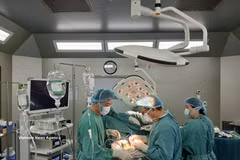
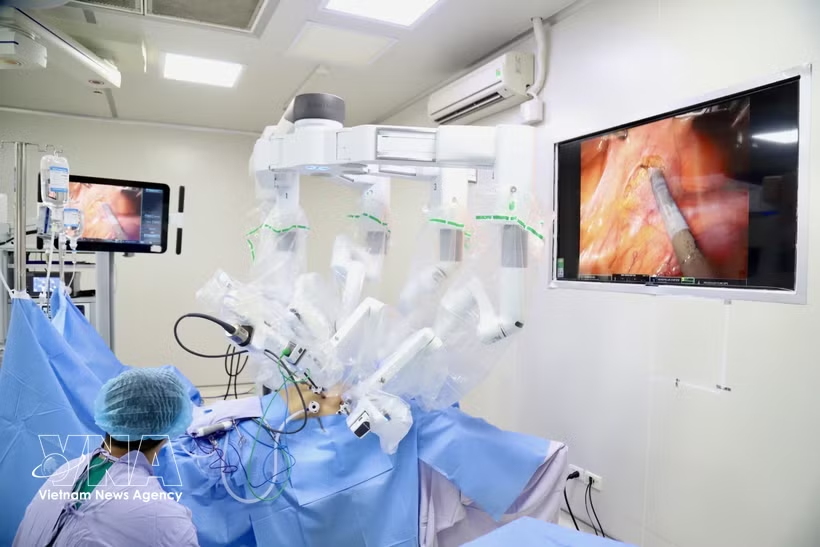
Robotic surgery is also improving the treatment of complex conditions. At a scientific and technical conference hosted by Can Tho General Hospital on October 22, Binh Dan Hospital in Ho Chi Minh City reported that it had performed more than 4,320 robotic surgeries since 2016, mainly for prostate, kidney, colorectal and bladder cancers.
The hospital is also expanding training and transferring techniques to domestic and international medical facilities, including two hospitals in the Philippines.
On October 20, S.I.S Can Tho International General Hospital in the Mekong Delta city of Can Tho put into operation a MAMMOMAT Revelation 3D mammography system integrated with AI, developed by Siemens Healthineers. The first of its kind in the Mekong Delta, the system supports breast imaging and early screening, enabling women in Can Tho and neighbouring provinces to access advanced screening locally.
Effective adoption of medical advances requires not only investment in equipment and technology but also workforce training, standardised procedures, patient safety and treatment outcome assessment. These efforts will help improve healthcare quality and bring advanced medical services closer to the public, in line with the Political Bureau’s Resolution No. 72-NQ/TW on healthcare development./.