Bach Mai Hospital becomes Vietnam’s first to win top WSO stroke certification

Hanoi-based Bach Mai Hospital has become the first healthcare facility in Vietnam to earn the “Advanced Stroke Centre” certification from the World Stroke Organisation (WSO).

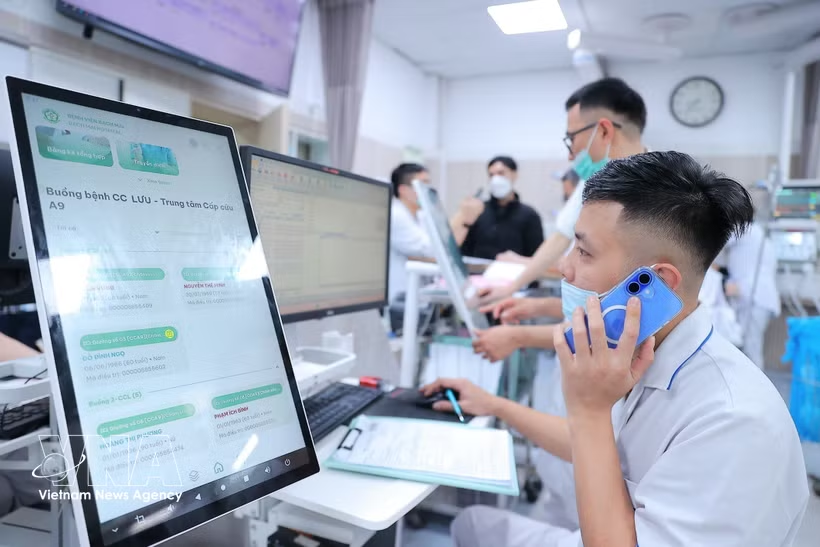
Staff at Bach Mai Hospital (Photo: VNA)

Hanoi (VNA) – Hanoi-based Bach Mai Hospital reported on October 23 that it has become the first healthcare facility in Vietnam to earn the “Advanced Stroke Centre” certification from the World Stroke Organisation (WSO).

The WSO presented the certificate, the highest tier in its stroke centre certification system, at the plenary session of the 18th World Stroke Congress (WSC 2026) in Seoul, the Republic of Korea on October 23. It is valid from July 20, 2025 to July 19, 2028.

The ceremony marked the WSO’s 20th anniversary and drew thousands of experts, physicians and healthcare managers from more than 100 countries.

The Advanced Stroke Centre status requires meeting 68 criteria, including 37 mandatory and 31 recommended. Applicants must satisfy all mandatory criteria and at least 75% of the recommended ones, a minimum of 61 of the 68 overall. The assessment spans the entire stroke care pathway, including infrastructure, equipment, specialised personnel, 24/7 emergency and reperfusion treatment, intensive care, rehabilitation and quality management.

A key requirement is showing stable, coordinated operations through a system of quality performance indicators (KPIs). The hospital reviewed and standardised its clinical procedures, pulled together documentation from multiple departments, and collected and verified data on all stroke patients during the four-month assessment period.

The data had to be complete, accurate, consistent and traceable. After the hospital submitted its documentation through the WSO’s accreditation system, WSO-appointed experts conducted an on-site assessment to check the paperwork against actual practice. The WSO Certification Committee then reviewed the results before making the final accreditation decision.

Assoc. Prof. Dr. Dao Xuan Co, the hospital’s director, said the certification reflects Bach Mai’s highest professional commitment to the public. The certificate is an independently verified benchmark of the hospital’s comprehensive standardisation of stroke emergency and treatment procedures to the world’s most stringent standards.

Bach Mai runs diagnostic imaging and emergency laboratory services around the clock. CT, MRI, CT/MR angiography and emergency lab tests support rapid detection of lesions and timely treatment decisions.

Before the Seoul ceremony, Bach Mai’s Stroke Centre presented the results of its operational standardisation at the Global Stroke Alliance conference in Hanoi, attended by delegates from 17 countries and Ministry of Health representatives.

The WSO is also working with Vietnamese experts to build and expand a nationwide stroke emergency care network./.

VNA

See more

Male plastic surgery: Why masculine aesthetics require a different approach

Male plastic surgery: Why masculine aesthetics require a different approach

Plastic surgery has long been associated with procedures for women, but men also seek treatment for abdominal fat, enlarged breasts and age-related changes around the eyes and face. The American Society of Plastic Surgeons (ASPS) includes liposuction, gynecomastia surgery and eyelid surgery among procedures performed on male patients.

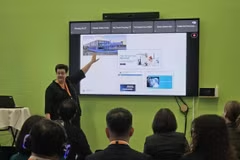
A speaker delivers presentations at the conference (Photo published by VNA)

Vietnam, Denmark expand cooperation in high-tech healthcare

Ambassador Nguyen Le Thanh called on Vietnamese and Danish partners to identify priority areas and promote research and training programmes, knowledge transfer and technology application in line with Politburo's Resolution No. 57-NQ/TW on breakthroughs in science – technology development, innovation and national digital transformation.

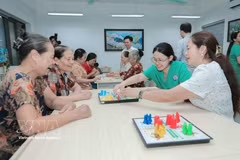
Ho Chi Minh City has favourable conditions for developing the ecosystem, including a large population, diverse healthcare needs and an extensive public and private medical network. (Illustrative photo: VNA)

Ho Chi Minh City develops multi-tier elderly care network amid population ageing

Dr. Huynh Minh Chin, Deputy Director of the department, said rising elderly care needs are putting pressure on traditional family-based care, as older people increasingly face multiple chronic illnesses, mobility problems, malnutrition, dementia and depression, requiring continuous support and closer coordination among hospitals, grassroots healthcare facilities, families and social support institutions.

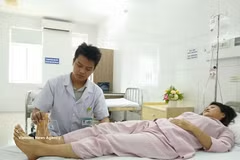
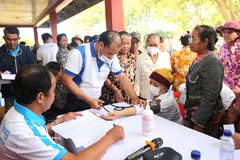
Local residents in Mondulkiri province, Cambodia, receive free medical check-ups and health consultation. (Photo: VNA)

Free medical examinations provided to remote communities in Cambodia

Vietnamese Ambassador Nguyen Minh Vu said the programme has been jointly organised by the embassy and the hospital annually in various Cambodian localities to provide healthcare support to disadvantaged households and contribute to the Cambodian Government’s efforts to improve public health. The initiative also reflects close cooperation in healthcare and the strong bonds between the people of Vietnam and Cambodia.

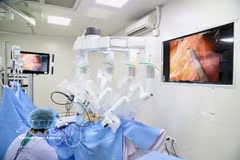
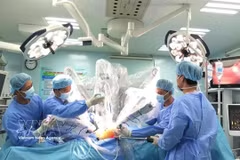
With the assistance of robotic-assisted laparoscopic surgery, doctors successfully perform a complex operation (Photo: VNA)

Vietnam advances towards high-quality, specialised healthcare

Recent developments in Hanoi and other localities highlight efforts to develop specialised treatment, standardise professional practices and apply artificial intelligence (AI) and advanced medical techniques, towards a more modern healthcare system.

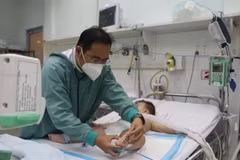
Collecting a sample from a pediatric patient for influenza testing (Photo: VNA)

Ho Chi Minh City acute respiratory infections surge over 64%

According to the Ho Chi Minh City Centre for Disease Control (HCDC), influenza viruses are are among the fastest-rising pathogens, with 151 positive samples in a single week. Influenza A is the dominant strain, with A/H1N1pdm09 in 116 samples, or nearly 77%.