Hung Yen (VNA) – Amid fluctuations in prices and supply of construction materials, the northern province of Hung Yen has taken proactive measures to ease difficulties and stabilise the market.
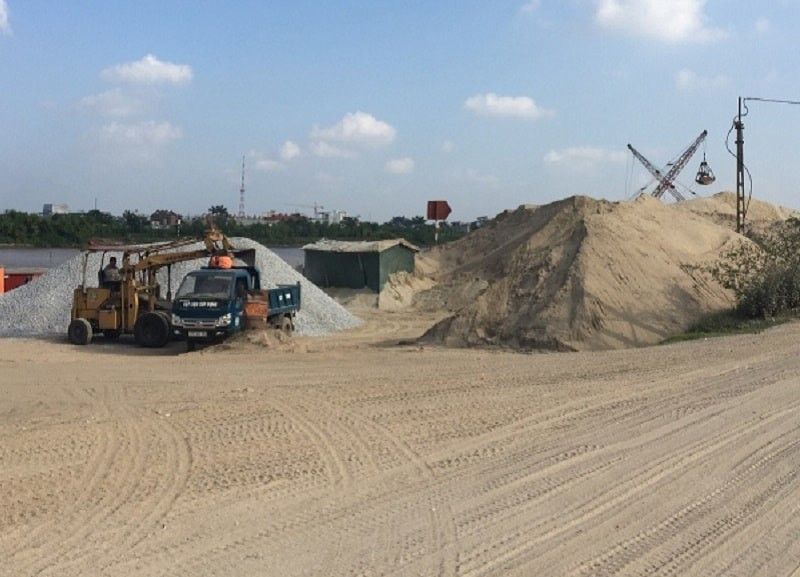
Authorities have accelerated the exploitation of sand, gravel and soil mines while simplifying administrative processes to boost supply for key projects, especially transport and urban works.
This has helped stabilise the local construction material market and provided greater certainty for contractors and investors.
According to the provincial planning, the province has 72 sand mines, including 50 river ones with an estimated reserve of 64.75 million cu.m and 22 coastal ones with around 75 million cu.m.
Currently, nine mines remain within their permit terms, with about 14.6 million cubic metre of reserves.
Of these, two are preparing to close and one has applied for a suspension. Four other river sand mines have got exploration and reserve approvals and are awaiting mining licences, with estimated reserves of 4 million cubic metres
However, total demand for sand in the province is projected to reach 50 million cubic metres by the end of 2026, far outstripping current supply.
For example, the Ninh Binh–Hai Phong Expressway section running through Hung Yen requires between 8.5 and 8.8 million cubic metres of sand, yet only 3 million cubic metres have so far been secured.
Deputy Chairmen of the provincial People’s Committee Lai Van Hoan and Nguyen Hung Nam stressed the need for comprehensive solutions.
They instructed the Department of Agriculture and Environment and the Department of Construction to review and finalise detailed reports on demand and supply plans for the remainder of 2025, the full year 2026, and the 2026–2030 period.Proposed solutions include urging licensed companies to complete procedures and begin exploitation, seeking supplementary supplies from neighbouring provinces, and diversifying materials such as marine sand, ash from Thai Binh 2 thermal power plant, and dredged river sand.
Vibrant construction market
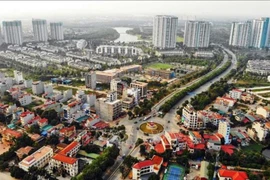
The local construction material market grew more active in the first seven months of 2025, driven by rising investment in infrastructure following the provincial merger. Each district, town and city now hosts 20–30 businesses supplying steel, cement, sand, stone, bricks and tiles, while several major enterprises specialise in large-scale production of steel, bricks and river sand.
The Hung Yen Young Entrepreneurs Association noted that infrastructure projects such as the Hanoi–Hai Phong Expressway, new industrial parks and urban zones have created strong momentum for the construction sector.
Housing, office and manufacturing projects are being rolled out simultaneously, fuelling demand for both materials and labour.This has also energised the real estate market, attracting major domestic and foreign investors.
Competition among contractors has raised construction quality and diversified services, opening a new phase of growth for the province’s economy.
Tran Van Tien, Director of Tien Anh Construction Co., Ltd., said his firm has secured contracts with suppliers, ensuring quality and quantity of key inputs like sand, steel and cement despite price adjustments.On the consumer side, families are also taking advantage of favourable weather to build or renovate homes.
Vu Huy Hoang, a resident of Bac Dong Quan commune, said rising material costs had prompted his family to cut unnecessary items and prioritise eco-friendly, affordable products.
Industry experts predict that global price pressures on raw materials may ease in the coming months, allowing the local construction material market to stabilise.
At the same time, the launch of large-scale public investment projects nationwide and in Hung Yen will sustain strong demand.
To address shortages, provincial leaders have directed agencies to speed up evaluation and approval of mining licences while ensuring strict environmental compliance and post-mining rehabilitation.
Companies are encouraged to use recycled or substitute materials such as thermal power ash and construction waste to ease reliance on natural resources.
With these measures, Hung Yen province expects to remove current bottlenecks in material supply, create favourable conditions for infrastructure and investment projects, and contribute to the province’s socio-economic development targets in 2025 and beyond./.