Indonesia maintains fuel subsidies until late 2026

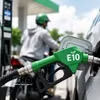
Indonesia will maintain its fuel subsidy policy to keep domestic fuel prices stable through the end of this year, despite rising fiscal pressure caused by currency fluctuations, according to Indonesian Deputy Minister of Energy and Mineral Resources Yuliot Tanjung.

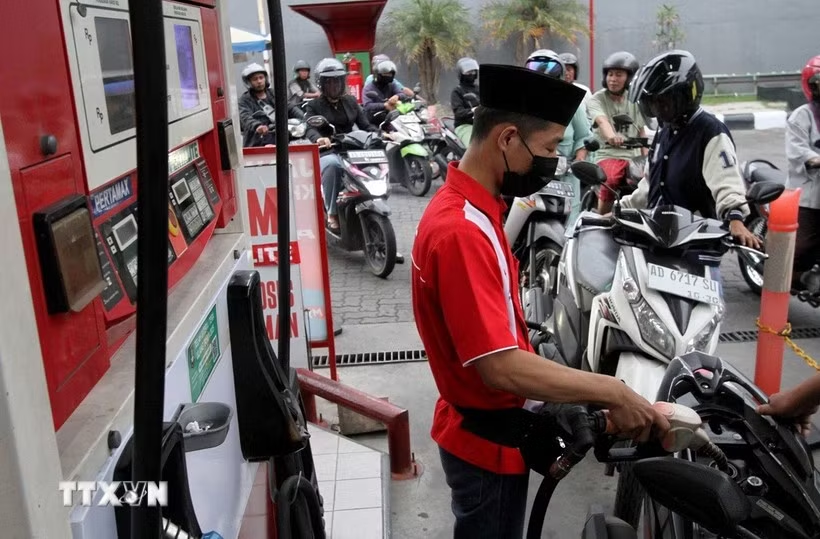
Motorcyclists wait to have their vehicles refilled at a petrol station in Surakarta city, Central Java province, Indonesia. (Photo: Xinhua/VNA)

Hanoi (VNA) – Indonesia will maintain its fuel subsidy policy to keep domestic fuel prices stable through the end of this year, despite rising fiscal pressure caused by currency fluctuations, according to Indonesian Deputy Minister of Energy and Mineral Resources Yuliot Tanjung.

The official said amid concerns over supply stability during currency volatility, Indonesia’s national fuel reserves and foreign exchange reserves remain stable.

The rupiah has recently come under significant pressure, falling to 17,877 IDR per USD, increasing strain on the budget allocated for subsidies.

Amid escalating conflict in the Middle East, which has disrupted shipping through the Strait of Hormuz and pushed global energy prices higher, the Indonesian government has announced a series of transport and fuel policies aimed at ensuring macroeconomic stability and containing domestic costs.

It currently allocates around 210 trillion IDR (12.3 billion USD) for energy subsidies./.

VNA

See more

(Photo: https://thainews.prd.go.th/)

Thailand targets Krabi-Phuket seaplane launch in 2026

The ministry is also establishing a Strategic Integration Committee for the Development of Water-Based Aircraft Operations to coordinate implementation, develop operational guidelines, and ensure compliance with aviation safety standards.

Indonesia eyes becoming regional gold finance hub

Indonesia eyes becoming regional gold finance hub

In the long term, Indonesia aims not only to export raw gold but also to establish itself as a regional gold finance hub, generating greater value-added for its economy and enhancing its role in the global financial system.

A passenger train operated by State-owned railway operator PT Kereta Api Indonesia (KAI) departs from Tugu station in Yogyakarta city, Indonesia (Photo: VNA)

Indonesia tests biofuel for trains

KAI Vice President for Corporate Communications Anne Purba said the transition to B50 biofuel will be carried out in phases and undergo a rigorous testing process to meet the operational requirements of the railway industry, which demands high reliability and continuous operation.

Aircraft park at Suvarnabhumi Airport of Thailand. (Photo: AFP/VNA)

Thailand targets regional aviation hub status by 2029

Thailand is embarking on a wave of aviation infrastructure projects to capitalise on its strategic location between the world’s two most populous markets China and India, thereby cementing Thailand’s role as a key transit and logistics hub in ASEAN and Asia.

Thailand ramps up efforts to eliminate child labour

Thailand ramps up efforts to eliminate child labour

Deputy Government Spokesperson Phatdarasami Thongsaluaykorn noted that alongside ensuring access to education, the Thai Government is promoting vocational skills development and age-appropriate employment opportunities to help young people gain work experience in safe environments while preparing a skilled workforce for the future.

Indonesia digitises, modernises dairy production

Indonesia digitises, modernises dairy production

In addition, the Indonesian government is carrying out a programme to subsidise up to 35% of investment costs for new machinery and equipment for dairy processing enterprises, cooperatives, and farmer groups participating in the supply chain.