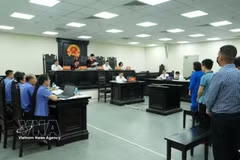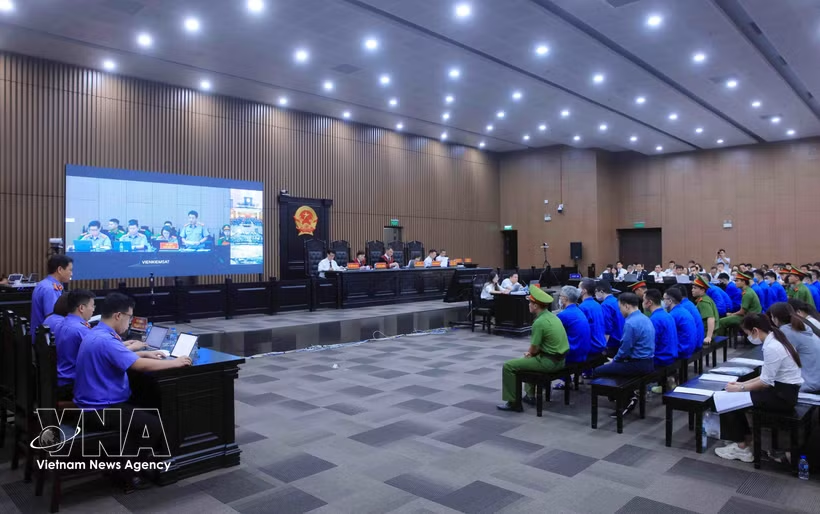
Hanoi (VNA) – Prosecutors on November 4 proposed a life sentence for Pho Duc Nam, also known as Mr Pips, for “fraudulent appropriation of property” and 11-12 years in prison for “money laundering”, with the combined sentence amounting to life imprisonment, at his first-instance trial.
They presented their indictment and sentencing recommendations for all 188 defendants, including Nam, born in 1994 and residing in Tam Thang ward, Ho Chi Minh City. The defendants are charged with “fraudulent appropriation of property”, “money laundering”, “harbouring or trading in property acquired through crime” and “tax evasion”.
For the same two offences, Le Khac Ngo, known as Mr Hunter, faces a proposed life sentence for “fraudulent appropriation of property” and 10-11 years in prison for “money laundering”. His combined sentence would also be life imprisonment.
Nguyen Thanh Phong, who resides in Ben Cau commune, Tay Ninh province, was proposed for eight to nine years in prison for “fraudulent appropriation of property” and five to six years for “money laundering”, with a combined sentence of 13-15 years.
Nguyen Thi Thuy, a resident of Tam Thang ward, Ho Chi Minh City, faces a proposed sentence of five years and eight months to seven years in prison for “money laundering” and “tax evasion”.
Nguyen Hoa Binh, also known as Shark Binh, was handed a proposed imprisonment of nine to 10 years for “money laundering”.
Pho Duc Tuan, a relative of Pho Duc Nam, is subject to a proposed five to six years in prison for “harbouring property acquired through crime”.
The remaining 177 defendants were recommended sentences ranging from 30 months’ imprisonment, suspended, to 20 years in prison for “fraudulent appropriation of property”.
According to prosecutors, the defendants lured victims into investing in international securities and foreign exchange (Forex), building a multi-layered fraud operation in which different groups worked in close coordination, from approaching potential victims and gaining their trust to appropriating their assets.
Victims were drawn into a cycle of repeated deposits until they exhausted their financial resources. Once they could no longer afford to deposit more money, their accounts became unable to place trades or were locked, while the so-called investment experts cut off contact.
Prosecutors stressed that the defendants worked closely and systematically to defraud victims. After causing victims to lose money on one trading platform, they passed their information to accomplices, who then lured them onto another platform with promises of helping them recover their losses. In reality, victims were defrauded again, to the point of financial ruin. Once the defendants realised that victims had no money left, they cut off contact and moved on to seek new targets.
The indictment described the entire network of Mr Pips’ trading platforms as a money-making machine, with each employee receiving 1-4% of the amount deposited by customers. This provided an incentive to lure victims and keep them investing.
Through these sophisticated methods, the defendants appropriated nearly 1.56 trillion VND (60.6 million USD) from 919 victims. Their conduct was typical of organised crime, with clearly assigned roles for each department and close, coordinated cooperation across the operation.
Although they carried out different stages of the criminal scheme, they remained jointly responsible for the assets appropriated from each victim, within the scope of their respective liability for “fraudulent appropriation of property” under Clause 4, Article 174 of the Penal Code.
Prosecutors said the consequences went beyond the money stolen, causing severe economic losses and breaking up victims’ families. Many victims fell into debt and sold all their assets, including their homes, yet remained burdened with debts. Numerous marriages broke down and children lost opportunities to pursue their education. Some victims even contemplated suicide as a way out.
Given the serious and dangerous nature of the crimes, prosecutors said it is necessary to bring the defendants to justice and impose strict sentences to ensure deterrence and prevent similar offences./.

Hanoi court tries 188 in Mr Pips’ 160.4 mln USD investment fraud case
The Hanoi People’s Court on October 26 opened the trial of 188 defendants in a major investment fraud case involving Pho Duc Nam, known as Mr Pips, whose alleged fake trading platforms defrauded more than 900 investors of nearly 1.56 trillion VND (60.4 million USD).