Hanoi (VNA) – The Ministry of Home Affairs is stepping up measures to optimise the local administration apparatus, strengthen human resources, and streamline grassroots administrative structures to ensure the smooth operation of the two-tier local administration model.
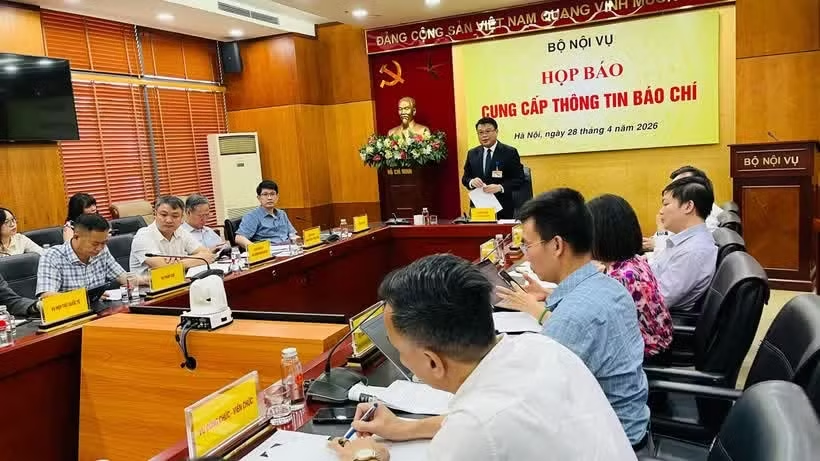
Speaking at the ministry’s press briefing on April 28, Nguyen Thi Tu Thanh, Deputy Director of the Department of Local Government, said that nearly one year after its implementation, the model has produced positive results in improving the efficiency and effectiveness of state administration.
Under the guidance of the Party Central Committee and the direction of the Government, the new model has quickly entered stable operation, creating an important foundation for advancing national governance reform.
However, implementation in reality has also revealed several challenges, including gaps in digital infrastructure, increasing workloads at the commune level, and issues related to the decentralisation of power and delegation of authority.
According to Thanh, one of the most pressing concerns is the lack of synchronisation among information technology systems and digital databases. While online public service platforms have delivered initial benefits, some localities continue to face difficulties in integrating specialised applications and data systems.
Addressing these issues will require stronger efforts to enhance connectivity and uniformity across all levels of government, she stressed.
At the same time, the transfer of greater responsibilities to commune-level authorities has significantly increased workloads for grassroots personnel, many of whom are limited in certain specialised areas.
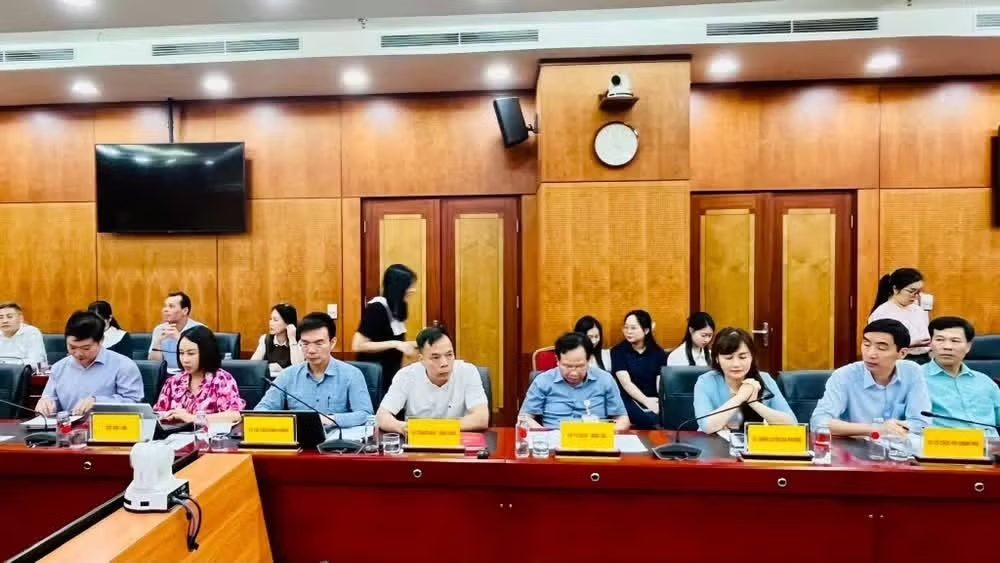
To address these bottlenecks, the Ministry of Home Affairs is prioritising institutional reform. Thanh stressed the need to improve regulations governing power decentralisation, apparatus structures and personnel management in order to ensure clear assignments of authority, responsibilities and accountability, thereby enhancing the effectiveness and efficiency of state governance.
Alongside institutional improvements, strengthening the quality of civil servants and public employees, particularly at the grassroots level, has been identified as a key priority. A major milestone in this effort is the Prime Minister’s Decision No. 700/QD-TTg, issued on April 20, 2026, approving a programme to enhance training for officials and civil servants in communes, wards and special zones during 2026–2031. The initiative aims to align personnel arrangements with new requirements while improving their digital skills, administrative capacity and ability to better perform tasks.
The ministry is also focusing on the efficient management of public assets and surplus offices resulting from administrative restructuring, with the goal of preventing wastefulness and improving working conditions for local personnel.
Another important area of reform involves enhancing the capacity of People’s Council deputies and restructuring villages and residential groups, which serve as vital links between local authorities and citizens.
Through coordination with agencies of the National Assembly, training programmes are being organised to equip newly elected deputies with essential governance knowledge and representation skills.
Meanwhile, the ministry is drafting a decree to institutionalise Party policies on reorganising villages and residential areas. The move seeks to streamline grassroots administrative units while ensuring suitability to conditions and population scales of different regions. It is expected to improve operational efficiency and reduce management pressure on commune-level administration.
The ministry is also reviewing support policies for part-time grassroots personnel to ensure that benefits are aligned with new responsibilities and promote efficient use of public resources.
The first year of implementing the two-tier local administration model is set to undergo a preliminary review in the coming time. The review will assess the remaining challenges, identify best practices and formulate strategic recommendations for the next phase of implementation./.