NA deputy suggests strong growth model transformation to create breakthroughs for 2026–2030

The GDP growth of 10% per year for the 2026–2030 period is an achievable goal if Vietnam successfully transitions to a green, circular, and digital economy.

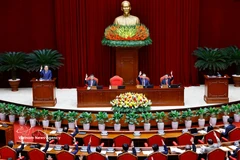
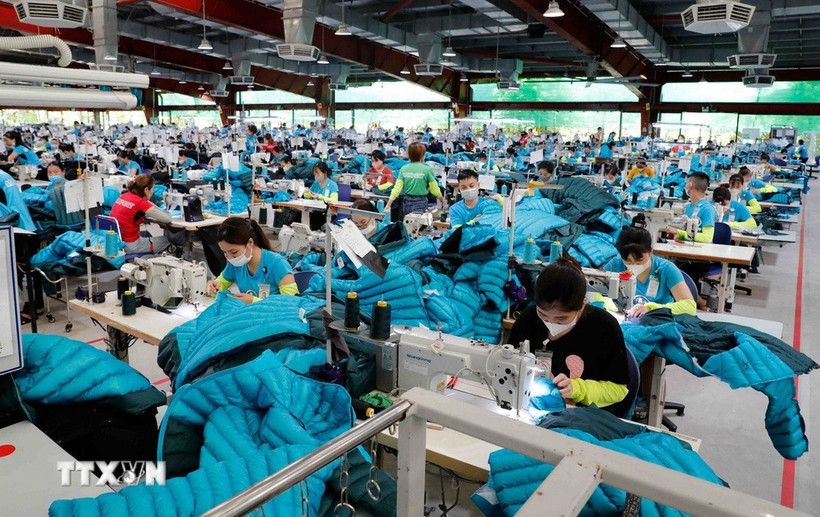
Illustrative image (Photo: VNA)

Hanoi (VNA) - National Assembly deputy Nguyen Quang Huan from Ho Chi Minh City has stressed the need for a radical and synchronised transformation in the growth model, economic restructuring, and effective promotion of new development driver while giving feedback to the draft Political Report to be submitted to the upcoming 14th National Party Congress.

The draft Political Report clearly defines the goals of striving for an average annual GDP growth of 10% or more during the 2026–2030 period, establishing a new growth model, restructuring the economy, and accelerating industrialisation and modernisation, with science and technology, innovation, and digital transformation as the main driving forces.

Huan stated that the achievements gained in the 2021–2025 period have laid an important foundation for fulfilling these goals.

Although there are still limitations, especially in workforce restructuring, improving labour productivity, and applying science and technology, this represents a “meaningful step” for the next term to continue to perfect them. Without the foundations in institutional frameworks, digital transformation, and science and technology established in the past term, the upcoming period will lack the basis for deeper restructuring, he analysed.

Regarding the growth model for the upcoming period, Huan stated that the document has identified two key driving forces: science, technology, and digital transformation; and the private economy. These are two distinct yet closely interlinked factors: the productive forces and the economic components. When combined, they create a “development matrix” that drives productivity, innovation, and the expansion of the economy’s internal strength, the deputy said, noting that the linear growth model based on the three traditional pillars of public investment, resource exploitation, and the FDI sector has now reached its limits.

Meanwhile, the potential of the private sector remains substantial, as it currently contributes only about 55% of GDP. If this share reaches 60% by 2030, combined with strong domestic consumption and accelerated digital transformation, the economy will become less dependent on exports and more autonomous and sustainable.

Regarding the GDP growth target of 10% per year for the 2026–2030 period, Huan considered it an achievable goal if Vietnam successfully transitions to a green, circular, and digital economy. He emphasised that economic development and environmental protection are no longer separate goals but rather two parallel pillars working together toward sustainable growth./.

VNA
See more

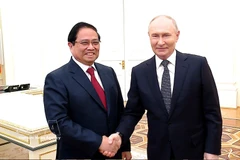
Prime Minister Pham Minh Chinh visits the operational system of the Nhon Trach 3 and 4 power plants (Photo: VNA)

Nhon Trach 3 and 4 thermal power plants reflect Vietnam’s determination, expertise: PM

The Nhon Trach 3 and 4 power thermal plants, invested by Petrovietnam Power Corporation, have a total investment of around 1.4 billion USD. With a combined capacity of 1,624 MW, the plants are expected to supply over 9 billion kWh annually once fully operational, adding substantial baseload power to the system, particularly in the southern region.

Minister of Foreign Affairs Le Hoai Trung receives Non-Resident Ambassador of Nepal to Vietnam Dhan Bahadur Oli in Hanoi on December 13, 2025. Photo courtesy of the Ministry of Foreign Affairs.

Vietnam, Nepal seek to promote deeper, substantive cooperation

Nepalese leaders attach great importance to relations with Vietnam and wish to learn from its experience and development models in socio-economic development and international integration, said Non-Resident Ambassador of Nepal to Vietnam Dhan Bahadur Oli.

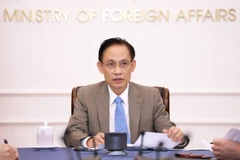
Vietnamese Minister of Foreign Affairs Le Hoai Trung (Photo: VNA)

Vietnamese, Lao foreign ministers hold online talks

The two ministers agreed to maintain close coordination in the time ahead and to expand cooperation under the new framework and orientation, underscoring the significance of the two countries’ “great friendship, special solidarity, comprehensive cooperation, strategic cohesion”.

State President Luong Cuong (fourth from left, first row) and newly-appointed foreign ambassadors in Hanoi on December 12, 2025. (Photo: VNA)

State President receives newly-appointed foreign ambassadors

Receiving Egyptian Ambassador Hany Mostafa Mohamed Mostafa Hassan, President Cuong affirmed that Vietnam highly evaluates Egypt’s role, position, and contributions to regional peace and stability. He also congratulated the African country on its achievements in implementing the 2030 Vision.

An overview of the seminar on the Party’s leadership in ensuring macroeconomic stability, renewing the growth model, restructuring the economy and promoting international integration (Photo: VNA)

Vietnam, Cuba exchange theoretical views on Party’s leadership in macroeconomic stability

The two sides explored in depth the Party’s role in leadership, orientation, oversight and strategic coordination in economic management; approaches to implementing economic restructuring programmes alongside the renewal of the growth model; measures to respond to global economic volatility, inflationary pressures and shifts in global trade; and the building of effective strategic advisory bodies to ensure the Party’s comprehensive leadership in a changing context.

Vietnam’s Ambassador to Australia Pham Hung Tam (Photo: VNA)

Australia–Vietnam Policy Institute serves as bridge for bilateral relations

Established in 2022, AVPI serves as a forum for exchanging ideas among businesses, government agencies, non-profits, universities, and scholars in Australia on Vietnam. The institute acts as a platform for policy dialogue, focusing on research and insights on strategic relations and bilateral economic ties.