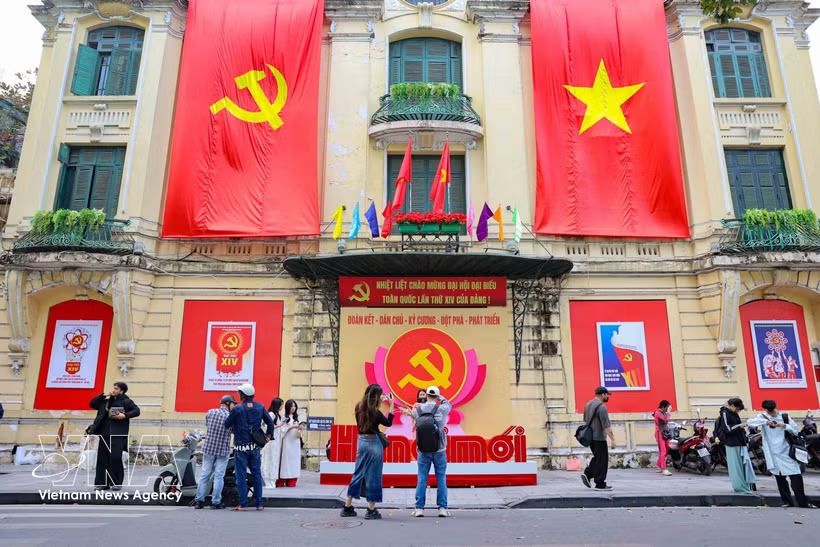
Part 1: Party tempered through ebb and flow of history
Part 2: People enjoy fruits of growth under Party leadership
Part 3: Vietnam advances under Party flag toward bright future
Hanoi (VNA) - The 14th National Congress of the Communist Party of Vietnam (CPV), held from January 19 to January 23, 2026, marks the beginning of a new era - that of the nation’s rise.
Following the resounding success of the 14th National Party Congress, the entire Party, people, and army commemorated the 96th founding anniversary of the CPV (February 3, 1930 – February 3, 2026) in a particularly joyful spirit.
In an article “Steadfast under the Party’s flag” released on that occasion, General Secretary of the Central Committee of the CPV To Lam affirmed that: “Over the course of 96 springs since its inception, especially more than 80 years in power, our Party has demonstrated enduring vitality, steadfast mettle and a correct leadership line, guiding the Vietnamese revolution from one victory to another. Since the Party’s establishment, our nation, with its millennia-old tradition, has written new heroic chapters in its history: leading the people to the successful 1945 August General Uprising and the founding of the Democratic Republic of Vietnam; leading the entire population to victory over colonialism and imperialism in protracted wars of resistance, reunifying the country, and steering the nation onto the path of renewal, construction, development and defence of the socialist Vietnamese Fatherland. Every ebb and flow of history has served as a crucible, tempering the Party and enabling it to grow ever more mature and resilient in its mission of serving the Fatherland and the people.”
According to Professor-Doctor Phung Huu Phu, former member of the Party Central Committee and former Chairman of the Scientific Council of the Central Party Agencies, under the leadership of the CPV, founded and fostered by President Ho Chi Minh, the Vietnamese nation has, in broad terms, traversed two glorious eras.
The first is the era of independence, freedom, and socialism building (1930–1975). It began with the birth of the Party in 1930, leading to the great victory of the August Revolution in 1945, followed by resounding triumphs in the wars of resistance against foreign aggression (1946–1975), and significant achievements in building socialism in the North from 1954 to 1975.
The second is the era of national reunification, renewal, and development (1975–2025), inaugurated by the historic victory in the resistance war against US imperialism, culminating in national reunification in 1975 and the nation’s advance toward socialism. This laid a firm foundation for the Party to launch and lead the Doi Moi (Renewal) process, beginning with the 6th National Party Congress in 1986, ushering in a period of vigorous, comprehensive development across all fields.
Today, Vietnam is entering the third era – that of the nation’s rise, marked by the 14th National Party Congress and the milestone of 40 years of Doi Moi (Renewal).
Each era gives rise, in an objective manner, to historic imperatives that require the nation and its people to respond with the highest resolve and capacity, so as to successfully realise the strategic goals set forth, Phu said.
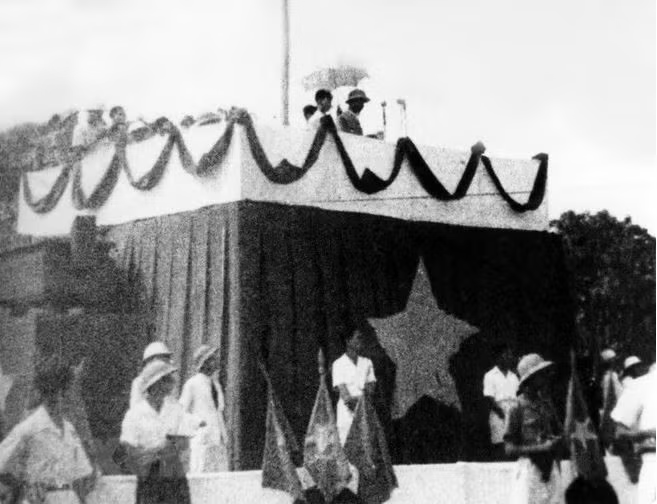
The Party was born at a time when the country was under French colonial rule. It swiftly assumed leadership of major revolutionary movements, including the Soviets Nghe Tinh (1930–1931) and the democratic movement (1936–1939). Under the guidance of Nguyen Tat Thanh, who later became President Ho Chi Minh, the Party established the Viet Minh Front (League for Independence of Vietnam) in 1941, gathering all patriotic classes – from peasants, workers, youths, and women to children – into a strong, united front, preparing for the August Revolution, which overthrew the colonial-feudal regime and gave birth to the Democratic Republic of Vietnam on September 2, 1945.
This 1930-1945 period affirmed the Party’s vanguard role in uniting patriotic forces and transforming the aspiration for independence into reality.
Following the August Revolution, the Party led the resistance war against the French (1946–1954), culminating in the historic Dien Bien Phu Campaign in 1954, which compelled France to sign the Geneva Accords and paved the way for the liberation of the North. This was followed by the resistance war against the US (1954–1975), marked by milestones such as the Dong Khoi movement (1960), the 1968 Spring Mau Than General Offensive and Uprising, and the Ho Chi Minh Campaign, which led to national reunification on April 30, 1975.
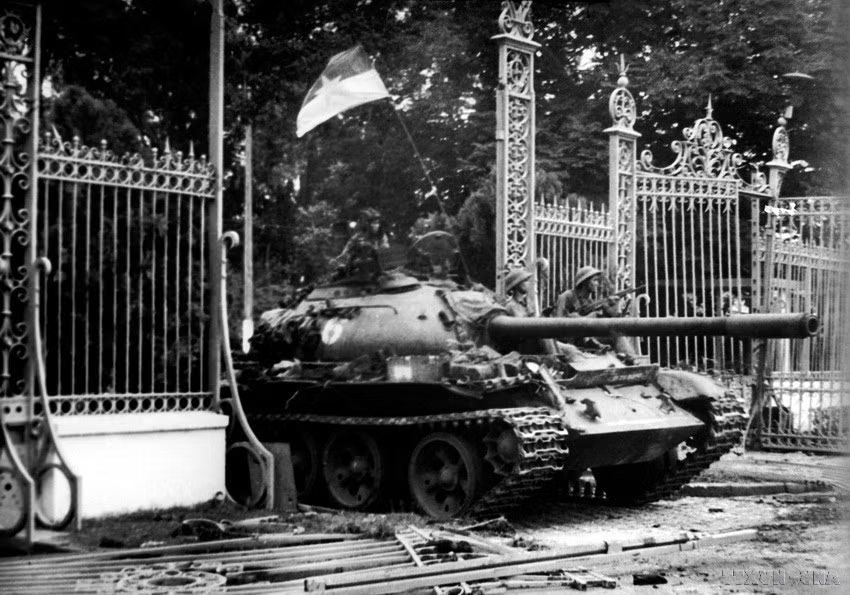
During this period, the Party creatively applied the strategy of people’s war, combining political, military, and diplomatic struggle, safeguarding the newly-gained independence and building socialism in the North despite blockade and embargo.
The 6th National Party Congress in 1986 launched the Doi Moi (Renewal) process, shifting from a centrally planned subsidy system to a socialist-oriented market economy, curbing inflation and driving growth.
Vietnam joined ASEAN in 1995 and the World Trade Organisation in 2007, and signed major trade agreements such as the Comprehensive and Progressive Agreement for Trans-Pacific Partnership (CPTPP) and the EU–Vietnam Free Trade Agreement (EVFTA).
The country has maintained average GDP growth of 6–7% per year, reduced poverty from 58% in 1993 to below 3% in 2025, and emerged as a dynamic economy.
Under the Party’s leadership, Vietnam has deepened international integration, effectively controlled COVID-19, and elevated its global standing.
On the occasion of the 96th founding anniversary of the CPV, the Central Committee of the Lao People’s Revolutionary Party (LPRP) sent a congratulatory message to the CPV Central Committee.
In its message, the LPRP Central Committee wrote that the CPV has been the banner leading Vietnam's heroic and creative revolutionary cause by setting forth sound, wise and skillful guidelines, leading the Vietnamese people to glorious victories in the struggle for national salvation, culminating in national liberation and reunification in 1975, and continuing to carry out comprehensive renewal for 40 years.
The CPV has led the Vietnamese people to secure further great, comprehensive achievements of historic significance, contributing to the firm maintenance of political stability, social order and safety, and rapid, sustained economic growth. People’s living standards have been steadily improved, while national defence and security have been strengthened. External relations and international cooperation have continued to expand, enhancing the role and prestige of both the CPV and Vietnam in the region and the world.
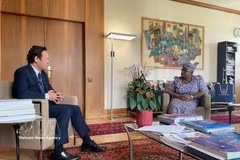
On the occasion of the 80th anniversary of Vietnam’s August Revolution and National Day (September 2), United Nations Deputy Secretary-General Atul Khare extended congratulations to the Vietnamese people and highlighted the country’s remarkable achievements over the past eight decades.
The UN official said he was proud of how far Vietnam has come. From a country in need of aid, Vietnam has transformed into an increasingly developing nation, with practical contributions to global peace and sustainable development. He pointed to Vietnam’s participation in UN peacekeeping operations since 2014 as a clear example. Vietnamese peacekeepers, including police officers, engineering units, and level-2 field hospitals, have been deployed to UN peacekeeping missions in Africa.
Khare praised Vietnam’s efforts in achieving the UN’s 17 Sustainable Development Goals (SDGs), which has helped improve people’s lives and ensure that no one is left behind.
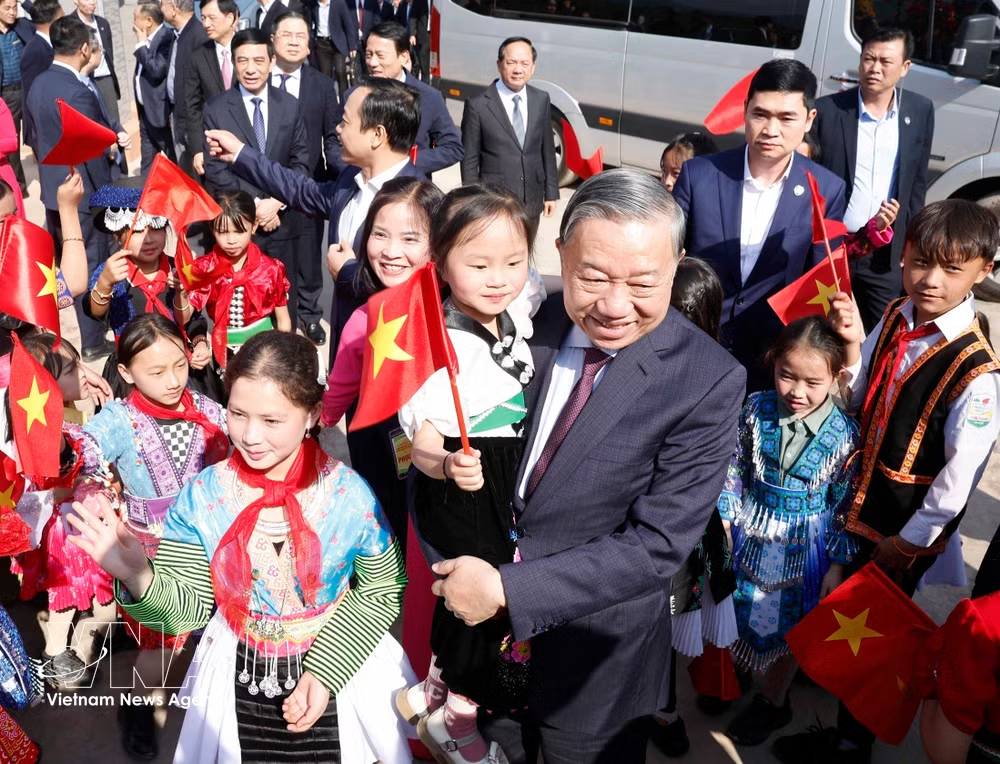
He said the country has made impressive progress in poverty reduction, education, women’s empowerment, and access to clean water. Those valuable experiences of Vietnam are being shared and are useful for many other countries in the world.
Commenting on the role of the CPV, Professor Xu Liping, Director of the Centre for Southeast Asian Studies at the Chinese Academy of Social Science (CASS), said the body has taken the lead in maintaining social stability and a favourable international environment, thereby laying a solid foundation for national construction and development. It has steered the formulation of five-year and long-term development plans, setting the direction for Vietnam’s medium- and long-term growth. In addition, the pioneering and leading role of Vietnamese Party members and officials has created strong momentum for national development, serving as an important source of growth and progress.
He said in the new era, the Party will continue to serve as a pillar of stability and a strategic anchor in strengthening strategic autonomy, enhancing strategic confidence, and steadfastly pursuing Vietnam’s socialist-oriented development path./.