Part 2: People enjoy fruits of growth under Party leadership
Part 1: Party tempered through ebb and flow of history
Part 3: Vietnam advances under Party flag toward bright future
Hanoi (VNA) - Under the Party’s comprehensive, sound and visionary leadership throughout its 96-year glorious journey, Vietnam has achieved remarkable accomplishments across all fields, laying a solid foundation for the nation to enter a new era of development towards prosperity and strength, with the goal of a “prosperous people, a strong nation, democracy, equity and civilisation.”
National strength and position on the rise
From a difficult starting point to historic accomplishments, Vietnam has risen strongly, deepened comprehensive international integration and steadily enhanced its global standing.
More than nine decades ago, in the spring of 1930, the founding of the Communist Party of Vietnam marked a turning point in the nation’s history, opening a new path for the revolution and the country’s future. Since then, the Party has remained closely connected with the people, steadfast in its mission to serve the nation and place the people’s well-being at its core.
Throughout its development, whether in times of hardship or renewal, the Party has overcome challenges, forging a “golden history” shaped by intellect, resilience and national aspiration.
In the decade following reunification (1975 - 1985), Vietnam’s per capita income ranged between 125 - 200 USD per year, placing it among the world’s poorest countries, while inflation peaked at 774.7% in December 1986. Recognising reform as vital, the Party initiated the “Doi Moi” (Renewal) process at its 6th National Party Congress in 1986, marking a historic turning point.

Since then, Vietnam’s economic growth has been strong. GDP growth averaged 4.4% during 1986 - 1990, rose to 8.2% in 1991 - 1995, and maintained relatively high levels in subsequent periods. Between 1990 and 2000, growth averaged 7.5%. During 2006 - 2010, despite challenges, the economy remained stable, with GDP reaching 101.6 billion USD in 2010, over three times that of 2000.
In 2011 - 2020, macroeconomic stability was maintained, inflation controlled, and growth sustained at 5.9% annually in 2011–2015 and 6.8% in 2016–2019. Vietnam became one of the region’s fastest-growing economies and was ranked by the IMF among the top 20 contributors to global growth in 2019.
In 2020, despite global recession caused by COVID-19, Vietnam maintained positive growth of 2.9% and ensured social welfare. The Economist ranked Vietnam among the world’s 16 most successful emerging economies.
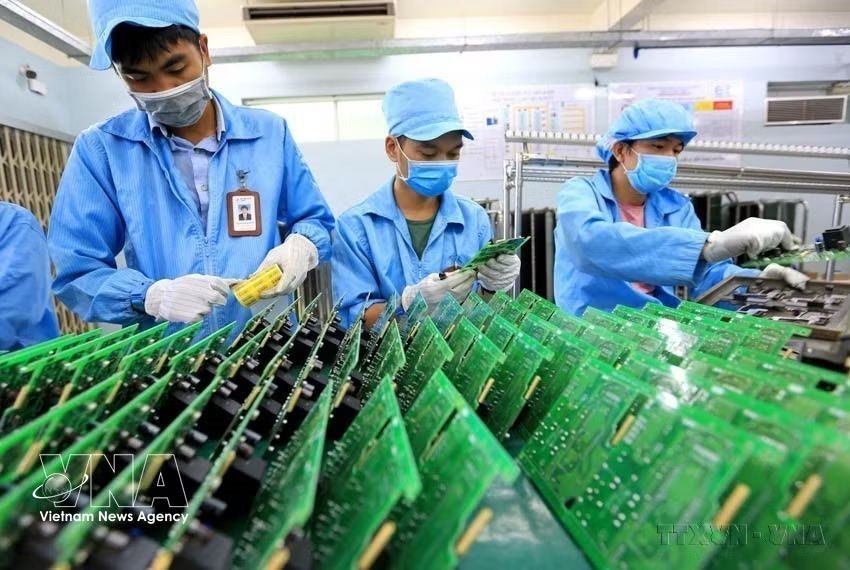
Most strikingly, GDP growth reached 8.02% in 2025, a result that effectively dispelled skepticism from critics reluctant to acknowledge Vietnam’s progress.
American journalist Amiad Horowitz told a Vietnam News Agency reporter that Vietnam stands out as a development success story, while also undergoing a shift in development thinking - from a growth-first approach to one that places people at the centre of sustainable development. He pointed to tangible economic and social indicators, including rapid growth, infrastructure expansion and urbanisation, which have helped lift millions out of absolute poverty. He cited Vietnam’s transformation from a food-insecure country into a major agricultural exporter as a striking illustration of that progress.
“Vietnam going from a country that couldn’t feed itself, to a country that exports food and is able to gift staples like rice to Cuba, a country under assault and in need of such staples, highlights Vietnam’s rapid economic rise and success,” he underscored.
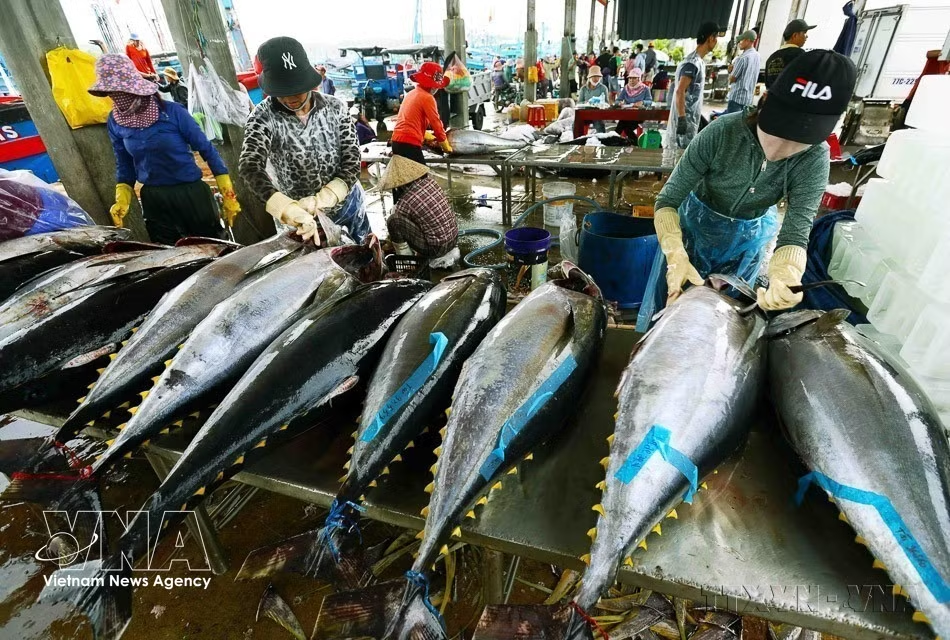
According to a newly released report by the UK-based Centre for Economics and Business Research (CEBR), Vietnam outperformed the global average and ranked among the fastest-growing economies in the Asia-Pacific.
Specifically, the Organisation for Economic Co-operation and Development (OECD) projected global GDP growth at 3.2%, while the IMF and the European Union estimated 3.2% and 3.1%, respectively. In ASEAN, Singapore reported a 4.8% growth, Thailand 2%, and Indonesia 4.9%.
Vietnam's strong showing is especially notable, given its maintenance of macroeconomic stability, with inflation held at 3.31% and key balances, including budget deficits and public, government and external debts kept well within limits.
Its GDP surpassed 514 billion USD in 2025, ranking 32nd globally, up five places from the prior year, and cementing Vietnam's place among the world's largest economies. Per capita GDP reached 5,026 USD, more than 1.4 times the 2020 level, officially elevating Vietnam to the upper-middle-income status.
Vietnam's total trade last year reached about 920 billion USD, up 16.9% year on year. Of the total, exports were valued at 470.59 billion USD, a year-on-year increase of 15.9%, while imports amounted to 449.41 billion USD, up 18%, resulting in a trade surplus of around 21.2 billion USD.
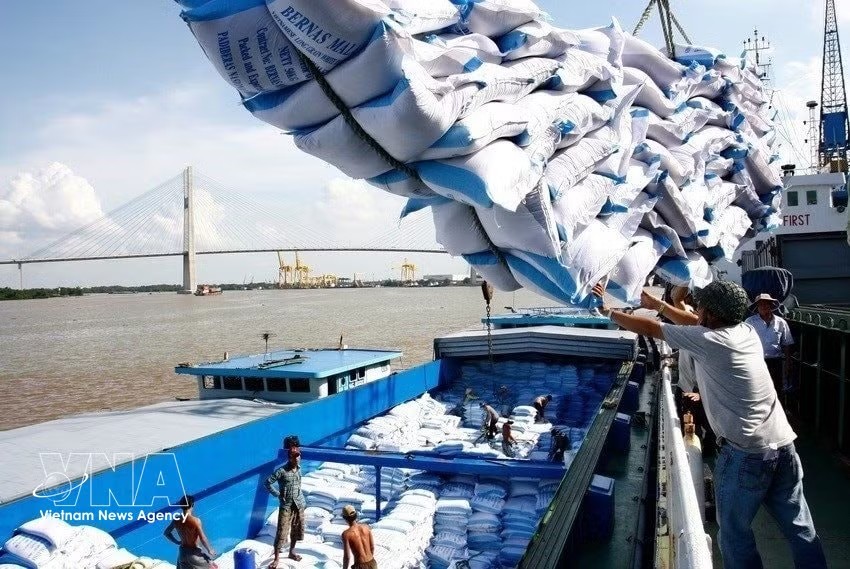
In 2025, amid a global decline in FDI, Vietnam remained a stable and sustainable destination for international investment, with total registered capital, including new and adjusted capital, and investment through capital contributions and share purchases, surpassing 38.4 billion USD, up 0.5% from 2024.
Foreign invested-projects disbursed a total of 27.6 billion USD, up 9% year-on-year, the highest level in five years.
Professor Carl Thayer of the Australian Defence Force Academy under the University of New South Wales emphasised that Vietnam has clearly identified a new development model to shift from export orientated growth based on foreign investment, to export growth based on innovation and digital transformation to move up the production chain to add value to its exports.
For example, instead of importing computer chips to test and package before export, Vietnam aim to promote the private sector and high-tech start-ups to contribute to the next generation in technology, he said.
Vietnam is now among the world’s top 32 economies and top 20 in global trade. The economy has expanded hundreds of times compared to the early years of reform.
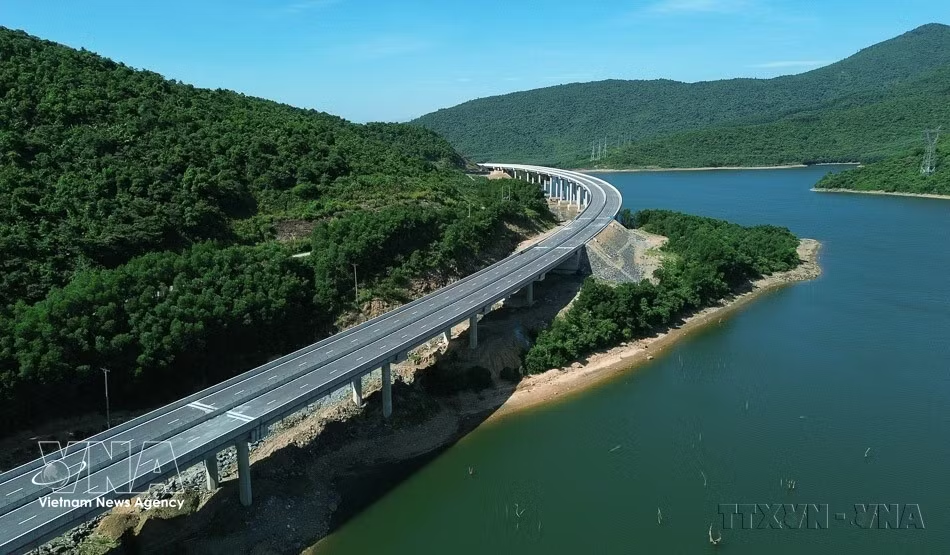
The country has also made breakthroughs across various areas, including infrastructure. By late 2025, Vietnam completed and put into operation around 3,345km of expressways and 1,711km of coastal roads, exceeding targets set by the 13th National Party Congress.
Particularly, the adoption of the two-tier local government model marked the beginning of a new era for the country - a bold step in administrative reforms.
“A historic administrative reform has been conducted. Following restructuring, Vietnam now has 34 provinces and centrally-run cities, down from 63, and 3,321 commune-level units, down from more than 10,000. The district-level administration was abolished nationwide. These changes aim to streamline governance, strengthen accountability, and improve services for citizens and businesses,” said Chinese researcher Weiwei.
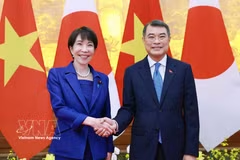
Regarding foreign relations, the country has established diplomatic relations with 194 countries and maintains strategic and comprehensive partnerships with major powers, including all five permanent members of the UN Security Council. It is an active member of ASEAN and over 70 international organisations.
As of October 2024, Vietnam has signed and implemented 17 free trade agreements, including new-generation deals such as the EVFTA and CPTPP, helping expand access to major markets and enhance export competitiveness.
Vietnam is an active and responsible member the international community, joining more than 70 key international organisations and forums. Since June 2014, Vietnam’s Ministry of National Defence has successfully deployed nearly 1,100 officers and personnel to United Nations peacekeeping missions and headquarters, both as individual experts and in formed units.

(Source: World Bank Vietnam)
Mariam J. Sherman, World Bank Division Director for Vietnam, Cambodia, and Laos emphasised that Vietnam has a strong opportunity to enter a new growth cycle in 2026, the first year of a new five-year period targeting double-digit GDP growth.
The country has a significant advantage: controlled inflation and low public debt provide the government room to respond to global uncertainty while protecting stability.
To succeed, public investment must work better - spending more efficiently, not just spending more. This requires stronger project preparation and faster implementation to close gaps in energy, transport, and logistics, which directly affect competitiveness, she said.
Simultaneously, the business environment needs continued improvement. Investors need predictability: clear rules and transparent procedures. The Party’s Resolution 68 shows Vietnam’s commitment in creating an enabling environment for the private sector to thrive.
Finally, human capital is crucial; the next growth model requires higher skills. Investing in people is as important as investing in infrastructure. Underpinning all of this are strong institutions - the “breakthrough of breakthroughs” - which ensure strategies turn into results, said the WB official.
People at core of development
The international community sees in Vietnam not only impressive GDP growth figures, but more importantly a country that places the well-being and development of its people at the centre of its policies. Positive assessments by foreign scholars and policymakers reflect not only recognition of these achievements, but also growing expectations that Vietnam will continue to serve as a “beacon” for other developing nations to follow.
Vietnam has made notable progress in poverty reduction, achieving the Millennium Development Goal on extreme poverty 10 years ahead of schedule. The poverty rate fell to below 3% by 2020. The country has also become a regional leader in applying multidimensional poverty measures.
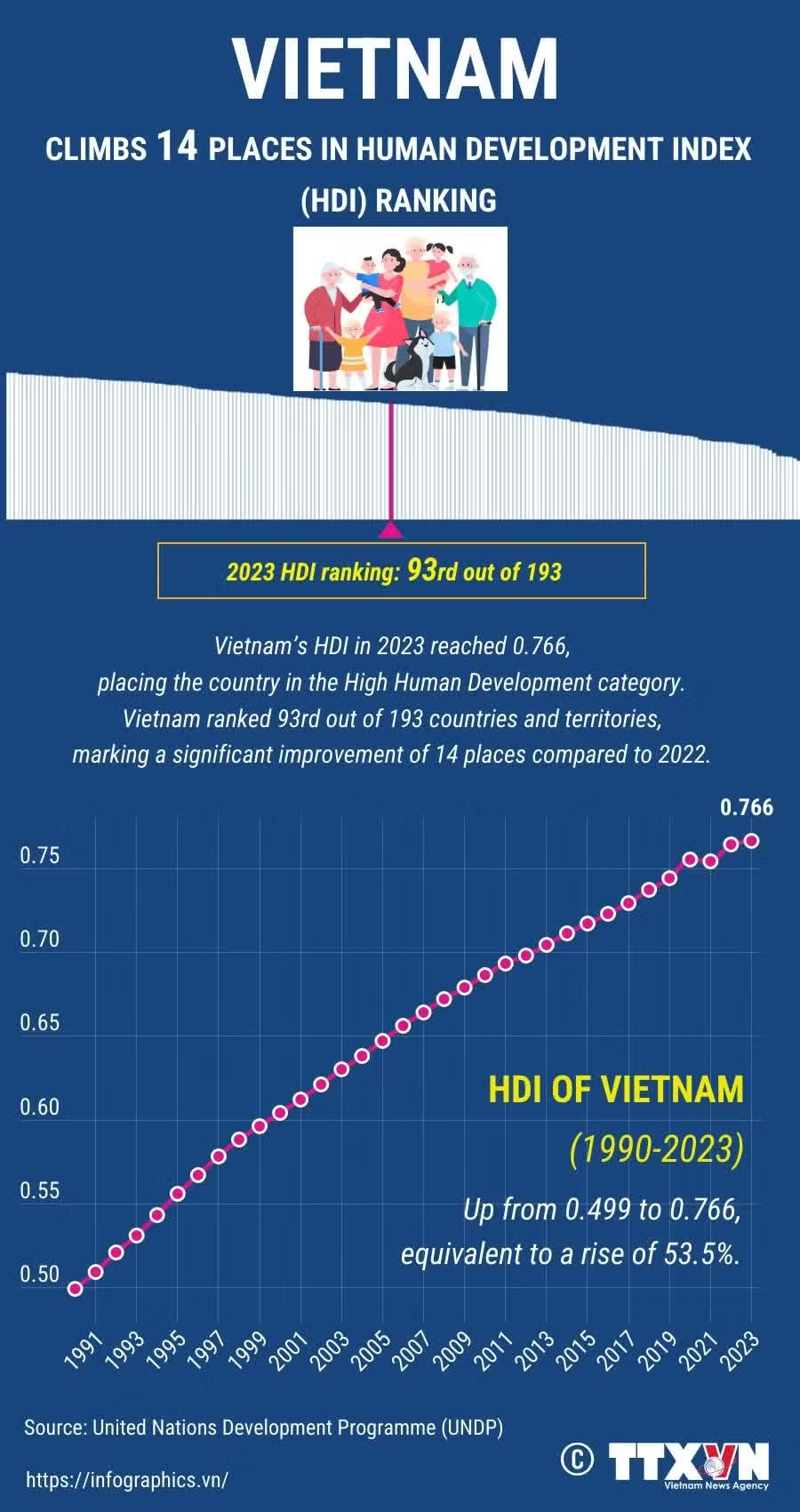
Human development has improved significantly, with the Human Development Index rising from 0.499 in 1990 to 0.766 in 2023, placing Vietnam among countries with high human development, ranked 93rd out of 193.
UNDP Resident Representative Ramla Khalidi noted that Vietnam has much to be proud of in poverty reduction, with economic gains shared fairly and only a small minority still facing extreme poverty. She observed that rapid, sustainable growth and job creation have been key drivers, alongside a structural shift from agriculture to industry and services. She stressed the Government’s central role through national target programmes on poverty alleviation, rural development, and efforts to achieve universal access to education and health care.
Social welfare has expanded, with over 19.3 million people covered by social insurance as of November 2024. Meanwhile, 686 social housing projects with over 627,000 units have been launched nationwide, reflecting strong policy commitment to social security.
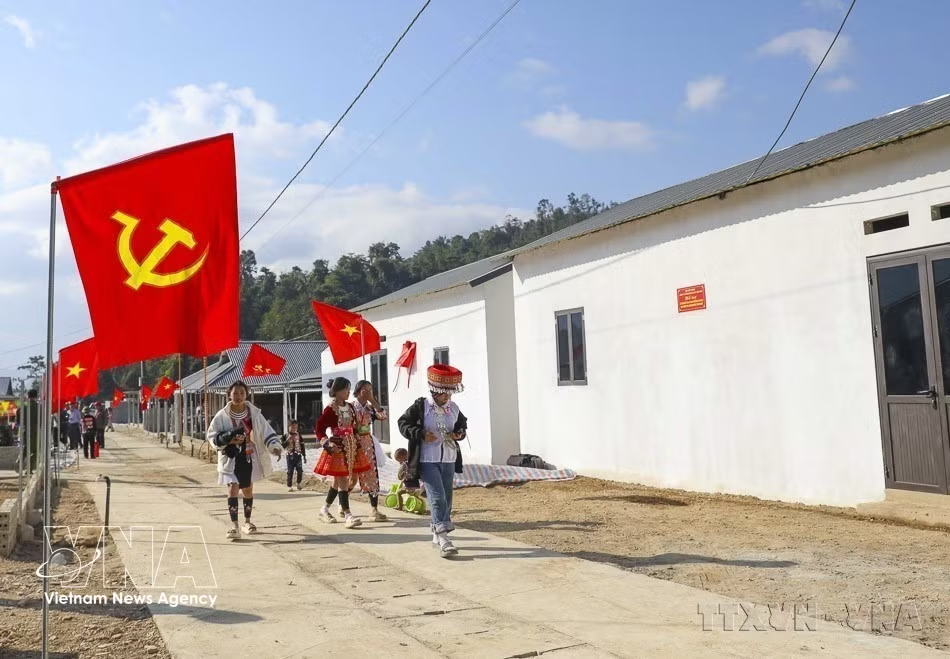
Economic growth has been more closely linked with social progress and equity. The multidimensional poverty rate fell sharply from 4.4% in 2021 to 1.3% in 2025, surpassing targets set by the 13th National Party Congress. By September 2025, Vietnam had replaced 334,234 makeshift and dilapidated houses nationwide, completing the task three years ahead of schedule – a deeply humane achievement. More than 3.5 million people now receive regular social assistance, 55% of whom are elderly.
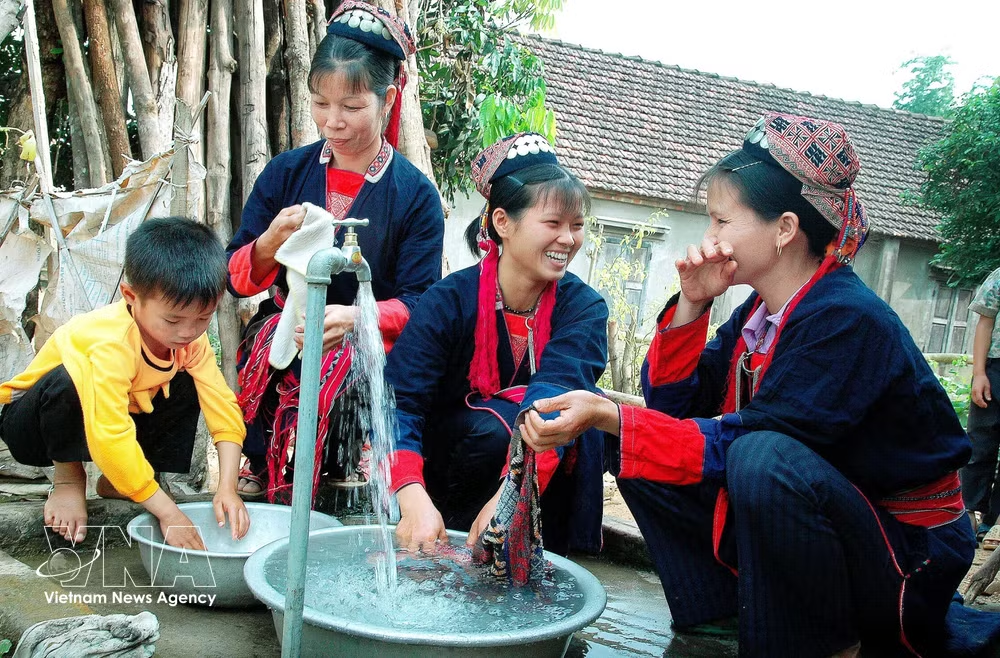
Alongside this, health care quality improved markedly. Vietnam mastered many advanced medical techniques, health insurance coverage rose from 90.9% in 2020 to 95.2% in 2025, and average life expectancy reached 74.8 years, with 67 years lived in good health.
The proportion of trained workers rose from 64.5% in 2020 to 70% in 2025, while those holding degrees or certificates increased from 24.1% to around 29%. Vietnam’s vocational training quality index now ranks among the top three in ASEAN.
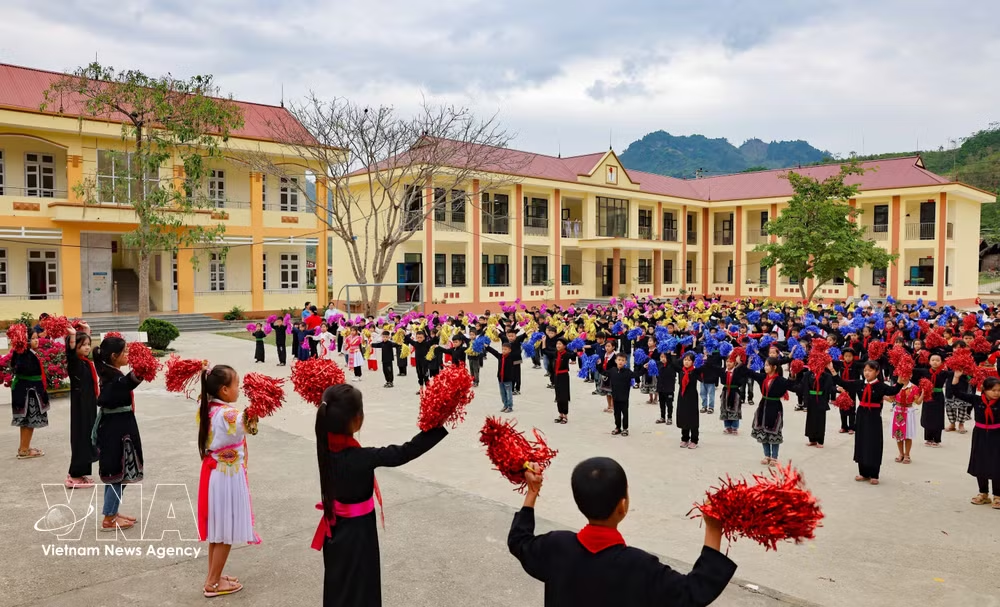
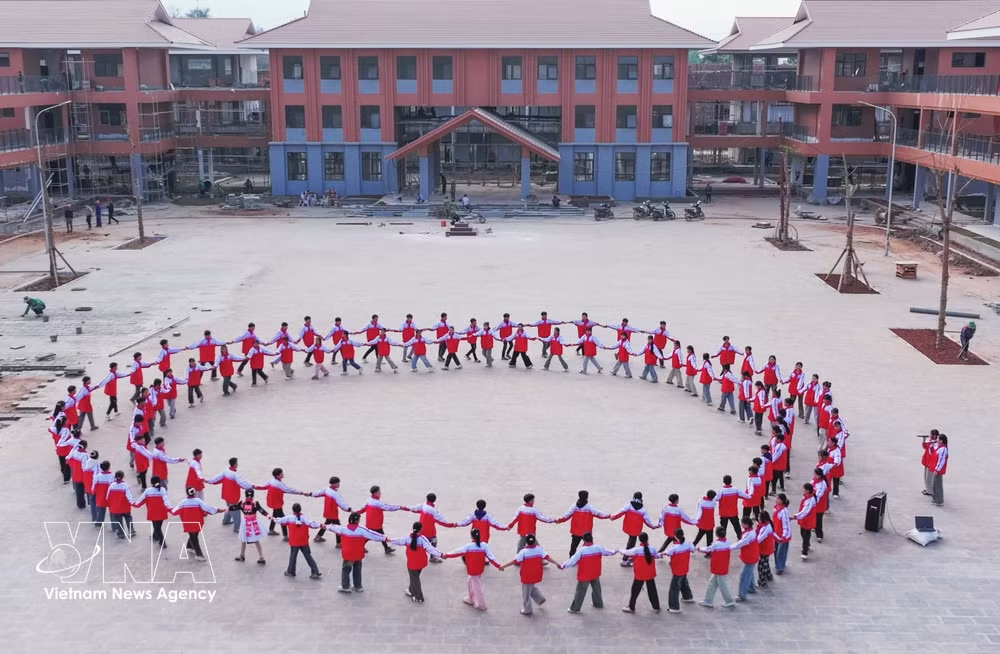
Breakthrough policies include tuition exemptions and support for preschool to high school students, investment in boarding school systems in border communes, promotion of education socialisation and lifelong learning. Higher education reform, coupled with enhanced institutional autonomy, has also boosted training and research quality. In 2024, six Vietnamese universities entered the QS World University Rankings 2025, while six were listed among Asia’s best universities in 2024.
In the Resolution of the 14th National Party Congress set the target of HDI reaching around 0.8. Average life expectancy at birth is expected to rise to about 75.5 years, with at least 68 years lived in good health; the share of agricultural labour in the total workforce is to fall below 20%; and the proportion of trained workers holding degrees or certificates is projected at 35 - 40%.
The poverty rate (under the multidimensional poverty standard for 2026 - 2030) is set to decline by 1 - 1.5 percentage points annually. Vietnam also aims to rank among the world’s top 40 countries in terms of happiness.
The 14th National Party Congress has become a milestone marking a clear shift in Vietnam’s development thinking, with a focus on sustainable development, a people-centred approach, deeper international integration, and the effective implementation of strategic breakthroughs through a coherent system of resolutions, steering the country to a new area of development and prosperity./.