Part 3: Vietnam advances under Party flag toward bright future
Part 1: Party tempered through ebb and flow of history
Part 2: People enjoy fruits of growth under Party leadership
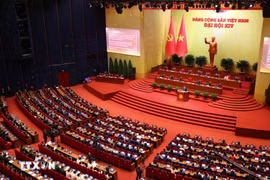
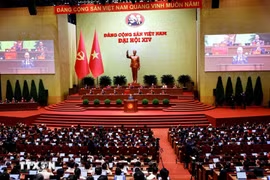
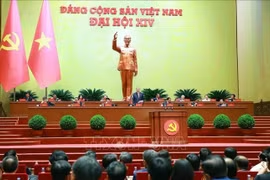
Hanoi (VNA) - Throughout Vietnam’s revolutionary history, the leadership of the Communist Party of Vietnam has always been the decisive factor in every victory. Entering a new era - one of the nation’s rise, the Resolution of the 14th National Party Congress has sketched out comprehensive and strategic viewpoints, goals, and solutions, opening a path toward a bright future for the country.
It must be affirmed that the Resolution is the crystallisation of innovative thinking, long-term vision, and the Party’s steadfast political mettle. It not only sums up the achievements of 40 years of Doi Moi (Renewal) but also introduces new breakthroughs in institutions, science and technology, and development models. In particular, the Party emphasises the need for “strong breakthroughs in development institutions” to unlock all resources and maximise the socio-economic potential. This is the key for Vietnam to make a leap forward in an increasingly competitive global context.
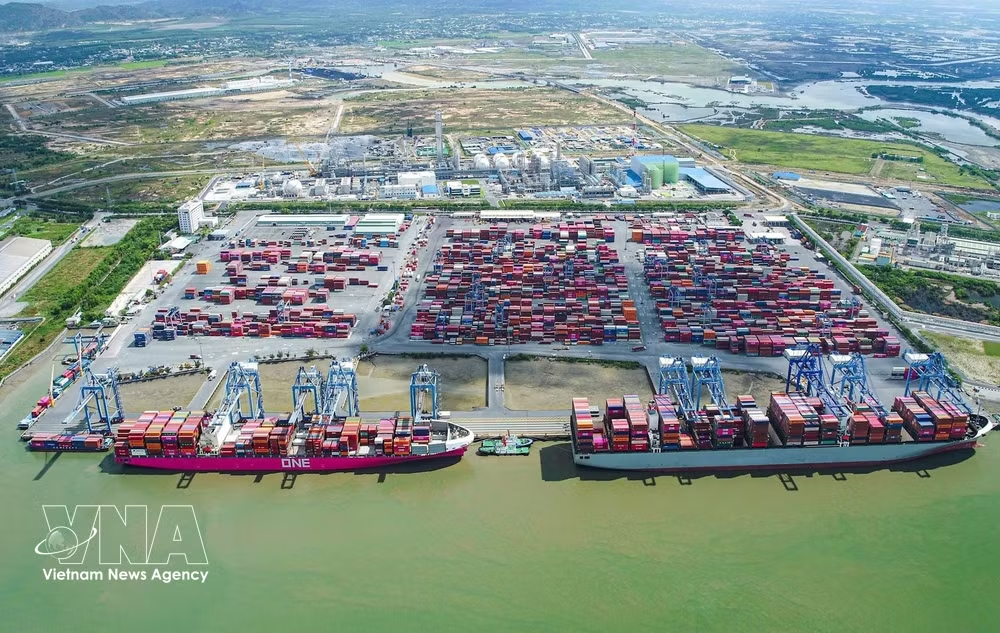
One of the highlights of the development orientation in the new era is the pursuit of rapid and sustainable growth based on science, technology, innovation, and digital transformation. The Party Central Committee has clearly identified the promotion of digital transformation, green transition, energy transition, and human resource restructuring as the core drivers of growth. This demonstrates that Vietnam is not only keeping pace with global trends but also proactively participating in shaping them.
Evaluating the policies set forth in the Resolution of the 14th National Party Congress, some international experts observed that Vietnam is emerging as a model of balanced development between economic growth and political stability, and between international integration and the maintenance of independence and self-reliance. They argued that the Party’s emphasis on “strategic autonomy” and “self-reliance” is a sound choice in an unpredictable global environment. This also reflects Vietnam’s foresight and its capacity for flexible adaptation.
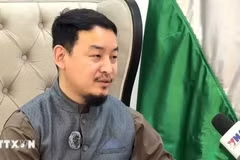
Gilbert Tenèze, head of the France – Vietnam Friendship Association chapter in Eure-et-Loir province, told Vietnam News Agency (VNA) correspondents in France that the outcomes and orientations affirmed at the 14th National Party Congress reflect the image of a nation deeply attached to its roots yet driven by an inspiring development vision, supported by a leadership team that listens and adopts a pragmatic approach to national issues.
According to Tenèze, the reforms currently underway in Vietnam demonstrate a clear consistency between policy directions and implementation, thereby strengthening confidence in the country’s long-term development path. Vietnam’s reform efforts and development orientations have contributed to a marked enhancement of the country’s standing in Southeast Asia and globally. Vietnam is increasingly seen as a partner of substance and influence, including in its relations with France, he said.
In addition, the foreign policy outlined at the 14th Congress continues to be elevated, clearly reflecting the identity of a peace-loving, responsible nation that is proactive in international integration. The Resolution affirms that promoting foreign relations and international integration is a “central and regular task,” contributing to the creation of a peaceful and stable environment for development. Beyond expanding relations, Vietnam is also actively participating in addressing global issues, thereby enhancing its international standing and prestige.
")
Vietnam’s foreign policy that supports multilateralism, especially at a time when the roles of some international organisations are being questioned, including in areas such as public health, child protection and refugee assistance, is very significant, stated Tenèze. Vietnam’s proactive and responsible participation in multilateral frameworks, he noted, is an important factor in maintaining peace and stability.
The Resolution sets out a vision centred on firmly maintaining peace and stability; pursuing rapid and sustainable development while safeguarding national defence; comprehensively improving people's living standards; strengthening strategic autonomy, self-resilience and confidence; and advancing resolutely into a new era of national development. It targets Vietnam becoming a developing country with modern industry and upper-middle income by 2030 and a high-income developed nation by 2045, for a peaceful, independent, democratic, prosperous, civilised and happy Vietnam steadily advancing towards socialism.
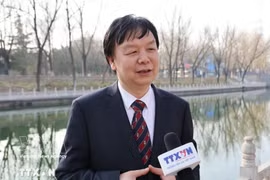
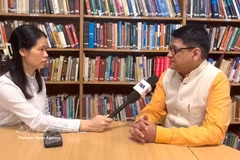
“What impressed me most is Vietnam’s long-term goal of becoming a modern developing country with upper-middle income by 2030 and a developed, high-income country by 2045. This goal is grounded in Vietnam’s current development foundation, demonstrates confidence in the future, and reflects the country’s firm determination to achieve long-term prosperity through structural reforms,” said Chairman of the Regional Comprehensive Economic Partnership (RCEP) Industry Cooperation Committee Xu Ningning in an interview with VNA reporters in Beijing.
He affirmed that from a strategic perspective, this goal will drive Vietnam to continuously strengthen efforts in areas such as upgrading industrial value chains, technological innovation, and infrastructure development. These areas are closely aligned with the key directions of regional cooperation under RCEP, maximising the benefits of regional openness. “This will not only provide sustainable momentum for Vietnam’s development but also inject new vitality into regional economic cooperation,” he noted.
He added that the foreign policy of “independence, self-reliance, comprehensiveness, diversification, deep and effective international integration,” outlined at the 14th National Congress, aligns with Vietnam’s aspiration for “deep integration into the global economy” and, by maintaining multilateralism and active regional coordination, can help create a stable external environment for the country’s economic development.
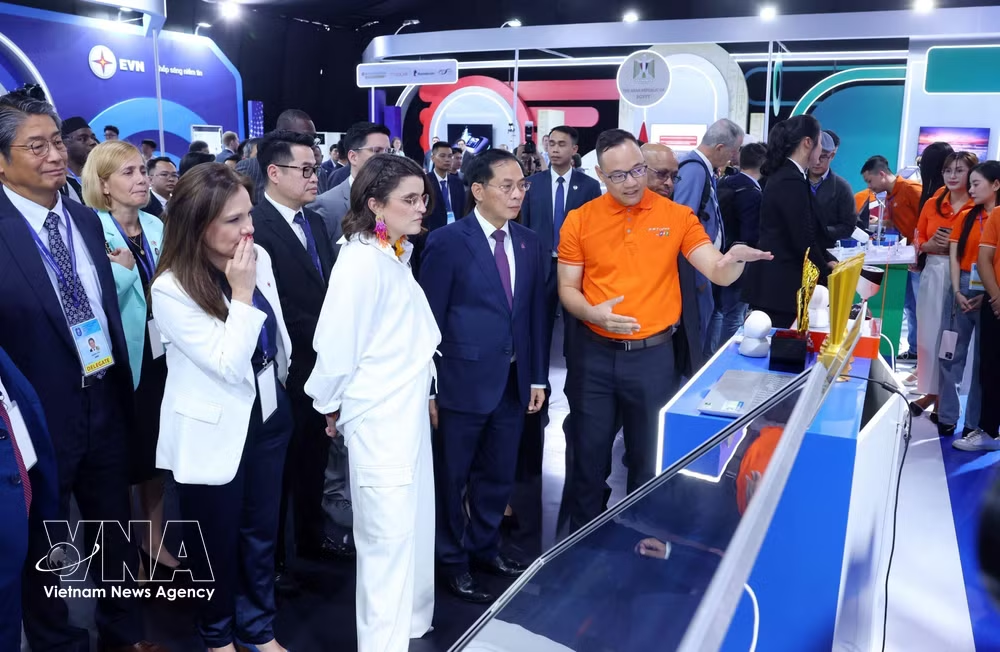
He cited that over 40 years of reform and opening up, Vietnam’s international standing has made remarkable strides: from being isolated to establishing diplomatic relations with 194 countries, becoming one of the nations with the most extensive diplomatic networks in Southeast Asia. The country has built strategic partnerships with major world powers, ranks among the top 15 trading nations globally, stands second in ASEAN, and has become an important link in regional supply chains.
Today, Vietnam actively participates in multilateral mechanisms such as ASEAN and the Mekong–Lancang Cooperation, demonstrating the dynamism of a developing economy and making significant contributions to maintaining regional peace and stability as well as promoting trade liberalisation, he said.
To achieve the above strategic goals, the role of the Communist Party of Vietnam is of paramount importance. Commenting on the Party’s role in the new era, Professor Xu Liping, Director of the Centre for Southeast Asian Studies at the Chinese Academy of Social Science (CASS), stated that as Vietnam enters a new era, the Communist Party of Vietnam will play an even stronger leadership role in shaping development pathways and strategies, as well as in responding to an increasingly complex international environment. In particular, the Party will serve as a stable force in strengthening strategic autonomy, enhancing strategic trust, and steadfastly pursuing the socialist-oriented development path.
According to Xu Ningning, in the new era, the Party’s leadership should focus on strategic direction and resource mobilisation. On the one hand, it should continue to deepen reforms and promote the transformation of the economic structure toward a digital and green economy. On the other hand, it should ensure foreign investor confidence through policy stability, leverage regional cooperation mechanisms such as RCEP to turn geographic advantages into development drivers, and coordinate the development of various sectors to safeguard the country’s overall progress in a complex global context.
In his article titled “The 14th National Congress of the Communist Party of Vietnam and the advance toward a new era”, published on aladaainternacional.com of the Latin American Centre for Studies on Asia and Africa, Cuban scholar Dr Ruvislei González Saez said that Vietnam is no longer viewed solely as an “Asian tiger,” but is entering a transformative phase toward becoming a middle power. This transition, he noted, requires Vietnam to reshape not only its domestic development strategies but also its modes of engagement on the international stage, across both bilateral and multilateral levels.
According to the article, after nearly a century of leading the nation through successive challenges, the Communist Party of Vietnam now faces a new historic mission: guiding the country into what has been termed “the era of national rise,” and realising the aspiration for a strong, prosperous, and happy Vietnam, to attain developed-country status by 2045.
To achieve this, Vietnam must continue addressing key challenges, including strengthening anti-corruption efforts, improving the quality of human resources, refining institutional and business environments, managing debt risks, and accelerating innovation and development in line with the Fourth Industrial Revolution. In the author’s assessment, Vietnam now stands at the threshold of a new development era, driven by strong aspirations and substantial potential.
The 14th Party Congress is, therefore, of decisive importance for the country’s future transformations, particularly amid an international environment marked by uncertainty and volatility. While this phase may be among the most complex of the renewal process, it also presents a critical opportunity for Vietnam to break through and evolve from an “Asian tiger” into a regional “dragon,” he said.
Politburo resolutions: From strategic design to action imperative
Over recent years, the Party’s guidelines have proven not only sound in theory but also deeply embedded in socio-economic life, generating clear shifts across all sectors.
Through the coordinated implementation of a series of key resolutions, the country is steadily advancing toward faster and more sustainable development, firmly entering a new era of national rise.
Since late 2024, the Politburo has issued nine strategically significant resolutions, covering most of the country’s key sectors, ranging from science, technology, innovation and national digital transformation to international integration, lawmaking and enforcement, private sector development, national energy security, education-training, public health, state economic development, and the development of Vietnamese culture.
Speaking at a September 16, 2025 conference disseminating Politburo resolutions — Nos. 57, 59, 66 and 68, Party General Secretary To Lam called them four strategic pillars to propel the country’s takeoff.
Resolution No. 57-NQ/TW on breakthroughs in the development of science, technology, innovation and national digital transformation was issued on December 22, 2024.
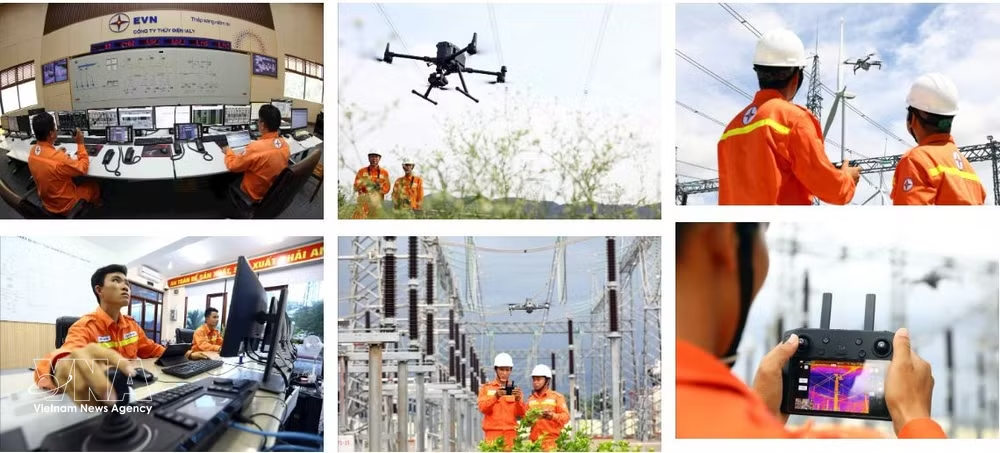
The resolution underscores that the development of science, technology, innovation and national digital transformation is a top strategic breakthrough and the primary driver for accelerating the country’s breakthrough development and prosperity in the new era.
Issued on January 24, 2025, Resolution No. 59-NQ/TW on international integration in the new context sets the overarching goal of improving the quality, effectiveness, coherence and comprehensiveness of international integration, while maintaining a peaceful and stable environment for national development.
It also seeks to maximise external resources to build an independent, self-reliant and resilient economy, ensuring fast and sustainable development.
Resolution No. 66-NQ/TW on renewing law-making and enforcement to meet the requirements of national development in the new era was issued on April 30, 2025.
Under the resolution, by 2030, Vietnam will have a democratic, equitable, coherent, consistent, publicly accessible, transparent and feasible legal system.
Resolution No. 68-NQ/TW on private sector development, issued on May 4, 2025, affirms that the private sector is “the most important driver of the national economy.”
The resolution sets the target that by 2030, Vietnam will have 2 million private enterprises, contributing 55–58% of GDP and accounting for 84–85% of total employment.
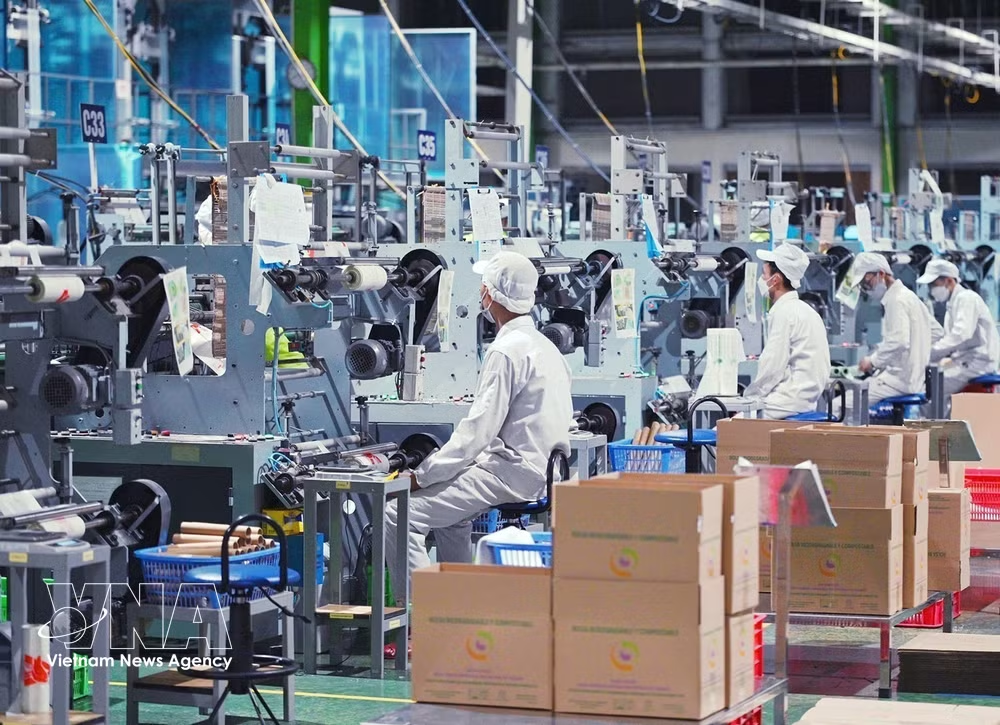
By 2045, it aims to develop a fast-growing, sustainable and globally competitive private sector that serves as a true pillar of an independent and self-reliant economy.
The Politburo’s issuance of nine resolutions in quick succession underscores the Party’s development vision and political resolve in the new phase. Broad in scope, the resolutions form a coherent framework, reflecting a comprehensive, long-term and system-oriented development mindset.
A notable point is that the nine resolutions do not stand in isolation but are designed as a strategic policy package aimed at removing major bottlenecks hindering development. Their overarching goal is to unlock resources, promote innovation, unleash productive capacity, and at the same time improve people’s living standards and national competitiveness. This approach reflects a clear shift from a management mindset to one focused on enabling and development.
At the strategic level, the resolutions are seen as an important foundation for realising the country’s two centennial goals. These are not merely symbolic milestones, but political commitments that require sustained, continuous, and coordinated efforts across the entire political system.
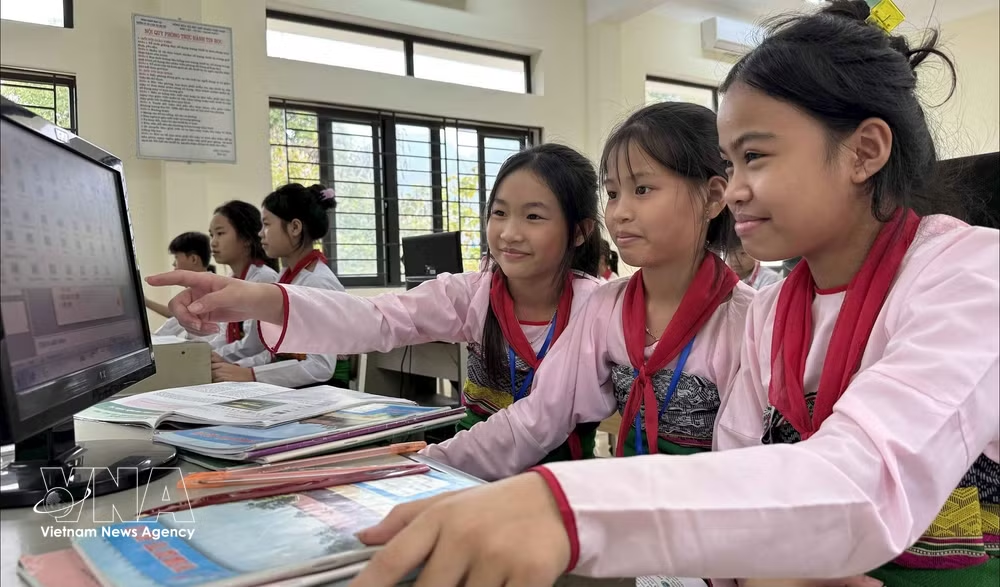
The spirit of action to implement the resolutions was emphasised by General Secretary Lam at the September 16, 2025 conference.
Accordingly, the focus is on rapidly shifting from “policy issuance” to “implementation governance,” taking citizens and businesses as the centre, and real-world effectiveness as the measure. This message underscores higher requirements for implementation capacity, administrative discipline, and accountability across all levels and sectors.
Notably, the core contents of the resolutions have been distilled and incorporated into the political report submitted to the 14th National Party Congress. This shows that the resolutions are not only of immediate relevance but also play a role in shaping strategic thinking, vision, and the country’s development orientation toward the mid-21st century.
General Secretary Lam said the country’s new development momentum is formed from the organic linkages among the resolutions.
In an interview granted to the Vietnam News Agency, Dr Valeria Vershinina, Deputy Director of the ASEAN Centre at MGIMO University in Moscow, described the resolutions as timely and essential for achieving Vietnam’s long-term ambition of becoming a high-income country by 2045.
She viewed recent administrative reforms as part of a broader shift in governance thinking, aimed at unlocking new growth drivers as traditional engines lose momentum.
“Vietnam needs to unlock new economic engines and improve public and legal systems,” she emphasised, adding that the resolutions help translate long-term strategic vision into concrete and practical policies.
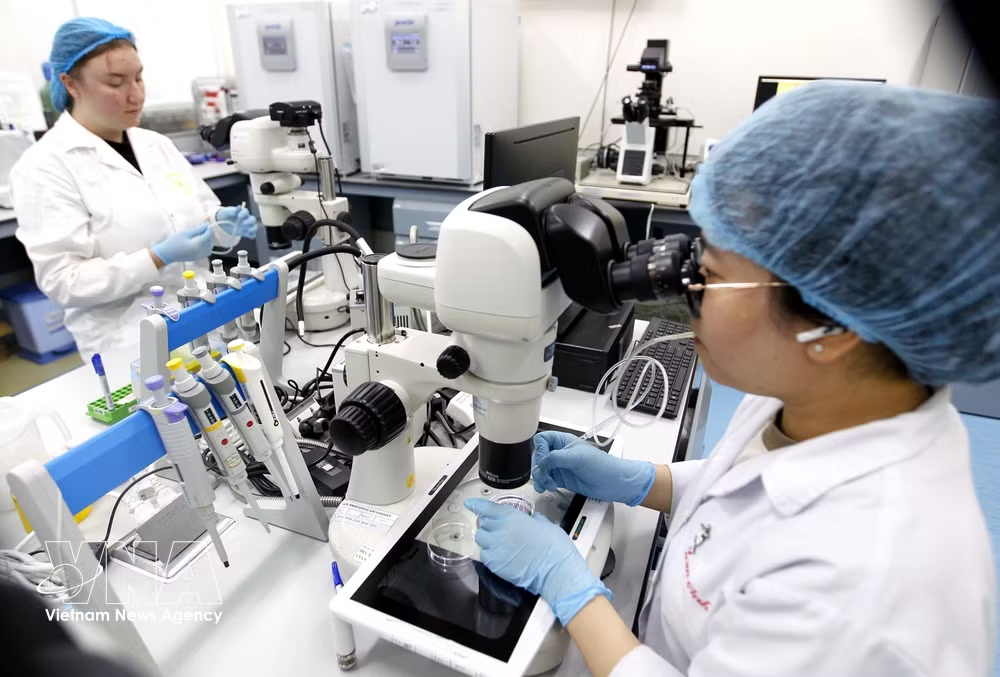
US journalist Amiad Horowitz, a member of the International Commission of the Communist Party USA, also viewed the resolutions as crucial for enabling Vietnam to move beyond a manufacturing- and agriculture-based growth model, especially in emerging fields such as artificial intelligence and advanced technology.
“If Vietnam wants to compete in the modern fields of AI and tech development, then new human-resource capabilities, education, technological infrastructure, and legal and systemic advances will be needed,” he explained.
Professor Carl Thayer of the Australian Defence Force Academy under the University of New South Wales highlighted the interlinked nature of the resolutions, noting that they are designed to be implemented simultaneously rather than in isolation.
He singled out Politburo Resolution No. 59-NQ/TW on international integration as particularly significant, as it strengthens the linkage between foreign relations, defence and security in an increasingly complex external environment./.