Preserving Bau Truc pottery heritage in modern life

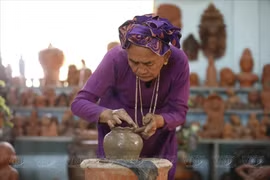
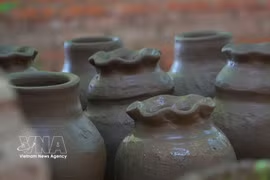
Bau Truc pottery is distinguished by its traditional handmade techniques. Without pottery wheels or moulds, Cham women use their hands to shape clay, water and fire into unique products that embody the community's folk knowledge, customs, memories and cultural identity.

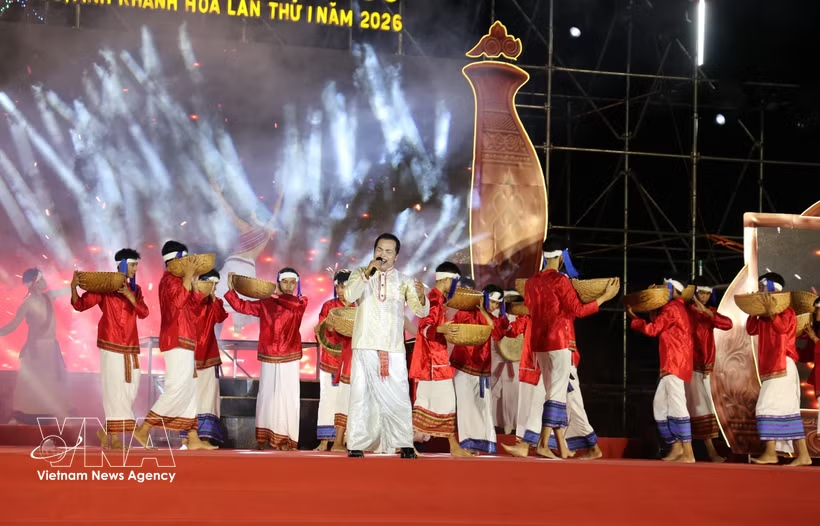
A dance performance celebrates the traditional craftsmanship of the Cham people in Ninh Phuoc commune, Khanh Hoa province. (Photo: VNA)

Khanh Hoa (VNA) – The first Bau Truc Cham Pottery Festival 2026 opened on October 10 in Ninh Phuoc commune, the south-central province of Khanh Hoa, celebrating the Cham people's pottery-making art and promoting local cultural heritage and community-based tourism.

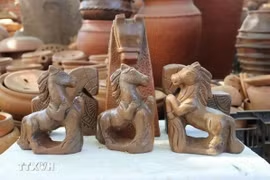
​Held during the Kate festival, the event showcases Bau Truc pottery, My Nghiep brocade weaving, OCOP products, local cuisine and tourism attractions. Visitors can browse pottery ranging from everyday items such as vases, jars and pots to decorative pieces, watch artisans at work and join a “One day as a Bau Truc potter” experience.

Artisan Chau Thi Nghiep said pottery-making has been passed down through generations of Cham women. Children in the village grow up watching their mothers and grandmothers select and prepare clay, shape products, decorate them and fire them. She hopes younger generations will learn the craft, understand its value and preserve the skills handed down by their ancestors.​

Bau Truc pottery is distinguished by its traditional handmade techniques. Without pottery wheels or moulds, Cham women use their hands to shape clay, water and fire into unique products that embody the community's folk knowledge, customs, memories and cultural identity.

Quang Thuc Doan, Chairman of the Ninh Phuoc commune People's Committee, noted that the Cham people's pottery-making art was inscribed on UNESCO's List of Intangible Cultural Heritage in Need of Urgent Safeguarding in 2022.​

He stressed that Bau Truc pottery represents more than clay products, carrying the craftsmanship, daily life, beliefs and spirit of generations of Cham people. Many elderly artisans continue to pass on their skills despite their advanced age.

Preserving the heritage requires ensuring that the craft continues to be practised, passed down and valued in contemporary life, he said. The locality plans to support artisans in training younger generations, encourage cooperatives and producers to improve quality and diversify products, and strengthen promotion, market access and links with cultural and community-based tourism.​

Ninh Phuoc also hopes to connect Bau Truc pottery with My Nghiep brocade weaving, Kate celebrations, Cham cuisine and community experiences to develop new tourism products, create jobs and raise local incomes. The festival is expected to inspire younger people to take pride in their heritage and keep the craft alive as older artisans gradually retire.​

The programme also brought the pottery story to life through artistic performances under the theme “The soul of Bau Truc pottery”. Cham instrumental music, folk songs and dances recreated the community's cultural life and the craft's history.

The highlight was the “Bau Truc flame” ceremony. Accompanied by Ginang and Paranung drums and Saranai horns, a ceremonial fire was lit as performers danced around it, inviting residents and visitors to join. The flame symbolised the bond between the land, the craft and successive generations.

For Bau Truc villagers and artisans, the festival is not merely a showcase of products but also an opportunity to meet customers, share the stories behind their creations and help young people experience and understand their ancestors' craft firsthand./.
VNA

See more

Construction on APEC Phu Quoc Multi-purpose Performance Hall (Photo published by VNA)

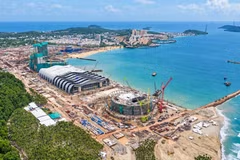
APEC 2027: Inside the making of Asia’s landmark theatre

One year in, Sun Group’s APEC Phu Quoc Multi-purpose Performance Hall is taking shape as one of Asia’s largest theatres. It boasts 54,680 sq.m of floor area, 17,250 sq.m of roof, six above-ground floors plus a basement, and 4,030 seats, larger than Hollywood’s Dolby Theatre, the Oscars venue.

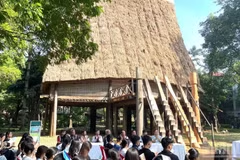
Visitors will enjoy free admission to the Vietnam Museum of Ethnology on Vietnam Culture Day (November 24). (Photo: nhandan.vn)

Free admission to museums, historical sites, national parks on Vietnam Culture Day

Organisations and individuals will be entitled to free admission every year on November 24 to eight museums: the Museum of Oceanography, the Vietnam Museum of Ethnology, the Museum of the Cultures of Vietnam’s Ethnic Groups, the Vietnam National Museum of History, the Vietnam National Fine Arts Museum, the Yersin Museum, the Vietnamese Women's Museum and the Vietnam Military History Museum, as well as the Independence Palace historical site.

Vietnamese Consul General in Perth Pham Hai Anh (Photo published by VNA)

Vietnamese community in Australia seen as bridge for bilateral ties

Vietnamese identity and life in Australia are complementary rather than separate. The more successful overseas Vietnamese became in Australia, the greater their ability to contribute to their homeland and bilateral ties, said Vietnamese Consul General in Perth Pham Hai Anh.

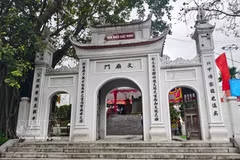
Van Lake within the Temple of Literature (Photo: VNA)

UNESCO Representative: Quoc Tu Giam offers inspiration for new approaches to education

UNESCO Representative to Vietnam Jonathan Wallace Baker said one of the things that stands out in Vietnam is the deep and enduring respect for education, learning and scholarship. Van Mieu –Quoc Tu Giam is a remarkable expression of that tradition, reminding that knowledge, talent and ethical responsibility have long been closely connected in Vietnamese society.

A highlight of the programme is the participation of 950 students in performances staged within the Temple of Literature complex (Photo: VNA)

950 years of Quoc Tu Giam: Continuing Vietnam’s enduring tradition of learning

Through evocative images of students of the Quoc Tu Giam, alongside performances by students and artists, the programme vividly recreated the journey of Vietnam’s scholarly tradition, from the era of the imperial examinations to the spirit of learning in contemporary society. It also helped bring the cultural values of Thang Long-Hanoi to life today.

Students pose for a photo at the ceremony (Photo published by VNA)

Mother tongue connects Vietnamese community in Belarus

Vietnamese language education in Belarus not only helps younger generations take pride in their heritage and better understand and appreciate traditional culture, but also serves as a bridge for promoting Vietnamese culture among international friends.

General Secretary of the Communist Party of Vietnam Central Committee and President To Lam (fourth from left, first row) and his spouse, Ngo Phuong Ly, attend the Vietnam-Japan Friendship Concert in Kanagawa Prefecture on November 10 evening. (Photo: VNA)

Vietnam-Japan Friendship Concert fosters cultural cooperation

In his welcoming remarks, Vietnamese Ambassador to Japan Pham Quang Hieu said the concert brought together talented musicians from the Vietnam National Symphony Orchestra and artists who are current or former members of renowned Japanese orchestras, including the NHK Symphony Orchestra, Tokyo Metropolitan Symphony Orchestra, New Japan Philharmonic and Kanagawa Philharmonic.

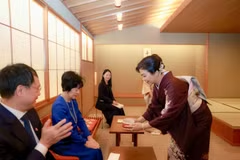
Madame Ngo Phuong Ly offers the first bowl of tea to Akiko Santo, former President of the House of Councillors of Japan. (Photo published by VNA)

Top Vietnamese leader’s spouse experiences traditional Japanese culture

After learning about the history of the tea ceremony, Madame Ly was invited to enjoy traditional sweets and tea, and then to try preparing tea herself. She respectfully offered the first bowl of tea to Akiko Santo, former President of the House of Councillors of Japan and the oldest guest present.

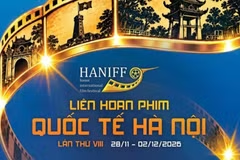
The 8th Hanoi International Film Festival (HANIFF VIII) is scheduled for November 28 to December 2, 2026. (Photo: the organising board)

Hanoi Int’l Film Festival 2026 to connect cinema, heritage, tourism

According to organisers, five public screening venues will be set up in Ba Dinh, Hoan Kiem, Dong Anh, Son Tay and Cau Giay, combining film screenings with art performances and exchanges with audiences. The initiative aims to expand access to films and bring cinematic works closer to local residents.