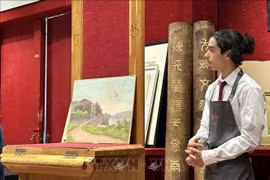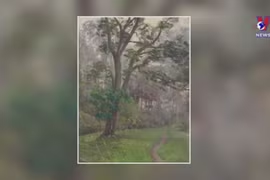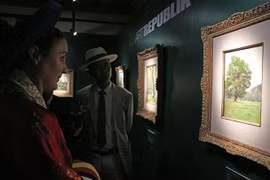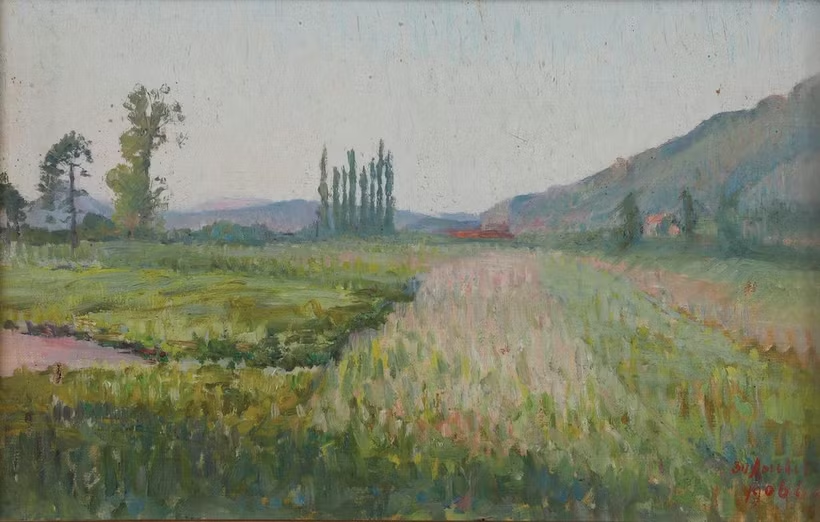
Hanoi (VNA) – A collection of rare paintings by King Ham Nghi (1871-1944) is being introduced to the public in Hanoi through the exhibition “Troi, Non, Nuoc | Allusive Panorama,” following the success of its first showing in the central city of Hue.
Featuring 20 artworks by the King, the exhibition offers visitors in the capital their first opportunity to view a substantial body of his paintings gathered in a single space. The event is jointly organised by Art Nation, Institut français du Vietnam, and the Van Mieu–Quoc Tu Giam Cultural and Scientific Activities Centre. It takes place from April 24 to May 10 at the Thai Hoc House within the Temple of Literature complex.
The exhibition was first held in March 2025 at Kien Trung Palace within the UNESCO-recognised Hue Imperial Citadel, where it drew approximately 110,000 visitors. The Hanoi showcase represents the second stage of the exhibition’s journey, bringing the collection closer to audiences in the north and expanding public access to these rare works.
Organisers emphasised that “Troi, Non, Nuoc | Allusive Panorama,” is a non-commercial initiative, as the artwork in the exhibition is not for sale. The 20 paintings have been assembled from 10 private collections, many of which had not previously been displayed publicly. The works have recently been repatriated to Vietnam and subjected to professional appraisal, conservation, and restoration to ensure their long-term preservation.
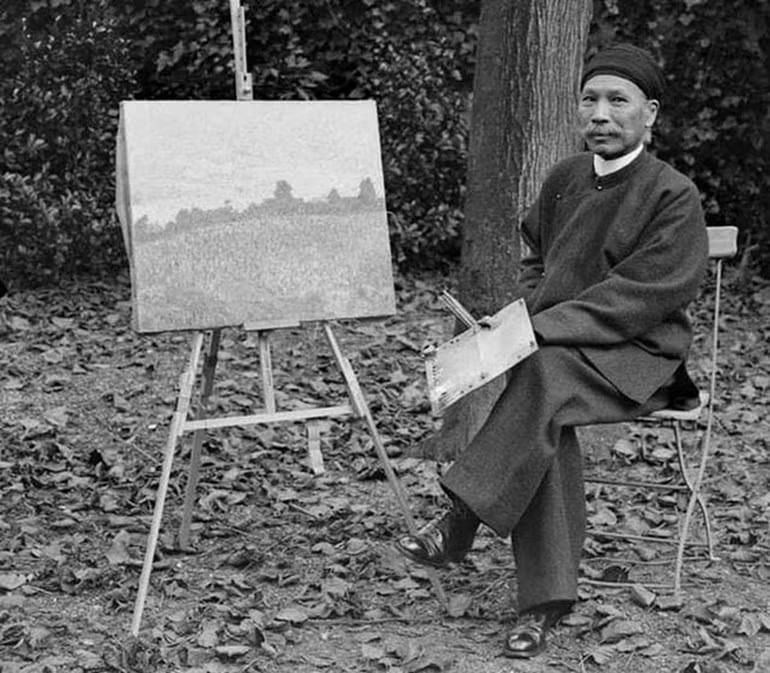
The collection presents landscapes from Algeria and southeastern France, locations closely associated with the King’s life in exile. Executed in Impressionism and Post- Impressionism styles, the paintings are said to capture not only natural scenery but also the emotional depth of a historical figure living far from his homeland. Through colour, light, and composition, the works reflect solitude, nostalgia, and moments of quiet contemplation.
Art researcher Ace Le and Dr. Amandine Dabat, a fifth-generation descendant of King Ham Nghi curated the exhibition. As the granddaughter of Anne Dabat, herself the daughter of Princess Nhu Ly, Dr. Dabat has played a key role in researching and bringing renewed attention to the King’s artistic legacy.
Born in 1871, Ham Nghi was the eighth ruler of the Nguyen dynasty (1802-1945). He is widely recognised in Vietnamese history as a patriotic leader who launched the Can Vuong movement against French forces. After being captured by colonial forces, he was exiled to Algeria, where he spent the remainder of his life until his death in 1944.
While his political legacy has long been acknowledged, his role as an artist has, for decades, remained largely overlooked. According to curator Ace Le, Ham Nghi was the first Vietnamese artist to receive formal training in Western academic art, positioning him as an early pioneer in the formation of modern Vietnamese fine arts and the broader Indochinese art tradition.
During his years in exile, the King reportedly turned to painting as a means of personal expression and emotional release. Research by Dr. Amandine Dabat cites writings attributed to Ham Nghi, in which he described his artworks as reflections of his inner world—capturing both sorrow and fleeting joy. Painting, he suggested, served as both a creative outlet and a source of comfort during a period marked by displacement and introspection.
Beyond its artistic value, the exhibition also carries cultural and historical significance. It forms part of activities marking the 950th anniversary of the founding of Quoc Tu Giam (1076–2026), Vietnam’s first national university and a symbol of the country’s long-standing tradition of learning.
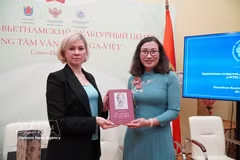
Director of the Van Mieu–Quoc Tu Giam Cultural and Scientific Activities Centre Le Xuan Kieu said the exhibition contributes to efforts to transform the heritage site into a dynamic cultural and creative space. He noted that displaying the works of King Ham Nghi at the Temple of Literature highlights the enduring importance of knowledge, creativity, and cultural continuity in Vietnamese society.
The exhibition is expected to become a cultural highlight during the upcoming holiday period, attracting both domestic and international visitors while fostering deeper public engagement with Vietnam’s artistic heritage.
Director of the Institut français du Vietnam Eric Soulier expressed hope that the event would allow audiences to encounter King Ham Nghi from a more personal perspective, not only as a historical figure but also as a sensitive and accomplished artist.
He added that the project contributes to strengthening cultural dialogue and underscores the lasting connections between Vietnam and France, particularly in the fields of art and heritage./.