Ho Chi Minh City (VNA) – The Politburo’s Resolution No. 23-NQ/TW, dated August 2, 2026, on overseas Vietnamese (OV) affairs has generated strong consensus, confidence and enthusiasm among Vietnamese communities around the world.
Those with close ties to Ho Chi Minh City have expressed strong confidence in the Party and State’s policies and offered practical, feasible proposals to help translate the resolution into reality.
The resolution marks a significant shift in strategic mindset, for the first time defining the more than 6.5 million Vietnamese living abroad as a “strategic resource” for national construction, development and defence. For many overseas Vietnamese, this represents a transition from simply being supported and mobilised to actively “accompanying and co-creating” development mechanisms.
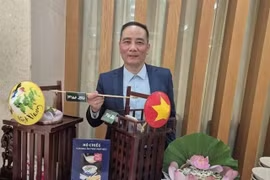
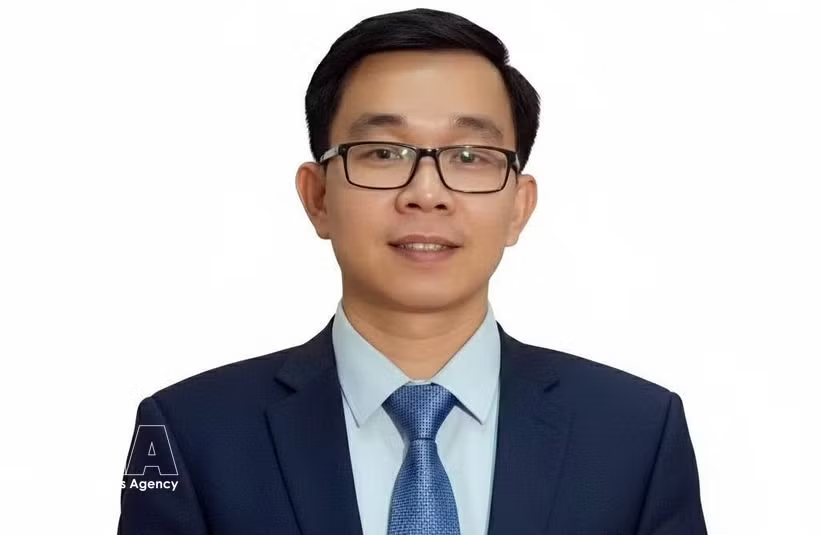
Nguyen Thanh Liem, Chairman of the Association of Vietnamese People in Chungnam province and Vice Chairman of the Association of Vietnamese Communities in the Republic of Korea (RoK), said the word “accompany” particularly moved him. In his view, Resolution No. 23 invites OV to take part in shaping the country’s future rather than merely receiving support.
Sharing the same view, Danny Vo, a member of the Vietnam Fatherland Front Committee of Ho Chi Minh City and Vice Chairman of the Business Association of Overseas Vietnamese (BAOOV), said he was especially impressed by the resolution’s recognition of OV as a “strategic resource”. He noted that this reflects not merely a change in wording but a fundamental change in their role, from people being mobilised and cared for to partners actively contributing to national development.
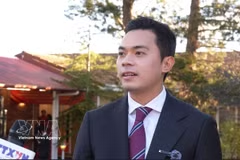
From the perspective of an OV entrepreneur, Dinh Vinh Cuong, a Vietnamese business leader in Japan and Chairman of the Vietnam-International Entrepreneurs Connection Club, said the resources of more than 6.5 million Vietnamese living in over 130 countries and territories extend far beyond remittances and financial investment. The community includes thousands of experts, scientists, entrepreneurs, engineers and young professionals working at leading global economic and technological centres.
He highlighted the resolution’s focus on attracting and connecting OV intellectuals and talents in key fields such as semiconductors, artificial intelligence (AI), digital transformation and biotechnology.
Ho Chi Minh City, with nearly 3 million OV having family or hometown ties there, is seen as particularly well positioned to implement the resolution. The city has substantial potential in capital, knowledge, technology, markets and international networks, and is seeking to become an internationally competitive economic, financial, innovation and technology hub.
However, OV representatives said that turning the resolution into concrete results will require changes in mindset and action from both authorities and the Vietnamese community abroad. They urged the community to move beyond asking what support policies are available and instead consider what value they can contribute to the homeland, whether through technology, investment, new markets or international expert networks.
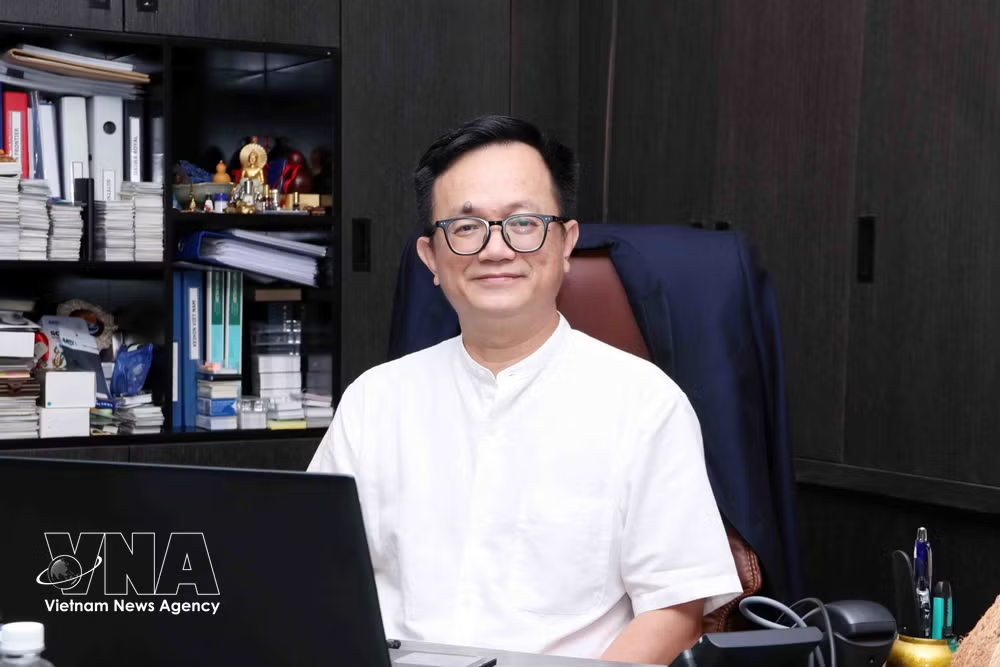
Among their proposals, Liem suggested Ho Chi Minh City establish a dedicated agency for OV affairs under the municipal People’s Committee to serve as a focal point for receiving and implementing cooperation initiatives. Cuong proposed a “one-stop shop for overseas Vietnamese resources” linking agencies which are in charge of investment, science and technology, finance, trade and foreign affairs.
They also called on the city to identify major practical challenges in areas such as AI, semiconductor manufacturing, smart transport, green logistics, renewable energy, international finance, healthcare and education, and invite OV experts to help solve them. A digital platform connecting OV experts, entrepreneurs and scientists with Ho Chi Minh City was also proposed, alongside a regular Ho Chi Minh City forum for OV.
Cuong further proposed establishing “sandbox” spaces where new technologies such as AI, autonomous vehicles, fintech and digital economy solutions could be tested, refined and commercialised under appropriate legal and risk-management frameworks./.