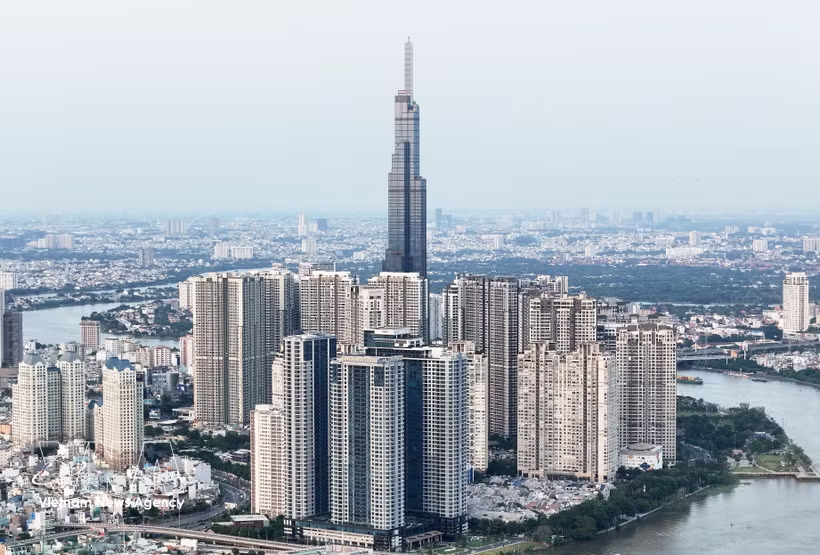
Moscow (VNA) – Growing interest among Russian investors in Vietnam’s real estate market is being reflected in rising demand for information on commercial property projects, including office buildings and logistics centres, according to an article published by RosBusinessConsulting – a Russian news outlet specialising in finance, commerce and economy.
RBC reported that the number of inquiries from Russian investors about the possibility of developing projects in Vietnam increased in 2026. Some experts attributed the trend to a need to diversify investments as Russian investors have begun seeking new markets in Southeast Asia, alongside traditional destinations in the Middle East.
Vietnam is seen as a potential market, with considerable room for growth in real estate, particularly commercial property, compared with some regional markets. Strong Vietnam-Russia ties and opportunities to establish foreign-invested enterprises are also considered favourable for Russian investors.
However, experts pointed out that real estate projects in Vietnam must meet various legal and financial requirements, including those governing developers’ equity capital. Foreign investors should also consider cultural and language differences, capital transfer procedures and the role of local partners.
In the residential segment, international real estate brokerage Tranio said inquiries from Russian clients about buying property in Vietnam fell 39% in the first eight months of this year from the same period in 2025. The decline was considered an adjustment following a sharp increase in demand the previous year.
Anna Larina, Director of the Foreign Real Estate Department at NF Group, said an increasing number of Russians are interested in buying property in Vietnam.
According to Tranio, Vietnam has several advantages over regional resort markets, including relatively low entry barriers, the recovery of tourism and aviation, and the development of coastal markets such as Da Nang and Khanh Hoa. The company also noted that the Russian community in Vietnam is growing, with many people living long-term and working remotely, potentially generating additional demand for apartments for residential or rental purposes.
Experts divide Vietnam’s real estate market into two main segments: major cities and resort destinations. In major cities, investors often show interest in projects from the early construction stage, expecting prices to rise upon completion. In resort areas, meanwhile, rising tourist arrivals are considered likely to support property demand, although not all projects offer low prices or high rental yields.
Tranio said foreign investors should pay particular attention to regulations on property ownership. Foreigners may purchase housing only in eligible commercial housing projects permitted to sell to this group, while property ownership does not confer the right to long-term residence.
Residence rights for investors are granted through capital investment in enterprises in Vietnam, with the duration and required investment amount subject to regulations./.