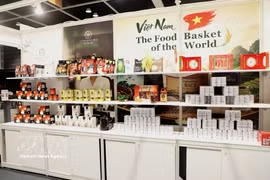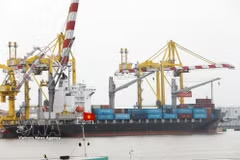
Hanoi (VNA) – The agricultural sector is facing the task of not only increasing export turnover, but also maintaining momentum in major markets, unlocking potential in key product lines and swiftly addressing bottlenecks related to standards, logistics and raw materials.
According to the Ministry of Agriculture and Environment, exports of agricultural, forestry and fishery products reached 49.3 billion USD in the first eight months of 2026, including 25.66 billion USD in agricultural products, 12.57 billion USD in forestry products, 7.94 billion USD in fishery products and 511.9 million USD in livestock products.
Asia continued to play a major role, with China accounting for 11.2 billion USD, accounting for 22.7% of the market share, and up 22.1% year-on-year; and Japan 3.3 billion USD, up 2%. Meanwhile, the export turnover to the US market reached 9.4 billion USD, down 0.4% year-on-year.
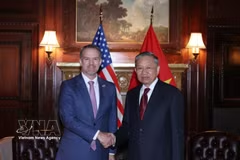
Deputy Minister Dang Ngoc Diep said that in the final four months of the year, the ministry will closely monitor individual markets and product lines, remove technical barriers, accelerate the issuance of codes for growing areas and packing facilities, and complete traceability requirements.
According to Ngo Xuan Nam, Deputy Director of the Vietnam Sanitary and Phytosaniary Notification Authority and Enquiry Point (Vietnam SPS Office), China, Europe and the Middle East-Africa region issued 254 SPS measures from early this year through September 15. The new requirements mainly concern residue limits, active substances, quarantine, facility registration and traceability.
Therefore, market expansion must go hand in hand with higher production standards. Businesses and raw-material areas need to understand market requirements before organising production rather than waiting until products reach border gates.
Meanwhile, the sector is looking to expand into the Middle East, Africa, Latin America and other potential markets to reduce risks and create additional outlets for competitive products.
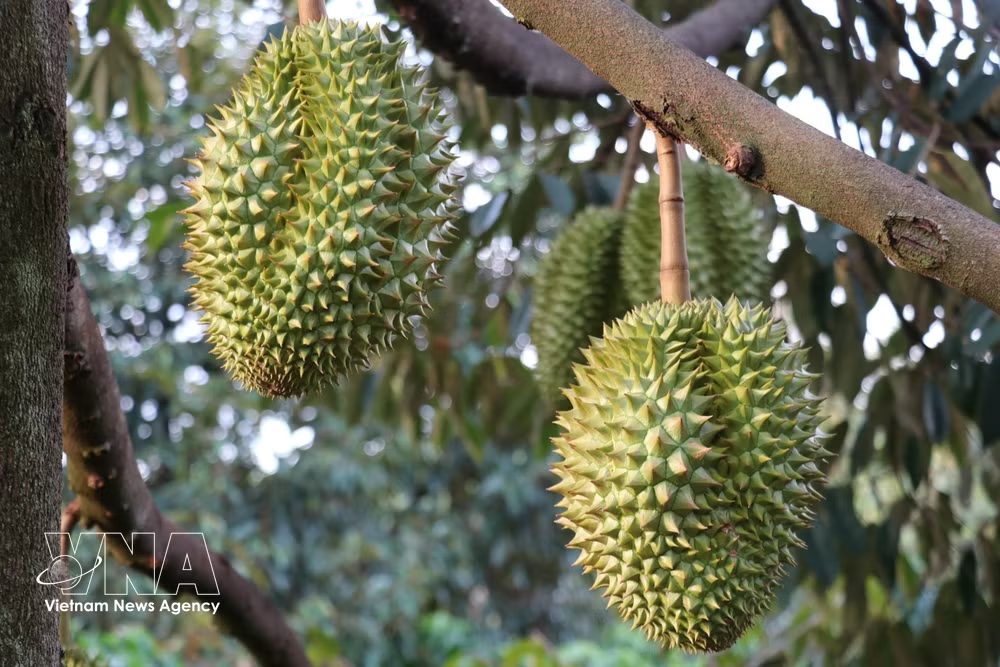
Durian is expected to be a major contributor to export growth in the final months. Vietnam currently has around 200,000ha of durian, with output of about 2.08 million tonnes. Exports rose from only about 177 million USD in 2021 to 3.85 billion USD in 2025, while the figure for the first eight months of 2026 was estimated at 1.95 billion USD, with China accounting for about 1.85 billion USD, or 95%.
Notably, China’s General Administration of Customs has granted an additional 567 codes for Vietnamese durian growing areas, bringing the total to more than 1,800. Since August 1, 2026, the processing time for growing-area codes has also been shortened from 10 days to three days.
To sustain growth, however, the sector needs to reorganise raw-material areas and link production with processing, preservation and distribution. Frozen and processed durian products are being promoted to increase value and reduce reliance on fresh fruit, while markets such as India, Australia and New Zealand are also being targeted. The ministry aims for durian exports to reach at least 3.85 billion USD in 2026, with a target of around 4 billion USD.
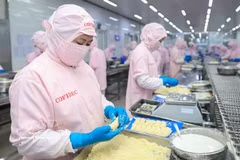
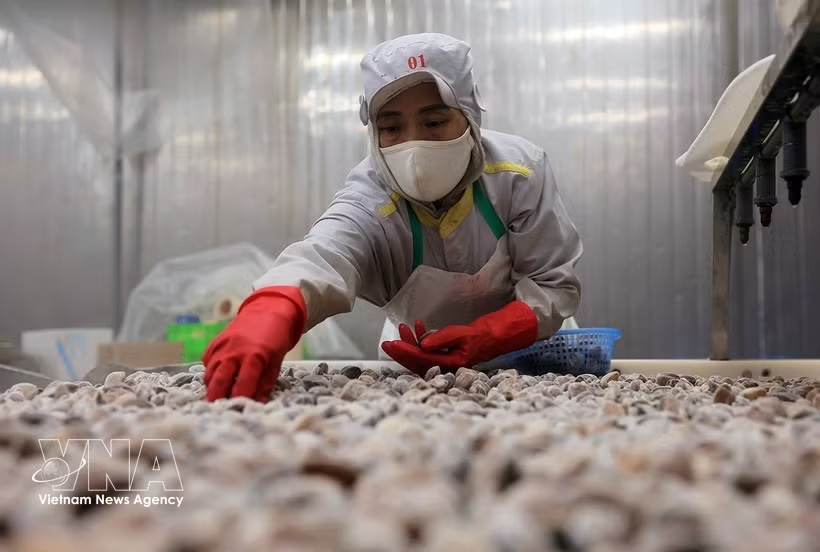
Fishery exports were another bright spot, reaching 7.94 billion USD in the first eight months, up 10.9%. The Vietnam Association of Seafood Exporters and Producers forecasts full-year exports could reach 12.3-12.5 billion USD if bottlenecks in raw materials and logistics are addressed.
By contrast, rice exports faced pressure, with around six million tonnes worth 2.86 billion USD shipped in the first eight months, down 6.3% in volume and 11.9% in value year-on-year.
To achieve the 74-billion-USD export target, the sector needs an additional 24.9 billion USD in the final four months, averaging 6.23 billion USD per month. The Ministry of Agriculture and Environment will focus on retaining markets and removing trade barriers, unlocking the potential of individual product lines, cutting costs and accelerating administrative procedures, while addressing bottlenecks in land, water resources and the environment and promoting science, technology, innovation and digital transformation./.