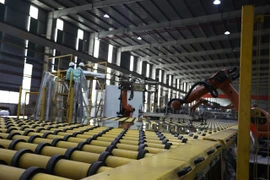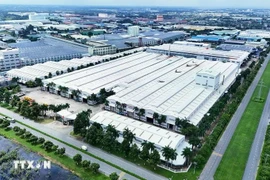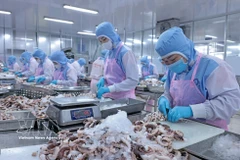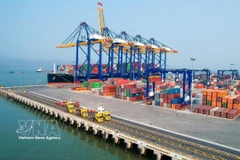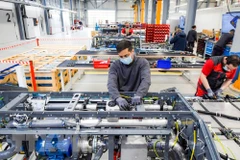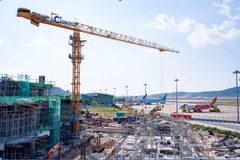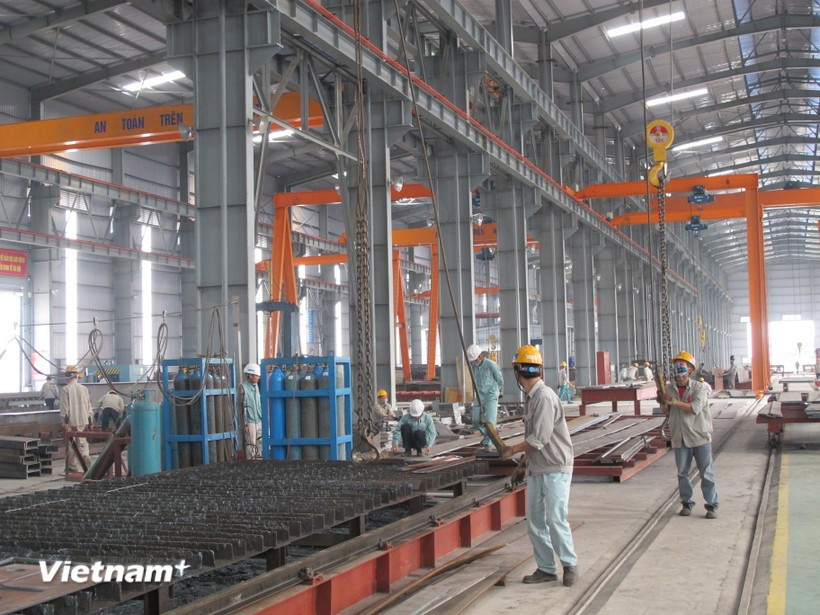
Hanoi (VNA) – Vietnam’s industrial production continued its positive momentum in the first half of 2025, posting a year-on-year growth rate of over 9%. The processing and manufacturing industry remained the key driving force, recording double-digit expansion.
According to estimates by the Ministry of Industry and Trade (MoIT), the index of industrial production (IIP) rose by more than 9% in the first six months of 2025 compared to the same period last year, growing significantly from 3.7% in 2024. Leading contributors included the processing and manufacturing sector, which increased by 11.1%, continuing to be the main engine of industrial growth, while the electricity production and distribution sector expanded by around 5.2%.
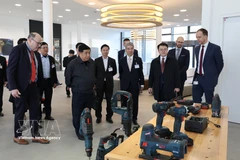
Supporting industries also stood out, with many Vietnamese enterprises successfully integrated into global supply chains, particularly those of Samsung and Intel.
Pham Van Quan, Deputy Director General of the MoIT’s Industry Agency, said despite the encouraging figures, the results still fall short of the ambitious targets set out in the Government’s Resolution No. 25/NQ-CP, which outlines sectoral and local development goals to achieve the national economic growth target of at least 8% this year. One major reason cited by Quan is that the purchasing managers’ index (PMI) continuously stayed below the 50-point threshold throughout the second quarter of 2025, reflecting persistent business caution.

Additionally, input costs – such as raw materials and logistics – remain high due to geopolitical volatility and global oil price fluctuations. Key industries such as textiles – garments and footwear are also grappling with order shortages and intense competition from goods of unclear origin.
He added that the slow expansion in electricity production, about 5.2% during the first half, was another cause of the lower-than-expected IIP growth. This reflected industrial production’s gradual shift to efficient energy use and high technology application.
Quan considered this shift as relatively positive as electricity production is no longer the sole indicator of industrial expansion as was the case in previous years. He attributed this shift to several causes, including the adoption of digital technologies and energy-efficient manufacturing in sectors such as electronics and precision engineering. Moreover, many firms have embraced rooftop solar power and implemented power-saving practices in their operations.
The official went on to say that the MoIT is pushing forward with building relevant legal documents to tighten control over product origin, stimulate domestic consumption, and safeguard consumer rights.
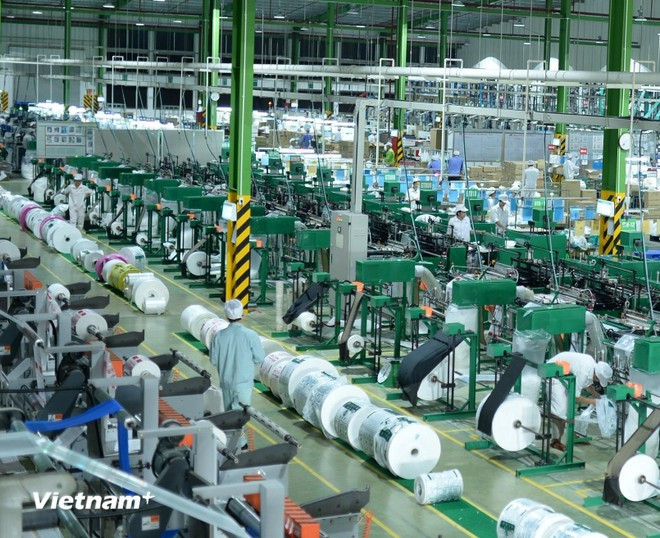
According to Quan, it is essential to implement a suite of coordinated solutions, including those relating to policy and regulatory frameworks. In particular, concrete actions are needed to carry out the Politburo’s Resolution No. 57-NQ/TW on making breakthroughs in science – technology development, innovation, and national digital transformation. They could include establishing innovation funds for the industrial sector, industrial development investment funds, and fostering public-private partnerships in R&D for new products and services.
Also key is the implementation of the Politburo’s Resolution No. 68-NQ/TW, which promotes the development of the private economic sector. This involves revising regulations related to land, credit, and tax incentives to better support private industrial enterprises.
Quan noted that on the ground, the ministry will prioritise measures to boost public investment disbursement in industrial projects and complete the development of technical support centres in both northern and southern regions. These centres are set to aid businesses in joining supporting industries.
At the same time, the ministry will accelerate efforts to realise the goals outlined in the Government’s Decree 111/2015/ND-CP on developing supporting industries. It will also submit to the Prime Minister a new programme for supporting industries in the 2026–2035 period.
The Industry Agency will also step up trade promotion and explore new markets for industrial products, especially those of the sectors affected by order shortages like garment and footwear, as well as those hit by the US’ reciprocal tariff policy.
“With these comprehensive solutions, I am hopeful that the full-year IIP for 2025 can reach 9% or higher, and that the processing and manufacturing industry will once again achieve double-digit growth, provided we implement these measures effectively,” Quan concluded./.