Strategic autonomy shows Vietnam’s strength in new era: Public opinions

“Strategic autonomy” is a key point, holding a deep theoretical and practical significance, marking a new evolution in the Party’s leadership mindset amid a rapidly changing and complex global environment.

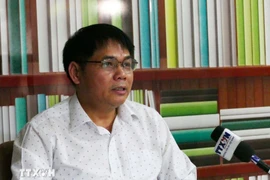
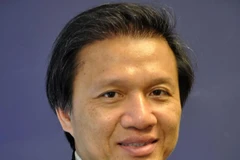
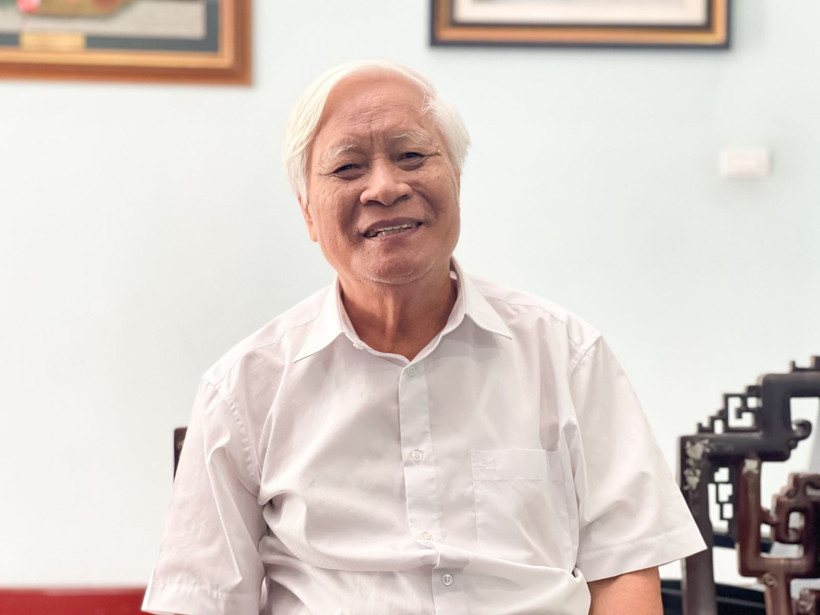
Dr. Nguyen Viet Chuc, former Vice Chairman of the National Assembly's Committee for Culture, Education, Youth, Adolescents, and Children (Photo: bvhttdl.gov.vn)

Hanoi (VNA) – The inclusion of the term “strategic autonomy” in the draft documents for the 14th National Party Congress is viewed as a significant step, highlighting the nation’s inherent strength, according to public feedback on the drafts.

Paying special attention to the term, Dr. Nguyen Viet Chuc, former Vice Chairman of the National Assembly's Committee for Culture, Education, Youth, Adolescents, and Children, noted that in the new context, “strategic autonomy” not only continues the spirit of self-reliance but also represents an essential development requirement, affirming confidence in the intellect, resilience, and strength.

Chuc said “strategic autonomy” means self-reliance and resilience in all areas, from national building and defence to economic, cultural, and social development. It entails the ability to make independent decisions and take full responsibility, without being influenced, coerced, or dependent on any alliance.

The Party’s decision to include the term “strategic autonomy” in the draft documents is a sound and strategically proactive move, he said, noting that it reflects an assertive revolutionary spirit and a determination not to pause or falter under any circumstances.

If progress halts, Vietnam will miss the chance to realise its aspiration of becoming a developed and powerful nation by 2045, he stated.

In the context of complex globalisation, strategic autonomy should be pursued comprehensively, Chu emphasised. He stressed that Vietnam must adhere to the principle of "cooperate but do not form alliances against anyone," while consistently following its foreign policy of independence, self-reliance, diversification and multilateralisation of relations. This approach should be reflected across all areas, including national defence, economy, culture, and education.

Expressing strong agreement with the approach in the draft documents, Chuc stated that they reflect a renewed mindset.

Strategic autonomy is a major idea of the new era, reflecting the vision, resilience, and aspiration for the rise of the nation, he said, stressing that including this term in the draft documents strongly affirms the country’s intrinsic strength and position, laying the foundation for Vietnam to enter a new era of development with confidence, stability, and sustainability.

Meanwhile, NA Deputy Le Hoang Anh from Gia Lai province said the emphasis on “strategic autonomy” is a key point, holding a deep theoretical and practical significance, marking a new evolution in the Party’s leadership mindset amid a rapidly changing and complex global environment.

Whereas “self-reliance” was previously understood mainly as independence and resilience in politics, economy, and national defence, in the current period, this term should be understood at a higher level - the ability to shape development space and make policy decisions based on national interests, amid globalisation and mutual dependence in technology, energy, finance, and data, he said.

The draft documents correctly outline major directions, but need to clarify the scope, components, and implementation mechanisms of “strategic autonomy.”

To further refine the perspectives, tasks, and solutions on “strategic autonomy,” Anh proposed identifying the pillars of strategic autonomy, key tasks through 2035, and linking strategic autonomy with proactive integration./.

VNA
See more

Professor Carl Thayer of the Australian Defence Force Academy at the University of New South Wales in an interview with the Vietnam News Agency. (Photo: VNA)

ASEAN Future Forum: Vietnam at forefront of advancing ASEAN-centred regional architecture

Thayer observed that Vietnam is increasingly emerging as a regional hub not only for manufacturing but also for diplomacy, supported by an expanding network of international partnerships. In his view, AFF 2026 represents an open and forward-looking agenda in which Vietnam acts as a trailblazer, proposing and advancing new ideas for regional cooperation.

Lao Prime Minister Sonexay Siphandone speaks at the opening session of the third ASEAN Future Forum. (Photo: VNA)

Lao PM Sonexay Siphandone concludes official visit to Vietnam, attendance at AFF 2026

The leaders of the two countries exchanged views and agreed on extremely important contents for bilateral cooperation in the coming period, including concretising the content of the strategic cohesion between Vietnam and Laos in all fields; and continuing efforts to cooperate closely to increase bilateral trade to 10 billion USD in the next five years.

General Secretary of the Communist Party of Vietnam Central Committee and President of Vietnam To Lam speaks at the meeting with heads of delegations, international experts, scholars and representatives of international organisations attending the ASEAN Future Forum 2026 in Hanoi on June 9, 2026. (Photo: VNA)

Top Vietnamese leader’s remarks at reception for participants in ASEAN Future Forum 2026

The measure of success in the coming period should not simply be how many additional documents, mechanisms or action plans ASEAN produces; more importantly, it should be measured by the extent to which ASEAN’s commitments are implemented in practice, what changes they bring about for the region, and what benefits they deliver to people, businesses and each member economy, said the top Vietnamese leader.

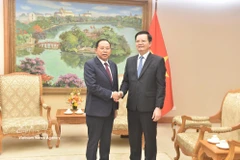
Deputy Prime Minister Phan Van Giang (R) welcomes Izumi Nakamitsu, United Nations Under-Secretary-General and High Representative for Disarmament Affairs. (Photo: VNA)

Deputy PM Phan Van Giang receives UN Under-Secretary-General, High Representative for Disarmament Affairs

Against the backdrop of increasingly complicated global political and security developments, the Deputy PM reaffirmed Vietnam’s consistent foreign policy of independence, self-reliance, peace, friendship, cooperation and development. He reiterated the country’s strong support for multilateralism, international law and the central and irreplaceable role of the UN in promoting a peaceful, stable and prosperous world.

The talks between Vietnamese PM Le Minh Hung and his Timor-Leste counterpart Rala Xanana Gusmao in Hanoi on June 9 (Photo: VNA)

Vietnam, Timor-Leste agree to expand multifaceted cooperation

The two PMs shared the view that Vietnam and Timor-Leste boast considerable potential and advantages to further expand cooperation for the benefit of their peoples, as well as for stable, self-reliant, and sustainable development in the region.