Hanoi (VNA) - Trade remedies are becoming an increasingly important part of corporate strategy, particularly as Vietnam targets average annual economic growth of more than 10% during 2026-2030.
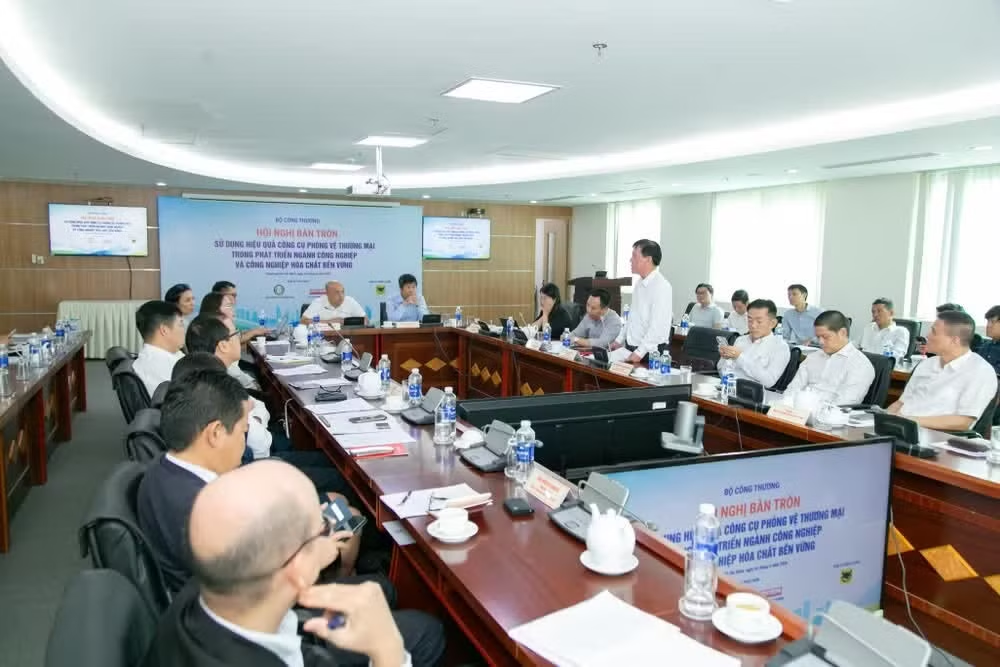
At an August 6 roundtable on the effective use of trade remedies to support sustainable industrial and chemical industry development, participants discussed emerging pressures, shared practical experience and proposed ways to improve coordination.
The event was jointly organised by the Trade Remedies Authority of Vietnam under the Ministry of Industry and Trade and Industry and Trade Magazine.
Vu Xuan Hung from the Ho Chi Minh City branch of the Vietnam Chamber of Commerce and Industry (VCCI) said Vietnamese businesses face pressure on two fronts: dealing with trade remedy investigations in overseas markets while also making proactive use of such measures to protect the domestic market.
Many companies still struggle with three key weaknesses: limited access to timely information, poor data management and traceability, and a shortage of specialised personnel. Hung stressed that businesses need to shift from reacting to cases to preventing risks by making better use of early-warning systems and strengthening cooperation through industry associations.
Wichai Techachindawong, Deputy General Director of Long Son Petrochemicals (LSP), said global oversupply and competition from low-priced imports are putting significant pressure on domestic investment projects. Trade remedies should therefore be seen as part of a broader industrial policy framework that helps maintain a level playing field and gives businesses the confidence to continue investing and expanding production.
One clear lesson emerged from companies that have been through trade remedy investigations: thorough preparation from the outset can make a major difference.
Nguyen Phuong Chi, Strategy Director at Century Synthetic Fiber Corporation, said careful preparation of documents and proactive cooperation with investigators helped the company secure an anti-dumping duty of just 2.5% in a US investigation, well below initial expectations.
Hyosung Dong Nai representatives also stressed the importance of standardising data, ensuring traceability and working closely with authorities from an early stage to reduce risks in anti-dumping, anti-circumvention and countervailing investigations.
Bui Thanh Canh, Deputy General Director of Southern Steel Company Limited – VNSTEEL, said trade remedies can help create a level playing field and give businesses time to restructure and upgrade technology. In the long run, however, a company’s own competitiveness remains the key to sustainable growth.

Chu Thang Trung, Deputy Director General of the Trade Remedies Authority of Vietnam, said trade remedies should be viewed within Vietnam’s broader development strategy, with manufacturing and the chemical industry identified as key growth drivers.
“Trade remedies are not intended to provide protectionism. They are policy tools designed to protect domestic industries for a reasonable period from unfair competition, giving businesses time to upgrade technology, strengthen production capacity and pursue sustainable development,” he said.
Trade remedies are most commonly applied in key industries such as steel, chemicals and plastics. Yet many businesses still struggle to prepare documentation, provide the necessary information and meet legal requirements.
Pham Huy Nam Son, Deputy Director General of the Chemicals Department under the Ministry of Industry and Trade, noted that the chemical industry provides essential inputs for agriculture, healthcare, electronics, engineering, construction materials and manufacturing. However, many basic chemicals remain dependent on imports, while competitive pressure from imported products continues to grow.
Trade remedies can therefore act as a “shield”, giving domestic companies the breathing space needed to invest in new technology and improve product quality.
The Ministry of Industry and Trade’s agencies pledged to strengthen early-warning systems and information sharing, help businesses improve data management and documentation, refine regulations, and promote stronger links between raw-material producers and downstream companies.
Pham Thi Le Nhung, Editor-in-Chief of Industry and Trade Magazine, said that as trade remedies become more widely used worldwide, improving businesses’ awareness and ability to use them effectively is becoming increasingly important./.