Hanoi (VNA) - Target, Walmart and other major US retailers are set to come to Vietnam with extensive product-sourcing lists, opening new opportunities for Vietnamese businesses to secure export orders and join global supply chains.
What are US retailers looking for?
Target, one of the US’s leading retailers, has confirmed its participation in the Vietnam International Sourcing Expo 2026 (VIS 2026), an annual event connecting suppliers with global buyers. It is seeking Vietnamese suppliers of household goods, home textiles, children’s products, personal care and beauty items.
Walmart has also announced plans to return to Vietnam to source products. Now in its fourth year, VIS will welcome Target for the first time, while Walmart has participated in all four editions. This year, Walmart is looking for suppliers in six categories: clothing and accessories; footwear; textiles and accessories; consumer electronics; furniture; and food and consumer goods.
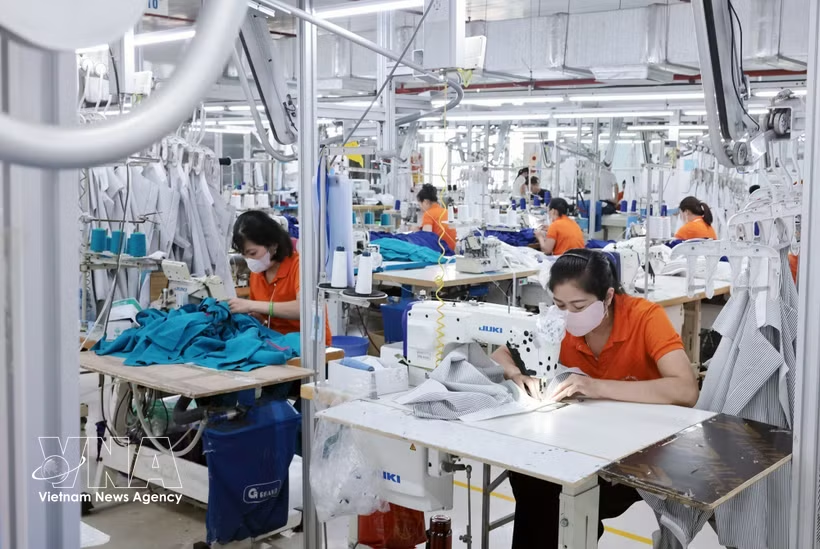
Vietnamese manufacturers’ production capacity, product quality and reliability are helping strengthen their position in US retail supply chains. All six categories sought by Walmart are among Vietnam’s major manufacturing and export strengths.
Last year, Vietnam exported about 46.3 billion USD worth of textiles and garments, nearly 30 billion USD of footwear and handbags, 17.2 billion USD of wood and wooden products, and 11 billion USD of seafood to global markets.
For Target, its diverse sourcing requirements give Vietnamese companies more opportunities to demonstrate their ability to supply products meeting international standards.
Target prioritises suppliers with manufacturing facilities in Vietnam, large export volumes, stable production capacity and experience in supplying international groups and retailers such as IKEA, Walmart, Costco, Home Depot, Amazon, CVS, Sephora and Ulta. The growing demand for high-quality suppliers to develop private-label products is creating new opportunities for Vietnamese businesses. Instead of simply undertaking contract manufacturing, companies can move further up the supply chain, increase product value and establish long-term partnerships with major retailers.
According to Do Ngoc Hung, Trade Counsellor and head of the Vietnam Trade Office in the US, Vietnamese suppliers have made significant progress in investing in modern production facilities, obtaining international certifications, improving quality management and food safety standards, and increasing production efficiency.
Despite tariff changes and major shifts in global supply chains, US buyers continue to value Vietnamese suppliers. In the first seven months of this year, the US remained Vietnam’s largest export market, with export turnover reaching 104.7 billion USD, up 23% year-on-year.
In 2025, the US imported about 153.1 billion USD worth of Vietnamese goods, up 42% from 2024. The sharp increase reflects continued expansion in US demand for products made in Vietnam, according to the Department of Customs.
Supply chains must be transparent
Supply-chain transparency is increasingly essential for Vietnamese companies seeking to enter the US market. As US trade policy places greater emphasis on origin and traceability, Vietnamese businesses must demonstrate the genuine value created in Vietnam.
According to the Ministry of Industry and Trade, companies must be able to provide reliable information on the origin of raw materials, suppliers, production sites and manufacturing processes to demonstrate that products are not wholly or partly made with forced labour.
This is particularly important for industries with long, multi-tiered supply chains, including textiles and garments, footwear and leather goods, electronics, energy, electrical equipment, semiconductor-based products, minerals and some agricultural products.
The US is tightening rules of origin, combating transshipment and increasing controls on high-tech exports, signalling a broader effort to restructure global production networks.
However, Vietnam’s strong presence in essential US imports such as electronics, furniture, textiles and consumer goods provides an important foundation for maintaining its position in US supply chains.
The room for growth remains substantial, but Vietnamese businesses need to strengthen production capacity and strictly meet requirements on origin, quality and traceability to turn sourcing opportunities into sustainable export orders./.