Vietnam attracts higher-quality FDI with rising US, European capital flows

Vietnam continues to draw strong interest from foreign investors, with capital inflows from the US and Europe emerging as a significant driver of growth.

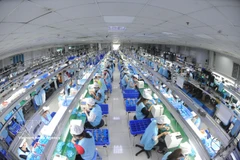
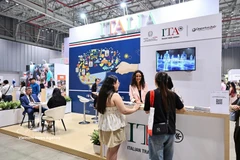
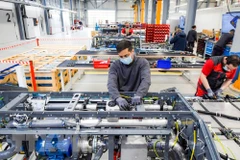
An increasing number of major corporations, particularly from Europe and the US, are investing in Vietnam. (Photo: baodautu.vn)

Hanoi (VNA) – Vietnam continues to draw strong interest from foreign investors, with capital inflows from the US and Europe emerging as a significant driver of growth.

Strong momentum in investment activity

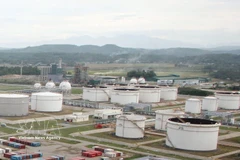
A highlight in recent days was ExxonMobil’s survey in South Van Phong in south central Khanh Hoa province. The US energy giant is considering a 10-billion-USD investment in a modern refinery project, which, if implemented, will be among its first near-zero emission facilities. The company plans to complete surveys by 2027, begin construction and investment procedures in 2031, and launch operations in 2035.

This development has added momentum to FDI flows into Vietnam, which remain robust despite global uncertainties over tariffs and geopolitical tensions.

In mid-August, Bac Ninh province licensed nine new FDI projects worth 322.5 million USD and approved capital increases of 762 million USD for nine existing projects, bringing total new FDI commitments in the province to over 1 billion USD within just one month. Following its mergence with Bac Giang, Bac Ninh has strengthened its role as a northern “investment hub,” particularly in high-tech and semiconductor industries. The province now ranks second nationwide in FDI attraction, after Ho Chi Minh City, both for the first seven months of 2025 and on a cumulative basis.

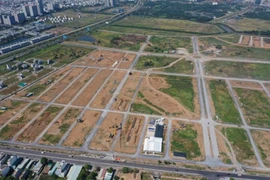
On August 19, among 250 projects inaugurated or launched nationwide, five were FDI projects with a combined value of 54 trillion VND (around 2.2 billion USD), notably including the 4.2-billion-USD North Hanoi Smart City developed by the BRG–Sumitomo joint venture.

Upgrading FDI quality through European and US investment

This information aligns with assessments by the Foreign Investment Agency under the Ministry of Finance, which reported that registered FDI in Vietnam reached 24.1 billion USD in the first seven months of 2025, up 27.3% year-on-year.

According to Savills Vietnam, FDI inflows remain stable, supported by Vietnam’s recent administrative boundary adjustments and adoption of a two-tier local administration model, expected to streamline governance and improve investment efficiency. Resolution No. 68-NQ/TW, aimed at boosting private sector development, is also seen as a key foundation for attracting high-quality capital, particularly from investors prioritising transparency and legal stability.

Among the standout transactions, CapitaLand acquired a project from Becamex IDC for 553 million USD in former Binh Duong province. Meanwhile, a consortium of Sumitomo Forestry, Kumagai Gumi, and NTT Urban Development teamed up with Kim Oanh Group to develop the One World project, and Nishi Nippon Railroad purchased a 25% stake in Nam Long’s Paragon Dai Phuoc project.

These deals underscore growing interest from Japanese, Korean, and Singaporean investors, alongside an increasing flow of capital from the US and Europe - the markets known for long-term strategies and high investment standards.

Minister of Finance Nguyen Van Thang has repeatedly underscored the increasing participation of major US and European corporations such as Qualcomm, LEGO, and SYRE, which are advancing billion-dollar projects and R&D activities in Vietnam.

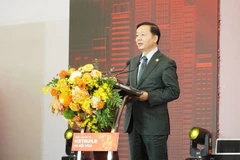
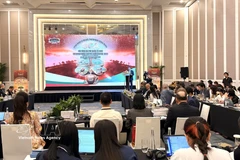
At the 2025 Global Business Forum, Alexander Ziehe, Chairman of the German Business Association (GBA) and Vice President of Hettich Southeast Asia, reported that 80% of German enterprises in Vietnam view business conditions as good or satisfactory, while 38% plan to expand within the next 24 months.

He emphasised Vietnam’s role as both a manufacturing hub and a strategic gateway to regional and global markets, with opportunities in advanced manufacturing, automation, renewable energy, green technologies, premium consumer goods, and vocational training.

Although US and European investment inflows into Vietnam are not large, rising interest suggests strong potential for these inflows of high-quality capital in the coming years./.
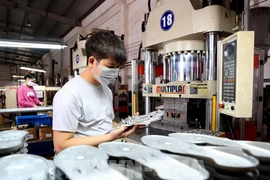
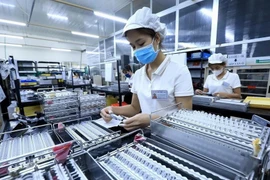
VNA

See more

Phin Ho Tra – a national five-star OCOP product. (Illustrative photo: VNA)

Hanoi to host Vietnam OCOP Festival 2025

The festival is seen a practical activity celebrating the achievements made by the capital and the country in 2025, affirming OCOP’s role in rural economic development, contributing to realising Vietnam’s aspiration for strong economic growth in the context of deep integration.

The expanded Hoa Binh Hydropower Plant (Photo baochinhphu.vn)

EVN launches major power projects

Among the flagship projects inaugurated was the expanded Hoa Binh Hydropower Plant with a total installed capacity of 480MW per year and average annual output of about 488 million kWh.

An ultra-intensive shrimp farming model linked with environmental protection in Ca Mau province. (Photo: VNA)

Fisheries take the lead in the Mekong Delta’s green transition

Across the Mekong Delta, leading aquaculture producers, processors and exporters, along with suppliers of inputs, are transitioning to circular, high-tech and clean production models that cut greenhouse gas emissions and comply with international certification standards.

A perspective view of the Red River Landscape Boulevard project in Hanoi (Photo: VNA)

Works starts on Hanoi’s Red River Landscape Boulevard Axis project

The project is among the 234 key works and projects being launched, inaugurated or technically opened simultaneously across 34 cities and provinces nationwide to mark the 14th National Party Congress. Its launch contributes to implementing the country’s strategic development orientations while concretising Hanoi’s development goals in the new period.

The ground-breaking ceremony of the Yen Bai 1 biomass power plant in Lao Cai province on December 19. (Photo: VNA)

Work starts on 114-million-USD biomass power plant in Lao Cai

The project, developed by Erex Yen Bai Biomass Power Co. Ltd. is located in Dong Cuong commune, Lao Cai province. It is backed by Japan’s Erex Group and falls under the Joint Crediting Mechanism, a bilateral initiative between Vietnam and Japan to reduce greenhouse gas emissions.

At the inauguration ceremony (Photo: VNA)

Vietnam Railways Corporation unveils upgraded coaches, digital tools

These moves reflect the VNR's commitment to fulfilling six priority tasks set by the Prime Minister, including leading in innovation and digital transformation, applying sci-tech in line with the Politburo’s Resolution No. 57-NQ/TW, and spearheading advances in digital, green and circular economy.

Producing MDF panels for export at Hai Duong MDF Construction and Manufacturing Co., Ltd., in Ho Chi Minh City (Photo: VNA)

HCM City targets 15 billion USD in wood exports by 2035

The merger of HCM City with Binh Duong and Ba Ria – Vung Tau is expected to give the local wood industry a strong boost into a phase of high-quality growth driven by linkages, innovation, sustainability, and deeper integration into global value chains.

Delegates cut a ribbon to inaugurate the expanded Terminal T2 at Noi Bai International Airport in Hanoi on December 19, 2025. (Photo: VNA)

Expanded Terminal T2 at Noi Bai International Airport makes debut

The project expands the terminal’s floor area to over 200,000 sq.m, increases passenger capacity from 10 million to 15 million, even up to 18 million per year, and boosts operational capacity with boarding gates rising from 17 to 30 and jet bridges from 14 to 27, meeting strong growth in international travel demand.

A section of Can Tho - Ca Mau Expressway (Photo: VNA)

Can Tho – Ca Mau travel time halves from December 19

Stretching more than 110 km with a total investment of over 27.5 trillion VND (1.04 billion USD), the project not only resolves long-standing traffic bottlenecks in the Mekong Delta, but also opens up new development opportunities for the entire region - especially Ca Mau, the last locality in the country to be directly connected to the eastern North–South expressway axis.