Vietnam highly evaluated as key shipping hub

FESCO Deputy CEO for Logistics German Maslov said the sea route connecting Vladivostok with Vietnamese ports has proven highly effective after two years of operation, attracting strong interest from businesses in both countries.

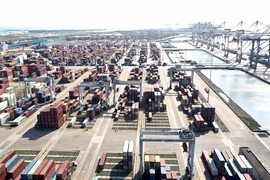
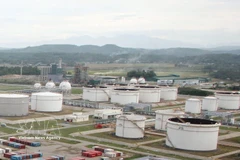
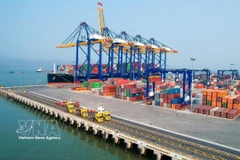
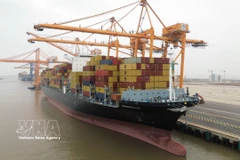
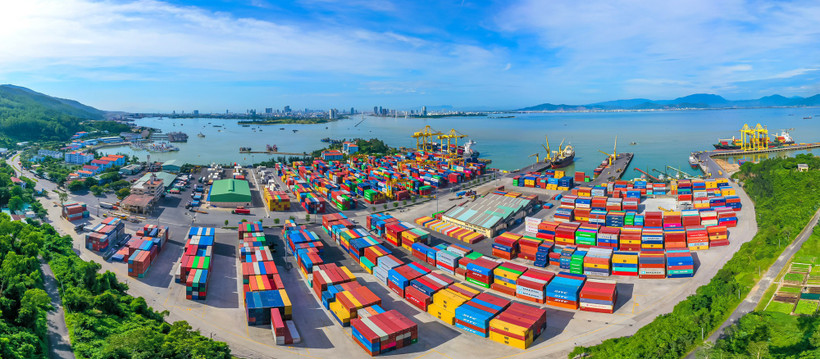
Vietnam’s seaport infrastructure capacity has tripled after each decade of development, handling 90% of the country’s total import and export cargo (Photo: VietnamPlus)

Moscow (VNA) – Russian logistics companies are expanding rail and sea routes to boost Vietnam – Russia trade, with FESCO Transportation Group playing a central role through its project to develop Ho Chi Minh City port into a Southeast Asian transshipment hub.

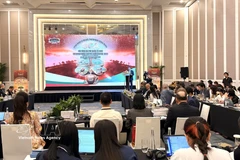
Speaking with the Vietnam News Agency (VNA)'s reporter on the sidelines of the 10th Eastern Economic Forum held recently in Vladivostok, FESCO Deputy CEO for Logistics German Maslov said the sea route connecting Vladivostok with Vietnamese ports has proven highly effective after two years of operation, attracting strong interest from businesses in both countries.

Starting with one vessel, FESCO now runs three regular ships. In 2025, cargo volume carried between Vietnam and Russia rose 16% year-on-year, while goods from ASEAN are also being transshipped through Vietnamese ports.

Building on this momentum, FESCO recently opened new services from Vietnam to Saint Petersburg and Novorossiysk, enabling Vietnamese goods to reach all three of Russia’s largest ports. Maslov affirmed that Vietnam has become an indispensable hub in the company’s logistics network.

Beyond Russia, Vietnam also serves as a key link in regional shipping services. FESCO operates routes connecting Vietnam with Malaysia, Indonesia, and Thailand. Thanks to this gateway, its cargo with Malaysia has increased by 66%, while trade with Indonesia has doubled, equivalent to thousands of containers. Maslov described Vietnam as a “hub port” for ASEAN, boosting transport flows between Russia and the bloc. He added that FESCO has opened a representative office in Vietnam and is considering building warehouses, port terminals, and joint ventures.

Vietnamese Consul General in Vladivostok Nguyen Viet Kien noted that Russia's Far East, which accounts for nearly 40% of Russia’s territory, boasts huge potential in minerals, land, and seaports. Vladivostok is the gateway for trade between Asia and Russia, with direct connections to the Baikal-Amur and Trans-Siberian railways, allowing smooth domestic distribution nationwide, he said.

However, he acknowledged that trade with Vietnam remains modest, with turnover reaching only 55 million USD in the first quarter of this year, of which 90% came from Vietnamese exports. On the investment side, Vietnam’s TH True Milk has launched a 4,000-hectare dairy farm near Vladivostok.

Kien stressed the need to view Vladivostok not just as a market but as a strategic gateway. Seizing this gateway would create favourable conditions to enter the Russian and broader Eurasian markets.

He added that the Far East is expected to receive stronger investment as Russian President Vladimir Putin announced new priorities for energy, transport, and urban development at the forum. This is the right time for Vietnamese enterprises to invest abroad, secure first-mover advantages, and establish a foothold in new markets, Kien suggested.

The diplomat affirmed that the Consulate General and Vietnam’s trade office in Vladivostok are ready to act as a bridge and provide support for Vietnamese businesses seeking to expand their presence./.
VNA

See more

Nguyen Tuan Anh, Deputy Secretary of the municipal Party Committee, holds a working session with a consortium of China Harbour Engineering Company (Vietnam) and Shenzhen Energy Group on March 26, 2026. (Photo: VNA)

Can Tho city courts global investors to accelerate energy ambitions

Rising interest from major global players underscores Can Tho city’s growing appeal as an investment destination. Clean energy, particularly wind power, has been identified as a strategic pillar to drive socio-economic growth while strengthening energy security across the Mekong Delta.

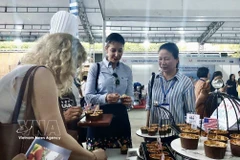
Visitors savor freshly prepared dishes on-site at the “Discover US Agriculture” programme, held on July 19, 2025 in Ho Chi Minh City. (Illustrative photo: VNA)

Vietnam, US work to step up agricultural cooperation

Vietnam has strengths in tropical farm produce, seafood and wooden products, while the US is a major supplier of key inputs such as soybeans, corn, wheat and dairy products. This trade structure creates a balanced supply chain with little direct competition, delivering tangible benefits to businesses and consumers in both countries.

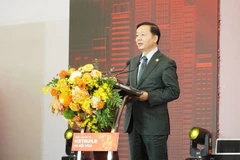
Deputy Prime Minister Tran Hong Ha speaks at the opening ceremony of the Vietbuild Hanoi International Exhibition 2026 on March 26. (Photo: VNA)

Vietbuild Hanoi 2026 International Exhibition opens

The five-day event, themed “Construction – Building Materials – Real Estate – Green Transport”, brings together more than 2,500 booths from domestic and international enterprises, reflecting the development momentum of Vietnam’s construction sector and the broader economy.

An overview of the International Coffee Conference 2026 (Photo: VNA)

Global Coffee Alliance launched to drive sustainable, inclusive growth

The Global Coffee Alliance is envisioned as a public–private partnership that bridges diplomatic efforts with business operations. Looking ahead to 2040, it aims to develop a global coffee ecosystem that is inclusive, technology-driven, and aligned with net-zero emissions goals.

At Dung Quat oil refinery (Photo: VNA)

Vietnam races to restart idle ethanol plants to meet surging demand

Do Van Tuan, Chairman of the Vietnam Biofuels Association, said that monthly ethanol demand for the E10 blend is projected at 92,000–100,000 cu.m. The country’s six ethanol plants have a combined design capacity of roughly 41,000 cu. m per month, but only three are now running, churning out about 25,000 cu.m, or just 25–27% of demand. Even if every plant hits full tilt, local supply would cover only around 41% of national needs.

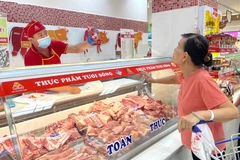
At a supermarket in Ho Chi Minh City (Photo: VNA)

Ho Chi Minh City to pilot pork trading on Mercantile Exchange of Vietnam

Nguyen Nguyen Phuong, Deputy Director of the municipal Department of Industry and Trade, said listing pork on the MXV will finally give consumers and firms more stable prices, while slapping on stricter food safety rules and making it easier to track where the meat actually comes from. Farmers, meanwhile, stand to gain from more predictable margins and dodge fewer of the supply-demand imbalances that routinely distort prices.

Processing octopus for export to the Japanese market at Huy Nam Company in An Giang (Photo: VNA)

Squid, octopus exports pick up early in 2026

In terms of product structure, squid has emerged as the main growth driver. Export turnover of squid exceeded 64 million USD, rising nearly 30%, while octopus exports brought in more than 47 million USD, up over 16%. The development indicates that demand for squid products is recovering faster in the short term.

The world’s longest over-sea cable car to Hon Thom Island in the Phu Quoc special zone, An Giang province. (Photo: VNA)

An Giang steps up tourism development ahead of APEC 2027

Tourism in the province has recorded strong growth, affirming its position as one of the region’s leading destinations. Phu Quoc Island continues to attract the majority of international travellers, receiving more than 817,660 visitors, accounting for over 98.5% of total foreign arrivals to the province.

Import-export activities at Lach Huyen international port in Hai Phong (Photo: VNA)

Reducing risks, removing logistics bottlenecks amid Middle East volatility

According to Truong Xuan Trung, Trade Counsellor of Vietnam in the UAE, the Middle East serves not only as a consumption market but also as a key global transhipment hub, meaning instability in the region creates ripple effects across intercontinental transport networks. Shipping route adjustments and airspace restrictions have lengthened transit times, increased costs and disrupted delivery schedules, with some Vietnamese shipments forced to reroute or seek alternative markets.

Cargo is handled at container terminals No. 3 and No. 4 of Hai Phong International Gateway Port. (Photo: VNA)

Businesses seek “survival momentum” amid global geopolitical turbulence

This is an urgent move as the challenges of 2026 differ markedly from previous ones, shaped by overlapping external shocks ranging from geopolitical tensions disrupting supply chains to surging logistics and raw material costs, exchange-rate pressures, and increasingly complex tariff barriers in global markets.

At the 2025 trade connectivity week for mechanical, electrical and digital industries. (Photo: VNA)

Ho Chi Minh City gives boost to supporting industry firms

Supporting industry firms in Ho Chi Minh City are scrambling to embed themselves more deeply into both global and domestic supply chains, backed by a suite of local incentives that are speeding up their tech upgrades and market access.

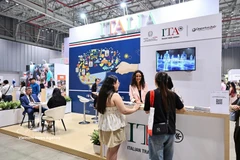
Italy's national pavilion at the ongoing Food & Hospitality Vietnam 2026 exhibition at Ho Chi Minh City's Saigon Exhibition and Convention Centre (SECC) draws visitors for hands-on experiences. (Photo: IVNA)

Italian food firms eye opportunities in Vietnam

Italy’s exports of food and beverages to Vietnam reached 105.1 million EUR in 2025, up 4% year-on-year, positioning the country among the leading EU suppliers to the Vietnamese market.

An overview of the working session (Photo: baoquangninh.vn)

Quang Ninh promotes all-round cooperation with Guangxi Zhuang Autonomous Region

Quang Ninh encourages Guangxi enterprises to invest in high-tech marine aquaculture and expand aquatic product exports in China. At the same time, the province aims to develop livestock farming in line with international standards and attract investment in deep-processing plants for agricultural products such as cinnamon, star anise and tea, linked with traceability systems at border gates.

Illustrative image (Source: VNA)

Vietnam becomes fastest growing market for Norwegian salmon in Southeast Asia

The Norwegian Seafood Council (NSC) reported at the “Norwegian seafood industry in Vietnam market 2026” event held in Ho Chi Minh City on March 25 that fresh Norwegian salmon exports to Vietnam jumped 16% in volume in the first two months of 2026 compared with a year earlier, while frozen salmon shipments surged about 37%.