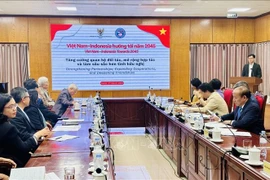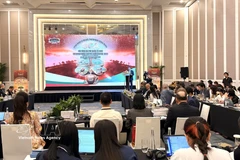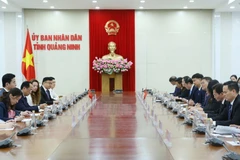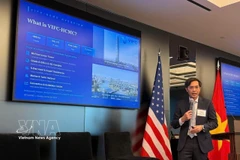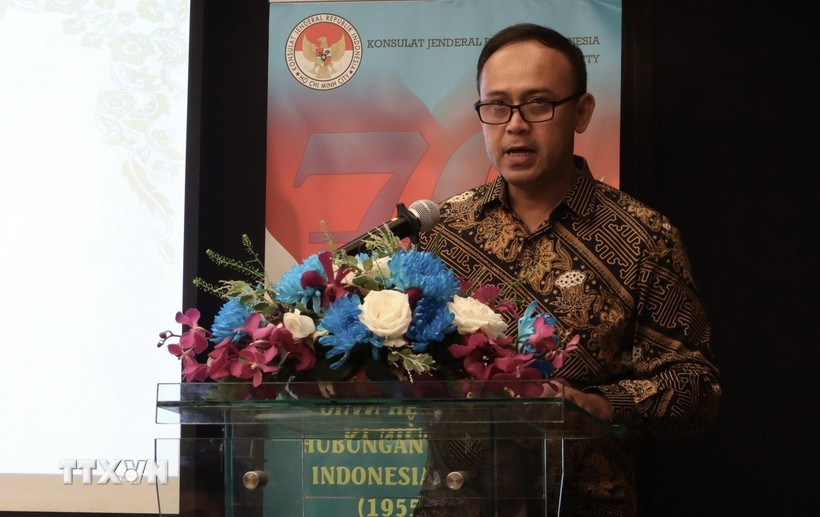
HCM City (VNA) - Vietnam and Indonesia are targeting two-way trade of 18 billion USD by 2028, zeroing in on food industry ties and food security, heard the Indonesia-Vietnam food security cooperation forum hosted by the Indonesian Consulate General and the Vietnam Chamber of Commerce and Industry’s Ho Chi Minh City branch (VCCI-HCM) on August 11.
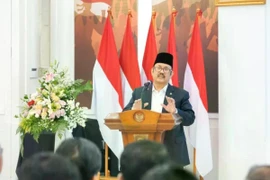
Adiguna Wijaya, acting Indonesian Consul General in HCM City, noted that since the establishment of diplomatic ties, the friendly cooperative ties between Vietnam and Indonesia have continued to flourish. Today, the two nations now anchor ASEAN’s economy, representing 55% of the bloc’s population and 45% of GDP. Trade skyrocketed to 16.7 billion USD in 2024, and it was already at 9.95 billion USD just halfway through 2025. In March 2025, high-ranking leaders agreed to upgrade bilateral relations to a comprehensive strategic partnership, while broadening ties into food security and the development of sustainable agricultural supply chains.
Data from the Indonesian Chamber of Commerce in Vietnam showed Vietnam as Indonesia’s fourth-largest ASEAN trade partner, while Indonesia ranked second in trade with Vietnam. Vietnam has 123 investment projects in Indonesia, including Dien May Xanh’s retail outlets and VinFast’s upcoming major venture. Under the framework of this comprehensive strategic partnership vision, the two countries will intensify collaboration in sci-tech, jointly striving to become developed, high-income nations by 2045.
With a combined market of over 370 million consumers, Vietnam and Indonesia leverage agricultural strengths: Vietnam leads in rice exports, while Indonesia dominates palm oil and coffee and is advancing toward rice self-sufficiency. Key cooperation opportunities span sustainable fisheries, hi-tech farming, agricultural science innovation, integrated value chains, and market access.
Nguyen Truong Thi, Deputy Director of the municipal Department of Industry and Trade, noted the city’s role as Vietnam’s top economic and trade hub, facilitating regional and national food supply links. As a gateway connecting the Mekong Delta, Vietnam’s rice bowl, with international markets, it houses major players in farm produce, aquatic products, and processed food. Indonesian firms are key partners in Halal food and goods. Vietnamese exporters struggle with Indonesia’s stringent standards, intricate Halal certification, high costs, and lengthy timelines.
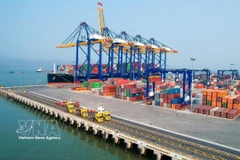
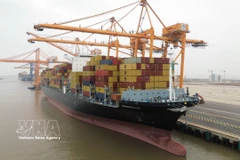
Thi suggested ramping up thematic seminars, information exchanges, and business support to demystify Halal requirements and ease trade flows. Recommendations also include deepening logistics and infrastructure ties, notably connecting Vietnam’s Cai Mep - Thị Vai port complex with Indonesia’s main ports for efficient food supply optimisation. Effective coordination mechanisms between regulatory agencies and business communities would address bottlenecks swiftly, fostering a transparent and stable investment climate.
Pham Thiet Hoa, Vice Chairman of the HCM City Food and Food Products Association (FFA), stressed the sector’s critical role in food security, competitiveness, and economic value. Vietnam’s 2024 food exports to Indonesia included rice at 746 million USD, up 16.5%; coffee at 212 million USD, up 60.4%; fruits and vegetables at 10.9 million USD, up 26.7%; tea at 10.8 million USD, up 47.9%; and aquatic products at 17.2 million USD. Imports from Indonesia featured seafood at 334 million USD, up 61.4% and other commodities.
Hoa pointed out that the mutually beneficial trade mix supports deeper ties, but hurdles remain: divergent standards like Halal, SME tech gaps in processing and storage, climate-driven supply disruptions, and weak bilateral business networks.
FFA proposed mutual Halal and food safety recognition, administrative simplification, technology training and transfer, Internet-of-Things (IoT) and blockchain-enabled sustainable chains, plus expanded trade shows, exhibitions, and Halal-focused product studies to enhance collaboration, build sustainable food industries, and secure ASEAN food supplies./.
Vietnam, Indonesia strengthen anti-terrorism cooperation
Vietnam and Indonesia reaffirmed their commitment to strengthening cooperation in combating terrorism as it remains a threat to peace, security, and stability across their respective nations, the broader region, and the international community.