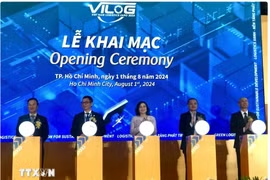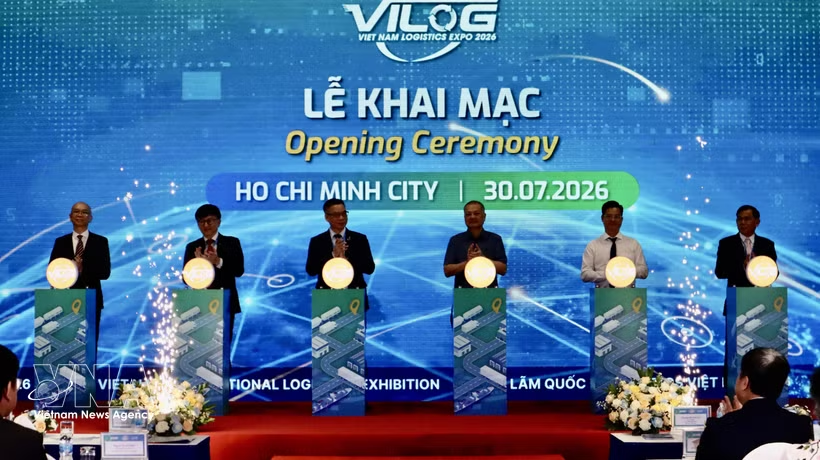
Ho Chi Minh City (VNA) – The fourth Vietnam International Logistics Exhibition (VILOG 2026) opened at the Saigon Exhibition & Convention Centre in Ho Chi Minh City on July 30, serving as a comprehensive networking platform for the country's logistics sector.
Organised by the Vietnam Logistics Business Association (VLA) and VINEXAD under the Ministry of Industry and Trade, VILOG 2026 marks an expansion in both scale and quality, featuring 450 enterprises from 22 countries and territories displaying across more than 550 booths.
From top logistics groups, seaports, and international freight forwarders to pioneering brands in robotics, artificial intelligence (AI), forklifts, commercial vehicles, smart warehouse equipment, and automation technology, the event presents a complete picture of the modern logistics ecosystem and smart supply chains, according to the organisers.
A standout highlight of VILOG 2026 is the pavilion area dedicated to leading domestic and international logistics associations and networks such as WCA, JCtrans, WIFFA, CIFA, TCCA, GLA, VLA, HNLA, and VALOMA. The exhibition also brings together prominent logistics and supply chain players, including Gemadept, ITL Group, Giao Hang Nang (GHN), Transimex, Long An International Port, Vinafco, U&I Logistics, and Bee Logistics.
It marks a strong shift from traditional logistics services to a smart logistics ecosystem. Companies featuring warehouse robots, electric forklifts, AI, smart storage systems, cargo handling equipment, and next-generation transport vehicles are introducing solutions to drive automation and digital transformation across the industry.
Tailored logistics solutions for the retail sector—driven by AI, data platforms, and large-scale infrastructure—are widely introduced at VILOG 2026, reflecting a growing trend of investment in technology, infrastructure, and smart logistics solutions aimed at realising Vietnam’s goal of building a modern, green, and sustainable logistics industry.
Nguyen Anh Son, Director of the Agency of Foreign Trade at the Ministry of Industry and Trade, noted that logistics is a foundational sector for any country's economic development and livelihood. Amid global trends toward digital transformation, digital trade, smart transport, and digital ecosystems, building these capabilities represents a strategic direction for Vietnam in the coming period.
Developing modern operational solutions in a synchronised manner helps lower costs, boost supply chain efficiency, and create momentum for Vietnam's logistics industry to enhance its competitive edge and integrate deeper into global value chains. To meet new development requirements, the Government aims to build logistics infrastructure and services that are green, clean, and sustainable.
Vietnam is also accelerating the adoption of AI, cloud computing, digital transformation, smart warehousing, and low-emission logistics to step-by-step form a comprehensive green logistics ecosystem—balancing economic growth with environmental protection and sustainability commitments, the official said.
VLA Chairman Dao Trong Khoa stated that the world is entering a phase of profound restructuring in global supply chains. New requirements around digital transformation, green development, resilience, and transparency are transforming how goods are produced, moved, and traded. While logistics competitiveness was once measured purely by speed and cost, today it is determined by technology, data, and sustainability.
He noted the presence of major international organisations like FIATA and WCA, regional ASEAN logistics associations, and a large number of domestic and foreign enterprises at VILOG 2026 demonstrates growing global confidence in the Vietnamese market and its increasingly vital role in global supply chains.
Running from July 30 to August 1, VILOG 2026 serves not only as an exhibition but also as a platform for knowledge sharing, policy dialogue, and innovation through a series of forums, thematic seminars, and international discussions. All activities aim to strengthen links between logistics providers and exporters, while sharing models, solutions, and best practices to drive digital transformation, foster green logistics, and enhance enterprise competitiveness.
Notably, the VILOG Talk series offers a collaborative space linking solution providers, industry experts, and business communities to discuss commercial transport solutions, maritime economy technology, automated warehousing, and tech innovations.
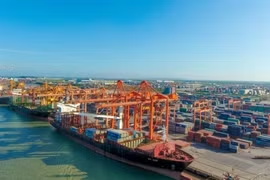
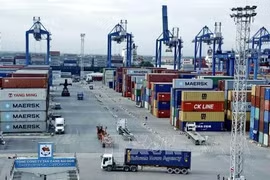
Additionally, the VILOG Insight Tour takes attendees on site visits to AJ Total Vietnam and Tan Cang – Hiep Phuoc Port, allowing businesses to directly observe modern logistics operations, cold-chain tech applications, and port management to find fitting solutions for their own supply chains./.
VNA