Vietnam moves to adapt to rapid population ageing, expand silver economy

The International Day of Older Persons 2026, themed “The Age of Longevity: Rethinking Systems for Longer Lives,” highlights the need to develop healthcare, social security, labour-market and social-service systems in response to increasing life expectancy. For Vietnam, rapid population ageing is not only a demographic issue but also a development challenge.

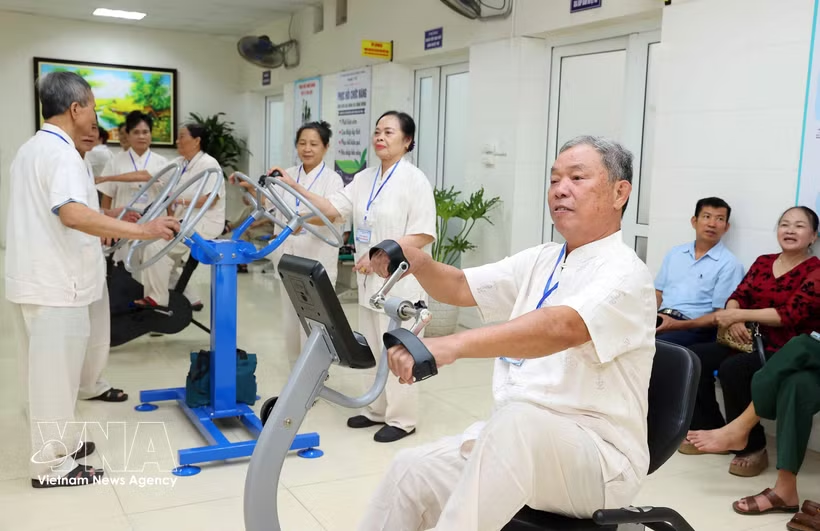
People have access to appropriate care, rehabilitation and support services within their communities (Photo: VNA)

Hanoi (VNA) - Vietnam needs to proactively adapt to rapid population ageing by improving policies and care systems, while creating conditions for older people to continue contributing to their families, communities and society and expanding the space for the silver economy, said insiders.

The International Day of Older Persons 2026, themed “The Age of Longevity: Rethinking Systems for Longer Lives,” highlights the need to develop healthcare, social security, labour-market and social-service systems in response to increasing life expectancy. For Vietnam, rapid population ageing is not only a demographic issue but also a development challenge.

Action strategy for the ederly

Vietnam began its ageing process in 2011 and is expected to become an ageing society by 2034, when people aged 65 and above will account for 14% of the population. The proportion is projected to exceed 21% by 2050.

Deputy Minister of Health Nguyen Thi Lien Huong said policies and the legal framework on older persons have continued to be improved towards broader coverage and better access to basic social services. Resolution No. 72-NQ/TW of the Political Bureau calls for developing elderly-care and rehabilitation facilities and improving coordination between healthcare and elderly-care services.

She said more than 2.5 million older people currently receive social retirement allowances, while about 80% have health-monitoring records and more than 69% receive annual health check-ups. However, only about 42% received pensions, social insurance allowances or social retirement allowances in 2025, below the 55% target. Elderly-care facilities and care workers also remain insufficient.
vnanet-ct2.jpg
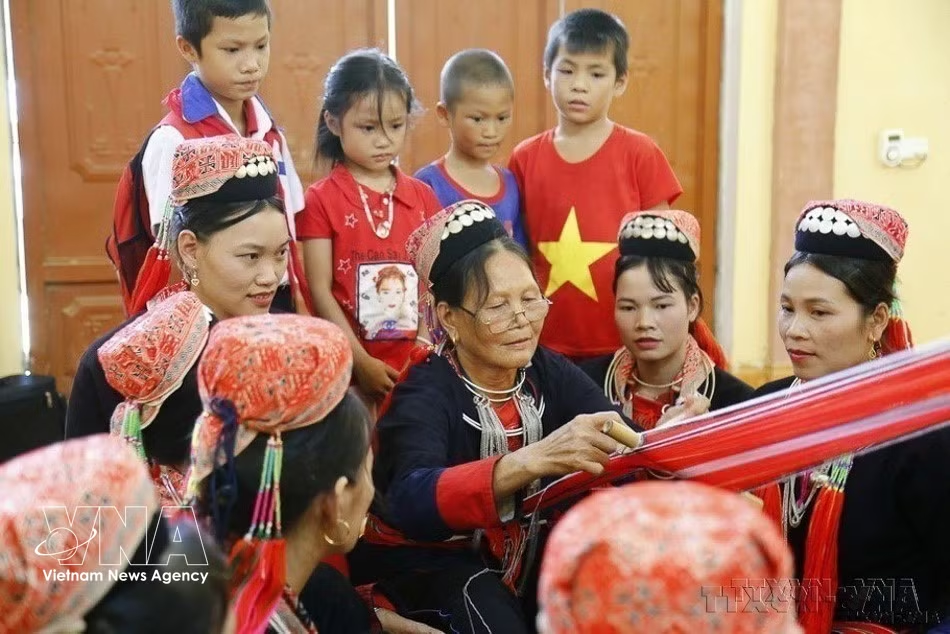
An elderly woman from the Dao Thanh Y Club in Eo village in Tuyen Quang province passes down the traditional brocade weaving craft of the Dao ethnic group to young people (Photo: VNA)

Ngo Anh Tuan, Deputy Head of the Department of Elderly Care under the Vietnam Association of the Elderly (VAE), called for a shift from addressing problems after they arise to proactive prevention and risk management, while ensuring older people’s legitimate rights and interests.

He proposed strengthening the VAE’s role in communications, social supervision and policy-making, developing data systems to identify risks early, and expanding community-based care models. Digital transformation, artificial intelligence and big data should also be used to forecast ageing trends, assess care needs and identify risks facing older people, he said.

Developing daycare services to expand silver economy

Developing care services suited to the needs of older people and their families can create new jobs, services and markets, contributing to the development of the silver economy.

Nguyen Thi Kim Thanh, Chairwoman of Nhan Ai International JSC, proposed developing daycare services as part of the elderly-care system. She said daycare could bridge the gap between family care and long-term residential care, enabling older people to remain with their families while receiving daytime support.

Daycare facilities could provide health monitoring, nutrition, medication management, physical exercise, rehabilitation and social activities, helping older people maintain mobility, independence and social connections.

To expand the model, Thanh proposed incorporating daycare into development plans for elderly care and the silver economy, establishing quality standards, encouraging social participation and public-private partnerships, and developing community-based daycare networks linked with home care, healthcare, rehabilitation and long-term care.

She also called for developing a professional elderly-care workforce and greater use of technology and data to connect older people, families, caregivers, service providers, healthcare facilities and communities.

Against the backdrop of rapid population ageing, daycare can serve as a bridge between families and professional care services, contributing to a more comprehensive care system and expanding the space for Vietnam’s silver economy./.

VNA

See more

Deputy Prime Minister Le Tien Chau addresses the meeting (Photo: VNA)

Deputy PM asks for highest education quality, safety for students

Regarding the construction of inter-level boarding schools in border communes, all 108 schools under Phase 1 opened for the 2026-2027 academic year, with 40 having completed all construction items. Procedures for groundbreaking at 121 schools under Phase 2 across 17 provinces and cities have been completed, with all projects targeted for completion before August 30, 2027.

Hanoi leaders attend the inauguration and groundbreaking ceremonies for projects. (Photo: VNA)

Hanoi launches 18 key projects worth nearly 4.94 billion USD

The city announced 292 projects with a combined investment of 384.886 trillion VND (14.92 billion USD), including 18 key projects worth 127.46 trillion VND, focusing on transport, infrastructure, environmental protection and public services.

With just a smartphone, a wealth of knowledge spanning tens of thousands of books can now be accessed in an instant. (Photo: Thanh Nien Newspaper)

Vietnam’s first shared digital library platform launched

Vietnam Digital Library Joint Stock Company (ViLiB) launched its “Digital Knowledge Space – Shared Digital Library” platform in Ho Chi Minh City on October 8, enabling libraries, schools and organisations to connect and share digital resources, thereby broadening access to books and knowledge.

Prime Minister Le Minh Hung are welcomed by staff of the Vietnamese Embassy, representatives of Vietnamese agencies and associations, and members of the Vietnamese community in Laos on October 9, 2026. (Photo: VNA)

Vietnam–Laos special ties nurtured by the people: PM Le Minh Hung

Prime Minister Le Minh Hung urged Vietnamese people in Laos to maintain solidarity, integrate proactively, respect Lao laws and educate younger generations about their national roots and the special Vietnam–Laos relationship. Calling Laos a country undergoing dynamic transformation with emerging opportunities

Vietnamese Deputy Minister of Foreign Affairs Ngo Le Van and his Lao counterpart Anouparb Vongnorke co-chair the conference. (Photo: VNA)

Vietnam, Laos enhance legal awareness among border village leaders

The conference aimed to help officials, specialised forces and village leaders gain a better understanding of border-related policies and laws, thereby enhancing their sense of responsibility for managing and protecting the border line and markers, maintaining public order and promoting economic development in border areas.

The international workshop on empowering women in the care economy on October 8, 2026 (Photo: VNA)

Int’l workshop focuses on women’s empowerment in the care economy

Vietnam has built a relatively comprehensive legal and policy framework to underpin the sector, including the Labour Code, the Law on Gender Equality, the Law on Social Insurance, the Law on Population and the National Strategy on Gender Equality for 2021-2030. Together, they set goals and measures to narrow gender gaps and give women and men equal opportunities to benefit across a range of areas.

A sea turtle nest found at Mui Tau Beach on Hon Cau Island after a night of rain. (Photo: VNA)

Sea turtle nests on Lam Dong's Hon Cau island for sixth time this year

Since the beginning of 2026, sea turtles have nested six times at three beaches on Hon Cau island, namely Nhat, Mui Tau and Ba Hon. Three nests were left undisturbed at safe locations, while another three were relocated to the incubation area for protection, involving a total of 246 eggs.