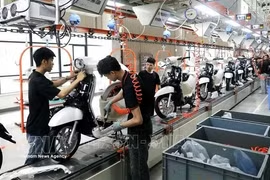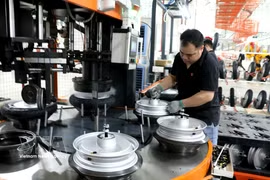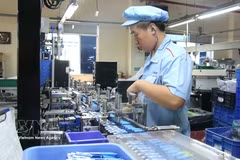
Hanoi (VNA) – Amid ongoing shifts in global production and supply chains, Vietnam is seeking to attract more high-quality foreign direct investment (FDI).
According to the National Statistics Office under the Ministry of Finance (MOF), Vietnam attracted 54.85 billion USD in registered FDI in the first 10 months of this year, up 74% year-on-year. The figure reflects the country's continued appeal to foreign investors. However, as competition for FDI intensifies, the challenge is not simply to increase investment capital but to attract projects that can generate broader benefits for the domestic economy.
At the Bac Ninh Industrial Forum 2026, participants highlighted the quality of FDI inflows and the ability of Vietnamese enterprises to join global supply chains. As multinational corporations adjust their investment strategies, low labour costs and preferential policies alone are no longer sufficient to maintain the country's long-term attractiveness. Investors are paying increasing attention to infrastructure, workforce quality and local suppliers' capacity.
According to a 2025 survey by the Japan External Trade Organisation (JETRO), the local procurement rate of Japanese manufacturers in Vietnam reached 38.1%, up 1.5 percentage points from the previous year. Purchases from Vietnamese companies accounted for 18.3%, the highest level since the survey began. However, 58.9% of Japanese businesses said they could not find local manufacturers capable of supplying the materials they needed. This highlights the remaining limitations in the capacity of domestic suppliers.
Vuong Thi Minh Hieu, Deputy Director of the MOF’s Foreign Investment Agency, stressed the need to shift from focusing on investment scale to improving the quality and efficiency of FDI.
Priority should be given to high-tech industries, electronics, semiconductors, supporting industries, and research and development (R&D), she said. At the same time, investment projects should be assessed based on their ability to connect with domestic businesses, facilitate technology transfer and increase added value.
A high-quality FDI project should not be measured solely by its registered capital or the modernity of its production lines. Its contribution should also be reflected in the development of domestic suppliers, the creation of skilled jobs and improvements in local production capacity.
If Vietnamese enterprises remain limited to simple production stages while most components and materials are imported, the spillover effects of FDI will remain modest.
This direction is consistent with the Politburo's Resolution No. 10-NQ/TW dated June 8, 2026, on developing the foreign-invested economic sector. The resolution calls for priority to be given to projects using advanced technologies and modern management practices, ensuring environmental protection and strengthening links with the domestic economy.
Alongside attracting major multinational corporations, localities therefore need to select projects capable of developing supplier networks and helping Vietnamese enterprises participate more deeply in global value chains.
Strengthening domestic enterprises' capacity
Bac Ninh city, with its strong electronics industry, has favourable conditions to develop supporting industries and strengthen links between foreign-invested and domestic enterprises.
Nguyen Minh Hieu, Director of the city's Department of Industry and Trade, said that during 2026-2030, Bac Ninh would prioritise electronics, semiconductors, mechanical engineering, automation and high-value supporting industries. It aims to have at least 700 enterprises operating in these priority sectors by 2030.
However, the goal is not simply to increase the number of businesses but also to improve their production capacity.
Small and medium-sized enterprises need better access to capital to invest in machinery and upgrade production processes. Businesses whose products already meet some investor requirements should receive support to improve quality management systems, product testing and supply capacity, gradually becoming direct suppliers to foreign corporations.
In terms of policy, the Government's Decree No. 205/2025/ND-CP dated July 14, 2025, amending and supplementing Decree No. 111/2015/ND-CP on supporting industry development, introduced additional mechanisms to help enterprises improve their competitiveness. Some activities related to market connectivity, management improvement, supplier development and digital transformation are eligible for financial support of up to 70%.
To make these policies more effective, authorities need to provide clearer guidance and help businesses access support programmes that match their actual needs.
In particular, business matchmaking activities should move beyond product promotion towards helping domestic companies secure specific orders. Management agencies and industry associations should work with FDI corporations to provide information on demand for components and materials, technical standards and supplier selection procedures.
This would help Vietnamese enterprises identify areas requiring improvement, invest in equipment and organise trial production. Support should continue until businesses are qualified to join supply chains, rather than ending with investment promotion conferences and networking events.
Alongside technological upgrades, workforce development is another urgent requirement.
Dinh Nam Thang, Deputy Head of the Industrial Zones Authority, said the development of high-tech industries must go hand in hand with training a skilled workforce that meets production requirements.
Training institutions should work more closely with businesses to develop programmes aligned with actual demand, particularly in automation, maintenance and quality control. Retraining and digital skills development for workers should also be stepped up.
Meanwhile, industrial infrastructure needs to be developed in a coordinated manner, shifting from simply providing production land to building an integrated industrial ecosystem linking FDI enterprises with domestic suppliers, training institutions and research organisations.
In addition to ensuring reliable electricity and water supplies and effective waste treatment, localities should improve transport connectivity, logistics and production support services./.
VNA