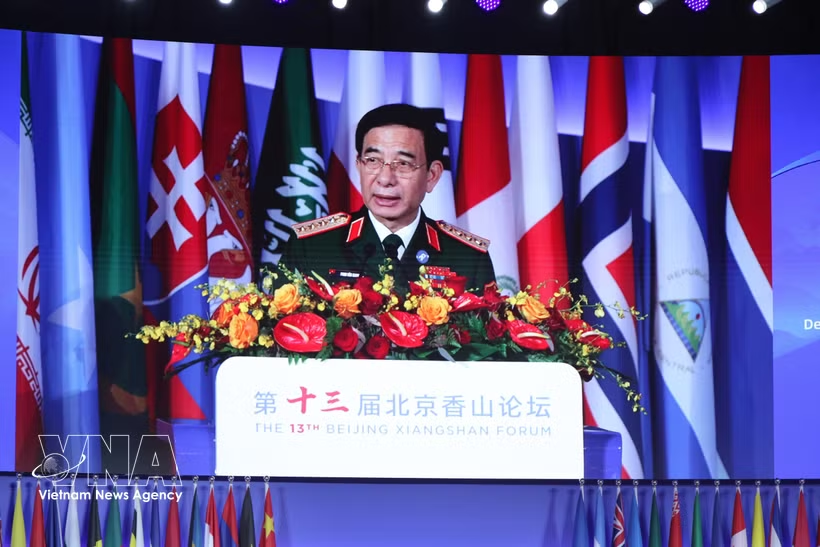
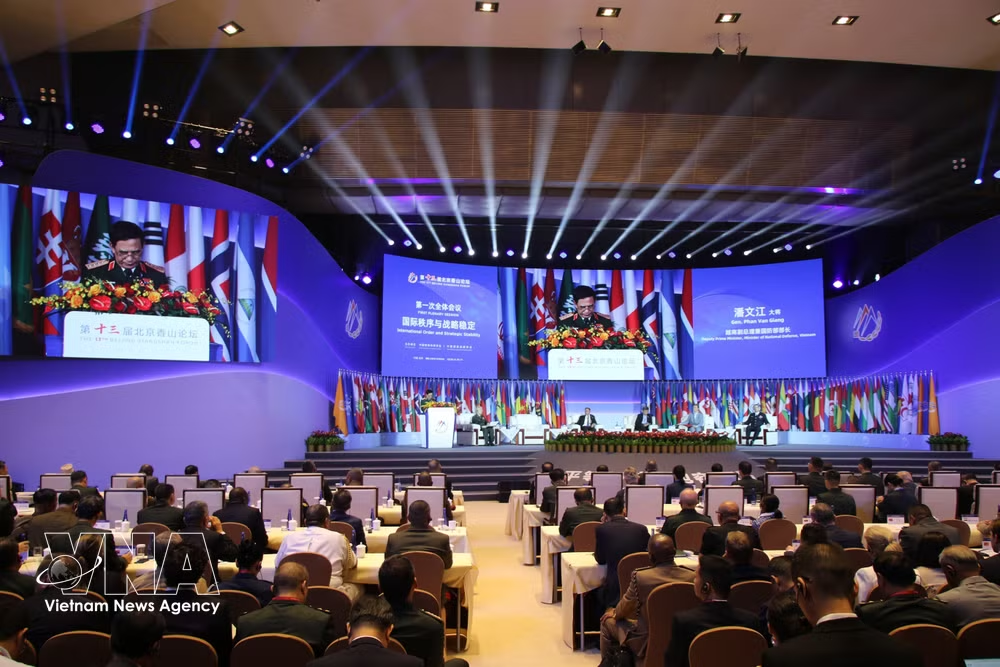
Beijing (VNA) – Vietnam places importance on multilateralism, dialogue and international law in building a fair, inclusive international order and maintaining strategic stability, Deputy Prime Minister and Minister of National Defence Gen. Phan Van Giang said at the 13th Beijing Xiangshan Forum in Beijing on September 16.
Addressing the first plenary session under the theme “International Order and Strategic Stability”, Giang said the world is undergoing complex and unpredictable changes, while peace and stability remain a common aspiration of the international community.
Countries continue to share the goal of promoting a fair and inclusive order based on international law. However, armed conflicts are occurring in many parts of the world, international law is not being strictly observed, and strategic competition aimed at rallying forces remains widespread. The use or threat of force, including weapons of mass destruction, is also making the global situation increasingly fraught with contradictions and concerns, he noted.
The Vietnamese representative stressed that promoting multilateralism means seeking to build a fair and inclusive international order founded on international law and international institutions. Such an order requires strategic stability, under which a peaceful environment is ensured and countries are treated equally, respect one another, pursue mutually beneficial cooperation, and resolve differences through dialogue in accordance with international law, international institutions, the UN Charter and regional commitments.
To strengthen the foundations of the international order and build strategic stability, Giang highlighted four key areas.
First, countries need goodwill, sincerity, strategic trust and a shared sense of responsibility. He underlined the importance of major powers shouldering greater responsibility, saying that the greater a country’s capabilities, the greater its responsibility should be. Regardless of their size, countries should respect each other’s independence and legitimate interests, refrain from seeking security at the expense of others’ stability, and prevent competition from narrowing the space for cooperation.
Second, international law, including the UN Charter, must be respected as the foundation governing relations among states. Without adherence to these principles, it would be difficult to establish a fair and inclusive international order and strategic stability.
Third, multilateral mechanisms should be promoted, with the United Nations playing a central role in global security governance. In the Asia-Pacific, ASEAN has an important role in shaping the regional architecture, maintaining peace and stability, preventing conflicts, promoting dialogue and building trust.
Regarding the East Sea, Vietnam consistently respects and fully implements the Declaration on the Conduct of Parties in the East Sea (DOC), while calling for efforts to accelerate negotiations toward an effective, substantive and feasible Code of Conduct in the East Sea (COC). Vietnam also remains committed to settling East Sea-related issues by peaceful means on the basis of international law, including the 1982 United Nations Convention on the Law of the Sea (UNCLOS).
Fourth, Giang stressed the need for solidarity, consensus, mutual assistance and sharing, noting that amid growing fluctuations, no country can effectively address increasingly complex traditional and non-traditional security challenges on its own.
He also expressed sympathy over the recent flash floods in the border area between China and Nepal and announced that the third Vietnam Defence Expo, scheduled for December, will carry the theme “Peace – Friendship – Cooperation for Development”, reflecting Vietnam’s desire to work with other countries to strengthen defence capabilities and contribute to regional and global peace.
The 13th Beijing Xiangshan Forum, held from September 15-17 under the theme “Build Consensus on Stability and Advance Security Governance Together”, brings together nearly 100 official delegations, as well as experts and scholars from countries, regions and international organisations./.