ASEAN urged to crack down on cyber, transnational scams

One of the key items on the meeting’s agenda was an ASEAN declaration on protecting children from online sexual abuse and exploitation, which addressed risks associated with artificial intelligence (AI)-generated content.

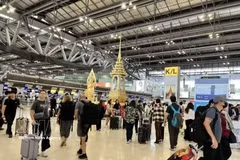
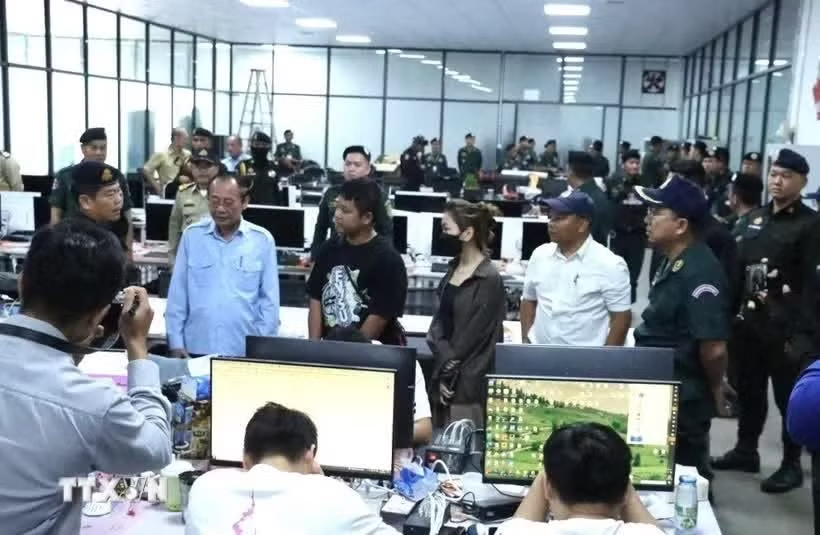
Police raid an online scam centre in Cambodia (Photo: AKP)

Hanoi (VNA) – Secretary of the Interior and Local Government of Philippines Jonvic Remulla urged ASEAN member states to modernise their responses to increasingly sophisticated criminal networks while addressing the 20th ASEAN Ministerial Meeting on Transnational Crime (AMMTC 20) in Makati City, the Philippines on October 21.

The local media cited him as saying that online scams, money laundering and drug trafficking are closely interconnected, while technology enables criminal groups to rapidly expand their operations across borders. Regional cooperation therefore needed to be stronger to protect citizens from emerging security threats.

One of the key items on the meeting’s agenda was an ASEAN declaration on protecting children from online sexual abuse and exploitation, which addressed risks associated with artificial intelligence (AI)-generated content. The ministers also discussed ASEAN’s first regional report on human trafficking, outlining achievements in combating the crime.

According to Remulla, ASEAN and its dialogue partners, including Japan, the Republic of Korea and China, are working to advance a joint declaration on strengthening cooperation against human trafficking, terrorism and cybercrime.

In addition to traditional forms of crime, the ministers also discussed threats associated with violent extremism driven by nihilistic ideologies. Remulla stressed that more intelligence sharing, border controls and law enforcement coordination among ASEAN countries remain key measures to effectively combat transnational criminal networks./.
​

VNA

See more

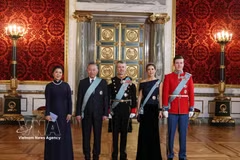
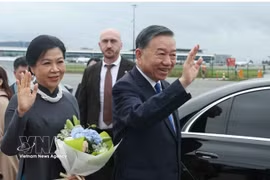
General Secretary of the Communist Party of Vietnam Central Committee and President To Lam (second, left) and his spouse Ngo Phuong Ly pose for a group photo with King Frederik X of Denmark, Queen Mary and Crown Prince Christian (Photo: VNA)

International media spotlights depth of Vietnam–Denmark ties

Danish media outlets, along with Canada’s Ground News, the UK’s hellomagazine.com, Yahoo and US magazine Town & Country, on October 19, stressed that the presence of Denmark's Crown Prince Christian, representing the next generation of the Danish Royal Family, during the visit, reflects the special importance Denmark and its Royal Family attach to strengthening friendship and multifaceted cooperation with Vietnam.

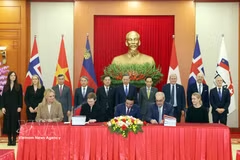
General Secretary of the Communist Party of Vietnam Central Committee and President To Lam (fifth, right) and delegates witness the signing ceremony of a free trade agreement between Vietnam and four members of the European Free Trade Association in Hanoi (Photo: VNA)

Vietnam-EFTA free trade pact expected to boost trade

Vietnam’s main exports to EFTA markets include seafood, footwear, textiles and garments, machinery, electronics and components. Meanwhile, Vietnam imports machinery, industrial equipment, chemicals, pharmaceuticals and production materials from EFTA countries.

Malaysia targets 250,000 international students by 2030

Malaysia targets 250,000 international students by 2030

Around 170,000 international students from 180 countries are currently studying in Malaysia, Minister of Higher Education Zambry Abd Kadir told the media after the closing ceremony of the International Young Future Leaders Summit 2026 (iFuture 2026).

Timor-Leste speeds up participation in ASEAN digital economic framework

Timor-Leste speeds up participation in ASEAN digital economic framework

For Timor-Leste, joining the ASEAN Digital Economy Framework Agreement will require improvements in institutional capacity, digital infrastructure and public digital skills, while offering domestic businesses opportunities to access broader markets. The move also represents a concrete step towards translating the country's ASEAN membership into tangible economic benefits.

Cambodia pledges to cut greenhouse gas emissions

Cambodia pledges to cut greenhouse gas emissions

Cambodia has reaffirmed its firm commitment to reducing greenhouse gas emissions and addressing climate change through technological modernisation, and pledged to work with the international community to cut emissions to the lowest possible level.

Cambodia steps up crackdown on online scam networks

Cambodia steps up crackdown on online scam networks

The national campaign against online scams has taken legal action against suspected operations, including raids, prosecutions and ongoing investigations into cases before the courts, according to a Cambodian official.

Cambodia spends over 70 mln USD on coffee bean imports

Cambodia spends over 70 mln USD on coffee bean imports

According to the Cambodian Ministry of Agriculture, Forestry and Fisheries, the country imports around 10,000 tonnes of coffee annually, mainly from Vietnam, Thailand, Laos, France, Italy, the US, Malaysia, Singapore, the Republic of Korea and Australia.

IMF-World Bank meetings give Thailand fresh year-end tourism boost

IMF-World Bank meetings give Thailand fresh year-end tourism boost

The events provide an opportunity to showcase Thai culture, performing arts and attractive destinations to international delegates, especially those visiting the country for the first time. The government hopes these experiences will encourage delegates to return to Thailand in the future, helping to raise the country’s international tourism profile.

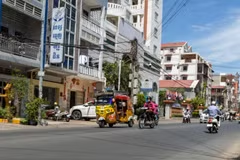
A corner of Phnom Penh (Photo: Pexels)

Cambodia optimistic about economic prospects

Cambodia’s national treasury currently held at least 2.5 billion USD in reserves. In the first nine months of 2026, its state budget revenue exceeded 5 billion USD, averaging 500-600 million USD per month.

(Photo: pib.gov.in)

India, ASEAN step up talks to upgrade trade in goods agreement

India and ASEAN signed AITIGA in 2009 to promote trade liberalisation and expand economic ties. However, changes in trade patterns, supply chains and the global economic environment have created a need to update the agreement to reflect current conditions.