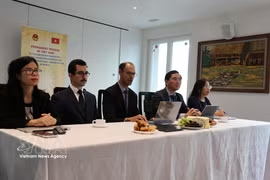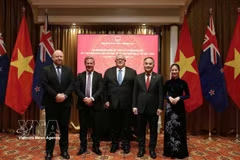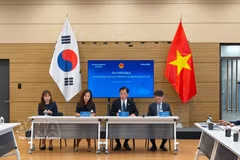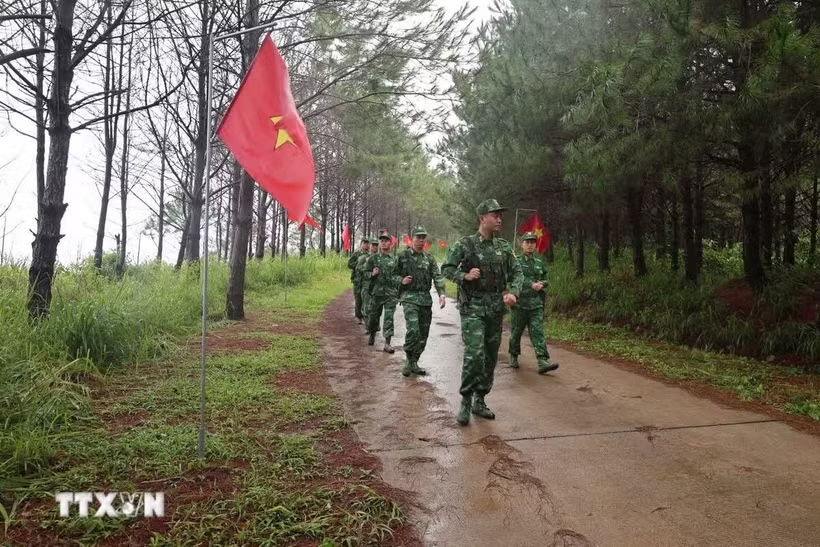
Hanoi (VNA) - On the occasion of the 33rd Diplomatic Conference and the 22nd National Conference on External Affairs, Nguyen Minh Vu, Party Central Committee member and Permanent Deputy Minister of Foreign Affairs, spoke to the press about the outcomes of border and territorial affairs, as well as priorities for safeguarding national sovereignty, promoting national interests, consolidating peace and stability, and expanding space for cooperation and development.
According to the Deputy FM, since the 32nd Diplomatic Conference and the 21st National Conference on External Affairs in December 2023, the Ministry of Foreign Affairs has implemented border and territorial affairs on both land and at sea, achieving a number of important results.
These achievements have strengthened the legal foundations for safeguarding sovereignty and Vietnam’s legitimate rights and interests, and protected land and sea borders. The achievements have also promoted negotiations, dialogue and cooperation, and linked border and territorial affairs with development-oriented diplomacy.
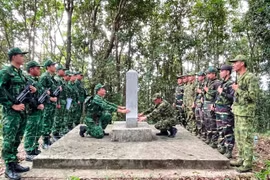
Since late 2023, Vietnam and its neighbouring countries have held 16 meetings of joint committees and specialised mechanisms, coordinated the management of border lines and markers in accordance with signed documents, promptly addressed emerging issues, and enhanced mutual understanding and trust. These efforts have helped create a firm social foundation for managing and protecting borders through peaceful means.
Development-oriented diplomacy in border areas has also produced concrete results. The Ban Gioc Waterfall (Vietnam) – Detian Waterfall (China) scenic landscape area has officially begun operations, while the Huu Nghi–Huu Nghi Quan smart border gate model is being piloted.
Since 2024, Vietnam has coordinated the inauguration and opening of six pairs of international and bilateral border gates, while restoring several traditional crossings. The Ministry of Foreign Affairs has also helped localities resolve difficulties related to the restructuring of administrative units, linking external relations more closely with border management and local development.
At sea, two major legal milestones have been Vietnam’s submission, on July 17, 2024, of a submission on the outer limits of the extended continental shelf beyond 200 nautical miles in the Central Area of the East Sea. Also, the Government announced on February 21, 2025, a declaration on the baseline used to calculate the breadth of Vietnam’s territorial sea in the Gulf of Tonkin.
In March 2025, Vietnam presented the legal and technical bases of its submission to the United Nations Commission on the Limits of the Continental Shelf, completing the presentation of the submissions it had made. These steps, which clarify the legal foundations and safeguard Vietnam’s legitimate rights and interests in accordance with the 1982 United Nations Convention on the Law of the Sea (UNCLOS), also reaffirm the country’s peaceful and responsible approach.
Vu said that, in the current context, the land-border situation with neighbouring countries is forecast to remain basically stable, although several issues persist, including changes in terrain, erosion, transnational crime, and requirements for infrastructure development and border-gate upgrades.
At sea, claims contrary to international law, strategic competition among major powers, and non-traditional security challenges are creating new requirements for safeguarding the country’s sovereignty over its seas and islands.
Against this backdrop, border and territorial affairs need to enhance forecasting capacity and prepare response options at an early stage and from a distance. They also need to prevent disagreements from developing into conflicts, and ensure that peace and stability are not maintained at the cost of narrowing Vietnam’s legitimate rights and interests.
He stressed that border and territorial affairs must remain resolute and persistent in safeguarding sovereignty and territorial integrity, maintaining border management, and peacefully resolving outstanding issues. At the same time, development-oriented diplomacy should be stepped up, while border and territorial management and policy advice should be modernised and the quality of human resources further improved./.