Building boarding schools: Ensuring equitable access to education, improving human resources in border areas

By the 2027-2028 academic year, Vietnam plans that border area communes with difficult travel conditions will construct inter-level boarding schools to meet local learning needs.

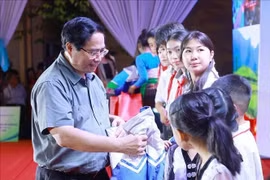
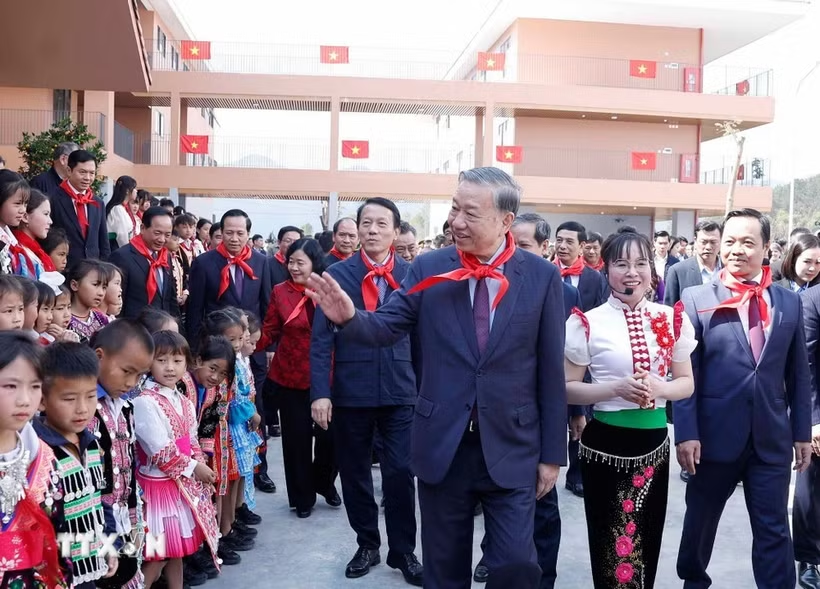
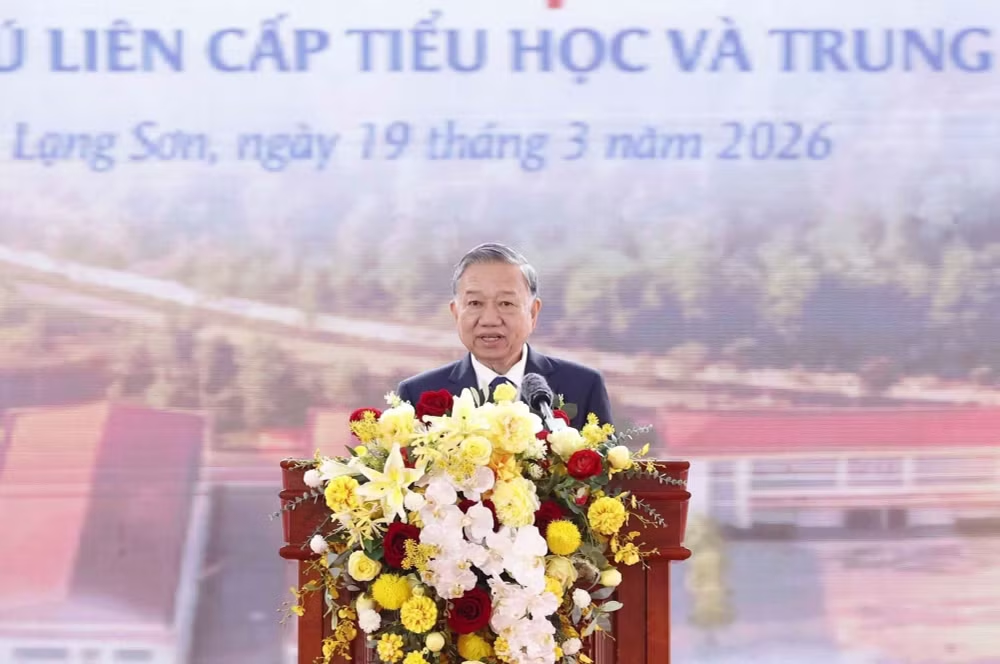
Party General Secretary To Lam speaks at the groundbreaking ceremony for 121 inter-level boarding schools in land border communes on the morning of March 19. (Photo: VNA)

Hanoi (VNA) – By the 2027-2028 academic year, Vietnam plans that border area communes with difficult travel conditions will construct inter-level boarding schools to meet local learning needs.

A groundbreaking ceremony for 121 boarding schools for primary and lower secondary education in the border communes was held simultaneously across 17 provinces and cities nationwide on March 19.

The event carries profound humanitarian significance, ensuring that all students, even those in the most remote border regions of the country, have equal access to quality education. It also holds political importance, as improving living standards and the quality of education in border areas helps strengthen national sovereignty.
vna-potal-tong-bi-thu-va-thu-tuong-du-le-khoi-cong-dong-tho-dong-loat-cac-truong-noi-tru-lien-cap-bien-gioi-8650064.jpg
Party General Secretary To Lam speaks at the groundbreaking ceremony for 121 inter-level boarding schools in land border communes on the morning of March 19. (Photo: VNA)

Accelerated construction

The project is being caried out in line with the Politburo’s Conclusion Notice No. 81-TB/TW dated July 18, 2025. Accordingly, a total of 248 such schools are planned for 248 border communes.

Given its significant humanitarian and socio-political importance, along with close attention from Party General Secretary To Lam and strong direction from the Prime Minister, the programme would be on an unprecedented scale at remarkable speed.

In Phase 1, on November 9, 2025, the Ministry of Education and Training organised the simultaneous groundbreaking of 100 inter-level boarding schools in 14 provinces. Thanks to strong mobilisation of resources, the actual number rose to 108 schools, all scheduled for completion before August 30, 2026.

In Phase 2, construction has begun on 121 schools with a total estimated investment of 30,000 billion VND (approximately 1.2 billion USD), including around 28,000 billion VND (1.12 billion USD) from the central budget and 2.1 trillion VND (80 million USD) from local budgets. These schools are expected to be completed before August 30, 2027, in time for the 2027–2028 school year.

Compared to the original target of 248 schools, the number has been reduced by 19, as some localities have more favourable terrain or do not require boarding models. Others regions have used their own budgets for construction.

At the launch of the programme, Prime Minister Pham Minh Chinh emphasised ambitious progress targets, urging ministries, sectors and border localities to act decisively, work urgently, and implement the programme with determination, while continuously reviewing, learning from experience and making necessary adjustments to ensure effectiveness and sustainability.

He stressed that the work must be carried out with the highest sense of responsibility, for national interests and for the future of children in border communities.

Currently, across provinces with border communes, construction of boarding schools is progressing rapidly, with efforts continuing day and night despite challenging conditions.

Demonstrating this pace, the Si Pa Phin Inter-level Boarding School for Primary and Lower Secondary Education in the northern mountainous province of Dien Bien, the first school under the programme, was inaugurated on January 31, just six months after construction began, meeting the expectations of residents.

Dream schools taking shape

At the inauguration ceremony of the Si Pa Phin school, Lo Thi Long Nhi, an eighth-grade student, expressed her joy at studying in a modern, well-equipped new school, and pledged to study diligently and contribute to the development of her hometown at the border.
1903-tong-bi-thu-khoi-cong-truong-noi-tru-bien-gioi-6.jpg
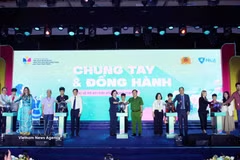
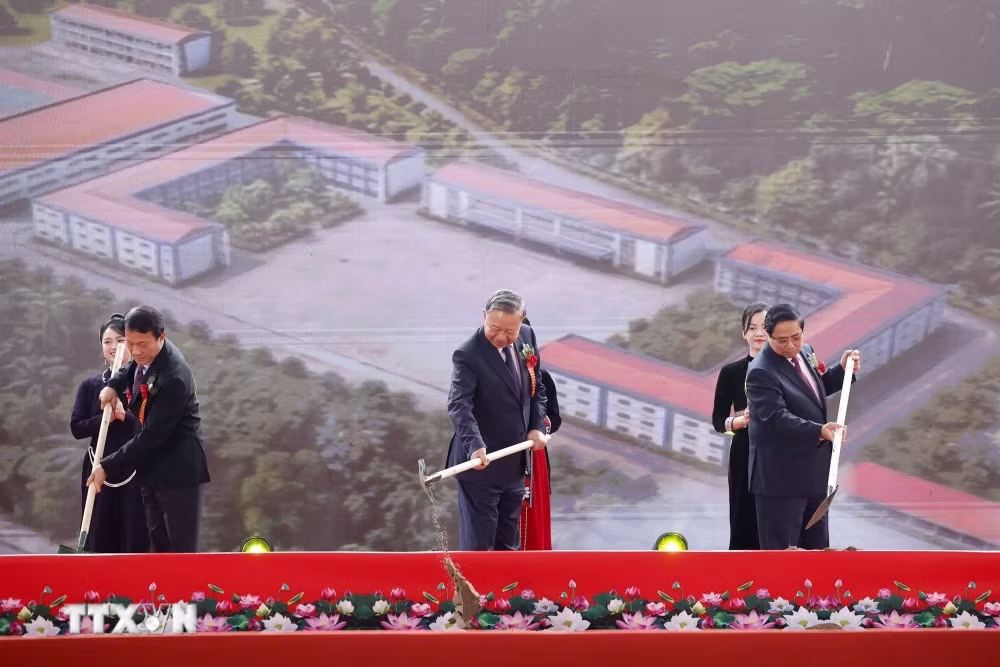
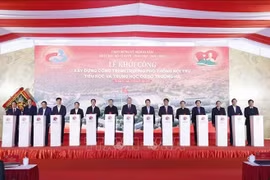
Party General Secretary To Lam, Prime Minister Pham Minh Chinh, and delegates perform the groundbreaking ceremony for the simultaneous construction of inter-level boarding schools in border areas. (Photo: VNA)

For students and residents of Si Pa Phin, the school is considered a dream come true. Covering 6.88 hectares, it is designed in the image of traditional stilt houses of highland communities, blending harmoniously with the northwestern mountainous landscape. It is equipped with modern, synchronised facilities to accommodate more than 1,000 students.

The academic area includes 31 standard classrooms, 14 subject rooms, and rooms for educational equipment, music, STEM programming, counselling, and a library. The boarding and staff housing area comprises administrative offices, 120 dormitory rooms for students, and 15 staff accommodation rooms.

The school also features a multi-purpose hall, cultural house, sports grounds, swimming pool, kitchen, and standard sanitation facilities.

With its spacious environment, modern classrooms and well-developed boarding and staff facilities, the school represents not only a dream for students in border areas but also an aspiration even for those in more advantaged regions.

Beyond Si Pa Phin, under the Prime Minister’s direction, all boarding schools in border areas must meet high-quality standards. Each school is planned to cover 5–10 hectares, including areas for learning, boarding, staff housing, physical training, cultural activities, experiential learning, and production activities. Locations must ensure convenient transport connections and sufficient essential infrastructure such as electricity, clean water, wastewater systems, and telecommunications. Designs must also reflect regional characteristics.

Planning and design are required to be modern, suitable to the local climate, culture, and terrain. In areas with uneven topography, designs must ensure connectivity, prevent landslides, optimise land use, and facilitate student access.
vna-potal-tong-bi-thu-va-thu-tuong-du-le-khoi-cong-dong-tho-dong-loat-cac-truong-noi-tru-lien-cap-bien-gioi-8649904.jpg
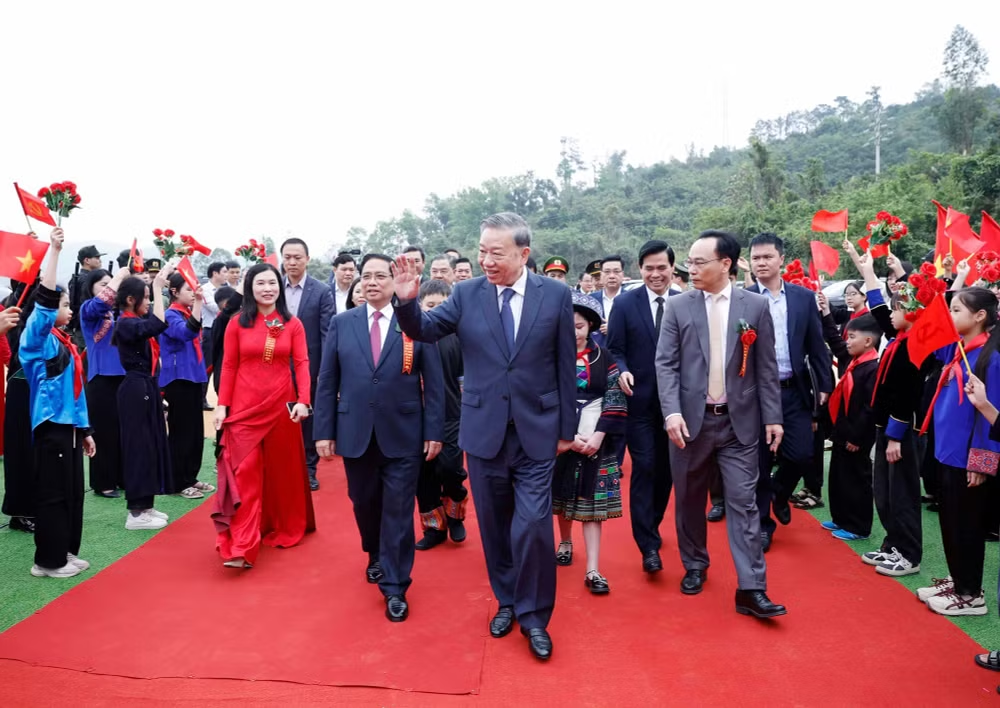
Party General Secretary To Lam, Prime Minister Pham Minh Chinh and Acting Minister of Education and Training Hoang Minh Son attend the groundbreaking ceremony for a border boarding school project. (Photo: VNA)

Party General Secretary Lam affirmed that education and training are identified as a top national priority and a foundation for rapid and sustainable development. In border, remote, and disadvantaged areas, education not only improves knowledge but also serves as a fundamental, long-term solution to safeguarding national sovereignty at its roots, through people and communities attached to their land and borders.

The overarching goal, he noted, is to create favourable conditions for teachers to work with peace of mind and long-term commitment, and for students to study and develop in the best possible environment, ensuring that all children, regardless of location, have equal opportunities to realise their potential and contribute to society.

He also stated that the Party and State will continue to expand the inter-level boarding school model for other disadvantaged areas with large ethnic minority populations, thereby narrowing development gaps and ensuring equitable access to education.
VNA

See more

The former headquarters of the Vietnam Fatherland Front Committee of Ha Dong district in Hanoi has been converted into a school following the administrative restructuring. (File photo - Source: thoibaotaichinhvietnam.vn)

Development resources unlocked via two-tier local administration model

According to the Ministry of Finance's one-year review report on the restructuring of administrative units and the operation of the two-tier local administration model, the first phase of handling 25,885 state-owned land and property facilities has been completed nationwide.

Each exhibition area, featuring distinctive designs and modern technology, offers immersive experiences that help visitors gain deeper insights into the history, customs, traditions and rich cultural life of Vietnam’s ethnic communities. (Photo: VNA)

Vietnam Museum of Ethnology embraces AI to shape digital future

In recent years, the museum has stepped up the application of technology to transform traditional exhibition spaces into interactive and immersive experiences. The process began in 2021 with the launch of an exploration room for children featuring interactive screens.

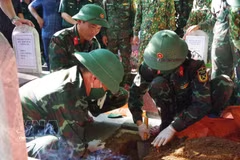
Working groups collect DNA samples from remains of martyrs at Truong Son National Martyrs’ Cemetery. (Photo: VNA)

Communication drive promoted for 500-day campaign to locate, identify fallen soldiers’ remains

Under the plan, all central and local media outlets are required to launch columns on the campaign, maintain regular coverage, and produce at least five to seven in-depth reports each month in key search areas. Media agencies will also be encouraged to gather and verify valuable information and develop high-quality products in both Vietnamese and foreign languages, including feature articles, documentaries, reports and short videos.

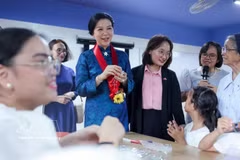
Ngo Phuong Ly, spouse of General Secretary of the Communist Party of Vietnam Central Committee and State President To Lam, visits the Asilo de San Vicente de Paul Centre in Manila, the Philippines, on June 1. (Photo: VNA)

Vietnam's First Lady visits disadvantaged children in Philippines

Ngo Phuong Ly, spouse of Party General Secretary and State President To Lam, expressed her emotion at seeing the children’s optimism despite difficult circumstances, noting that both Vietnam and the Philippines place children at the centre of their development policies, from education, health care to child protection.

The Buddha procession around Phat Tich Pagoda in Vientiane, Laos. (Photo: VNA)

Buddhist activities help strengthen Vietnam–Laos special relationship

Addressing the event, Venerable Thich Minh Quang, abbot of Phat Tich Pagoda, said Vesak not only meets the spiritual needs of the Vietnamese community in Laos but also contributes to promoting people-to-people exchanges and deepening the special friendship between the two neighbouring countries.

At the press centre for the 14th National Party Congress. (Photo: VNA)

📝 OP-ED: Vietnam’s media landscape challenges narrow assessments of press freedom

As digital transformation and global integration reshape the information landscape, Vietnam’s press sector continues to solidify its role as a key channel connecting the Party, State and people while providing comprehensive coverage of social life. The sector’s evolution reflects the country’s efforts to advance press freedom in line with its development goals and national circumstances.

The ribbon-cutting ceremony marks the inauguration of Dai An Tokyo Pagoda on May 31. (Photo: VNA)

First Vietnamese pagoda in Tokyo inaugurated

Ambassador Pham Quang Hieu expressed confidence that the establishment will serve as a strong spiritual anchor for Vietnamese people living in Japan while contributing to friendship and cultural exchanges between the two countries.

At the press conference on May 30. (Photo: VNA)

State President approves amnesty for 9,950 prisoners

Among the 9,950 inmates granted amnesty are 133 prisoners linked to cases monitored by the Central Steering Committee for Prevention and Control of Corruption, Wastefulness, and Negative Phenomena. The list also includes 63 foreign nationals, comprising 56 men and seven women.

Deputy Foreign Minister Dang Hoang Giang (right) meets with UNFPA Representative in Vietnam Matt Jackson in Hanoi on May 29. (Photo: Ministry of Foreign Affairs)

Vietnam seeks UNFPA support in negotiations on convention on older persons’ rights

Vietnam is stepping up international cooperation on ageing-related issues and requested UNFPA’s continued support through technical expertise, international experience and policy recommendations in areas such as population ageing, long-term care, the care economy, the silver economy and promoting the role of older persons in society.

Representatives of the armed forces of southern Lao provinces offer flowers at the ceremony. (Photo: VNA)

Remains of fallen Vietnamese volunteer soldiers, experts repatriated from southern Laos

Speaking at the ceremony, Sisanga Keodouangdy, Vice President of the Sekong provincial Administration Committee and head of the province’s Special Task Committee, expressed profound gratitude to the Vietnamese volunteer soldiers and experts who made great sacrifices for the independence and freedom of both nations and for the noble international mission.

Participants mark the launch of the national drive to protect and support children in cyberspace for the 2026–2030 period on May 29. (Photo: VNA)

National drive kicks off to protect, support children online

Cyberspace now runs through children’s learning, entertainment, and daily lives, but warned it is laced with dangerous content, online insults, threats, and seemingly harmless clicks that can trigger fraud, data breaches, and risks children who are not yet equipped to handle.