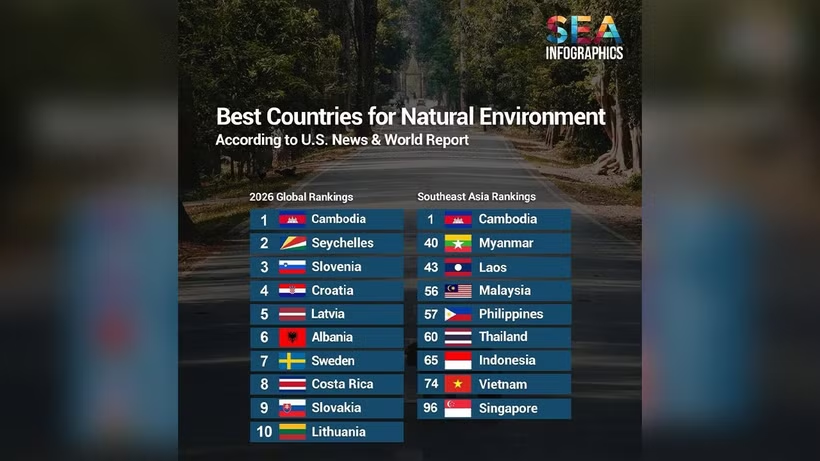
Phnom Penh (VNA) – Cambodia has been ranked the world’s leading country for natural environment in 2026 by US News & World Report, highlighting the Southeast Asian nation’s efforts in environmental protection, biodiversity conservation and sustainable development.
According to the global rankings released by the US-based media company, countries were assessed based on environmental governance, air quality, natural resource management and biodiversity conservation, as well as their ability to balance economic growth with environmental sustainability.
Cambodia currently manages 73 protected natural areas covering more than seven million hectares, equivalent to about 41% of the country’s total land area.
According to the Cambodian Ministry of Environment, these protected areas play a vital role in forest conservation, wildlife habitat protection and biodiversity preservation through stricter law enforcement and conservation measures.
The ministry said it has been working closely with ministries, agencies, local authorities, conservation communities and development partners to strengthen the sustainable management of environmental and natural resources.
It also reaffirmed its commitment to implementing the Circular Strategy on Environment, which focuses on maintaining a clean, green and sustainable environment.
In recent years, Cambodia has accelerated nationwide reforestation programmes through tree-planting campaigns. The ministry said at least one million saplings have been distributed to local communities in efforts to restore forests and expand green coverage across the country.
The programme is expected to enhance climate resilience, support local livelihoods and contribute to Cambodia’s target of achieving carbon neutrality by 2050./.
Vietnam, Cambodia boost supply chain connectivity
Total two-way trade neared 10.1 billion USD in 2024, up 17.5% year-on-year and jumping to more than 11 billion USD in 2025. Vietnam’s key exports to Cambodia include apparel, iron and steel, petroleum, machinery and equipment, chemicals, and processed food. Its main imports are cashew nuts, rubber, farm produce, and industrial raw materials.