Children’s songs for President Ho Chi Minh: Melodies that connect generations

Many Vietnamese, particularly those from earlier generations, still recall with vivid emotion elicited from the melodies that once echoed through schoolyards and village squares.

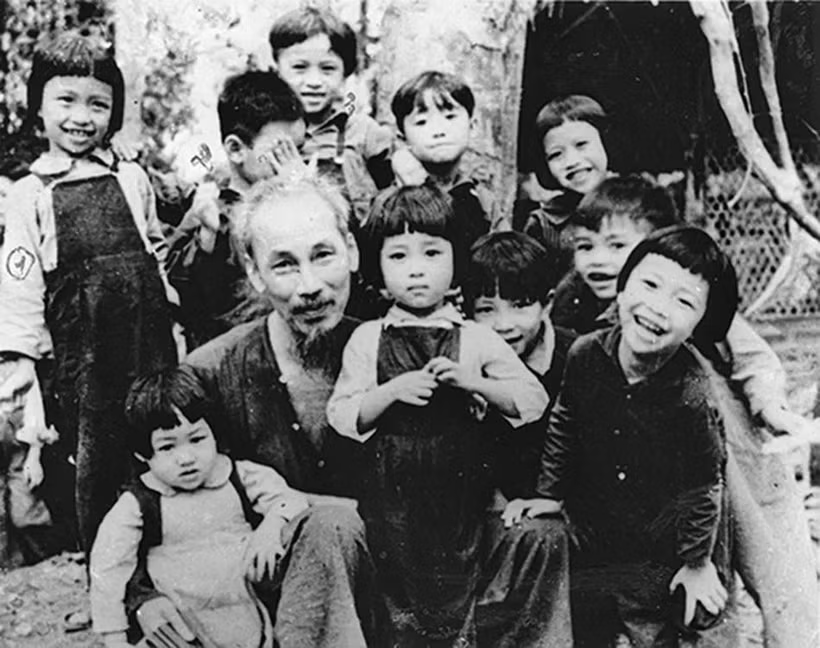
President Ho Chi Minh visits the army’s first boarding kindergarten in the Viet Bac revolutionary base on the occasion of his birthday, May 19, 1953. (File photo: VNA)

Hanoi (VNA) – Songs composed to express children's love and admiration for President Ho Chi Minh hold a unique place in Vietnam’s cultural and musical heritage. With their gentle melody and heartfelt lyrics, these songs have long transcended music to become lasting symbols of national identity, patriotism, and affection for the late leader.

Many Vietnamese, particularly those from earlier generations, still recall with vivid emotion elicited from the melodies that once echoed through schoolyards and village squares.

For people like Phuong Lan from Lieu Giai ward of Ba Dinh district, Hanoi, such songs evoke strong childhood memories.

She shared that even now, when she hears those songs, she feels a stirring in her heart. Growing up in the 1970s, her youth was closely tied to revolutionary songs, particularly those dedicated to children’s affection for “Uncle Ho” as President Ho Chi Minh is lovingly known.

Among the most enduring titles are "Ai yeu Bac Ho Chi Minh hon thieu nien nhi đong" (Who loves Uncle Ho more than children), “Dem qua em mo gap Bac Ho” (Last night I dreamt of meeting Uncle Ho), and “Tu rung xanh chau ve tham lang Bac” (From the forest, I came to visit Uncle Ho’s mausoleum). These are not just songs but echoes of a time when children strove to behave well and study hard to earn the cherished title “Uncle Ho’s Good Children.”
1405giandi1.jpg
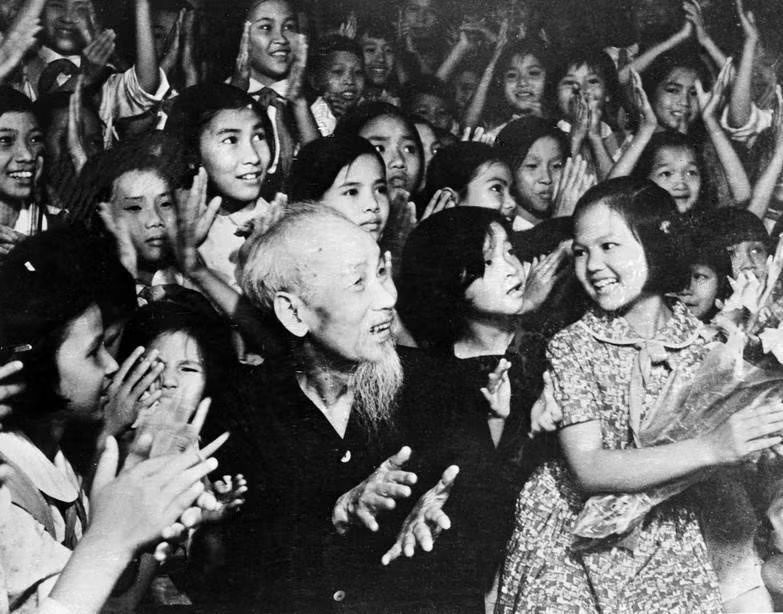
Uncle Ho and Hanoi children watch musical performances at the Presidential Palace on May 31, 1969 evening, on the occasion of the International Children’s Day (June 1). (File photo: VNA)

Composed in the midst of historical milestones, many of these songs serve as emotional time capsules. The iconic "Ai yeu nhi dong bang Bac Ho Chi Minh" by Phong Nha was created in 1945, inspired by the sight of children cheering as President Ho read the Declaration of Independence at Ba Dinh Square. Touched by the moment when the President warmly waved to the young crowd like a grandfather to his grandchildren, Phong Nha sought to capture this spirit in a song that is simple, loving, and reverent. The resulting lyrics, describing Ho Chi Minh as a tall, gentle man with bright eyes and a long beard, have since been memorised by generations.
1505thieunhibh8.jpg
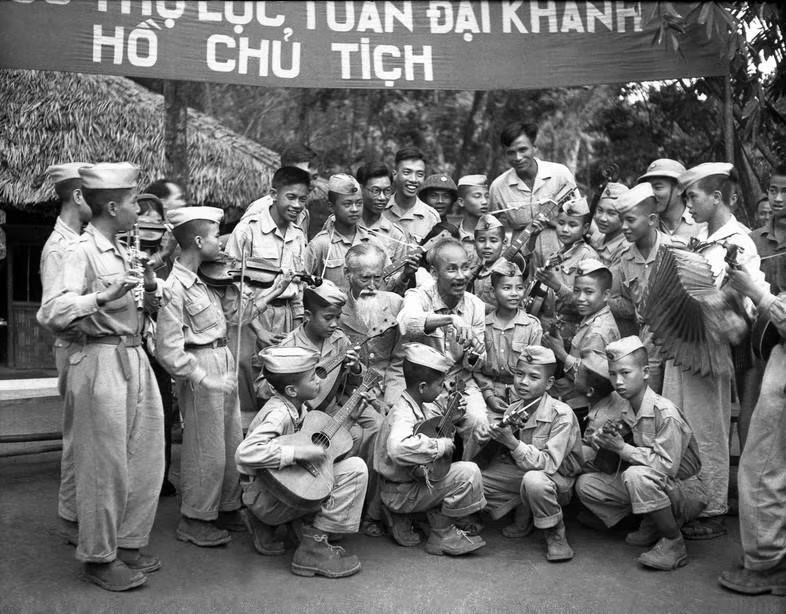
President Ho Chi Minh in a photo with a children’s arts troupe from Inter-region 5 and an army children team who visit to offer him the 60th birthday wishes in Viet Bac on May 19, 1950. (File photo: VNA)

Another celebrated composition, "Dem qua em mo gap Bac Ho" was written by Xuan Giao in 1969 shortly after the leader’s passing. Deeply moved by the national mourning and personal memories of meeting the President in 1946 at the age of 15, the composer translated his grief into a touching lullaby-like tune. Its lyrics reflect a child’s dream of meeting the late leader again, singing and dancing joyfully in his presence. For over five decades, the song’s vitality remains intact and it has still been performed at children's programmes and commemorative events.

Equally significant is "Nhu co Bac Ho trong ngay vui dai thang" (As if Uncle Ho were with us on the day of great victory), written by Pham Tuyen on April 28, 1975 night, just before Vietnam’s reunification on April 30, 1975. Composed in merely two hours and recorded on the same day of the national reunification to be broadcast on Radio the Voice of Vietnam, the song captured national elation. With concise yet powerful lyrics, it remains one of the most recognised patriotic songs, often sung at anniversaries and major events.

In 1978, another piece, "Tu rung xanh chau vet tham lang Bac", by brothers Hoang Long and Hoang Lan, continued the emotional narrative. Depicting a child’s journey from a remote village to Hanoi’s Ba Dinh Square to visit Uncle Ho’s Mausoleum, the song’s cheerful rhythm and pure lyrics express the excitement of fulfilling a long-held dream.
1505thieunhibh21-1.jpg
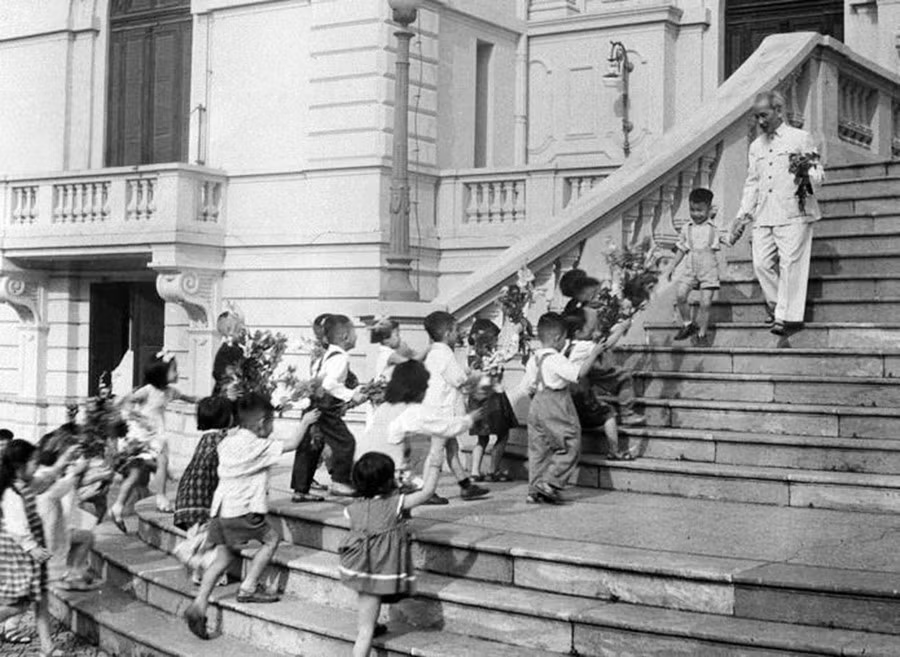
President Ho Chi Minh welcomes children at the Presidential Palace on the Mid-Autumn Festival in 1961. (File photo: VNA)

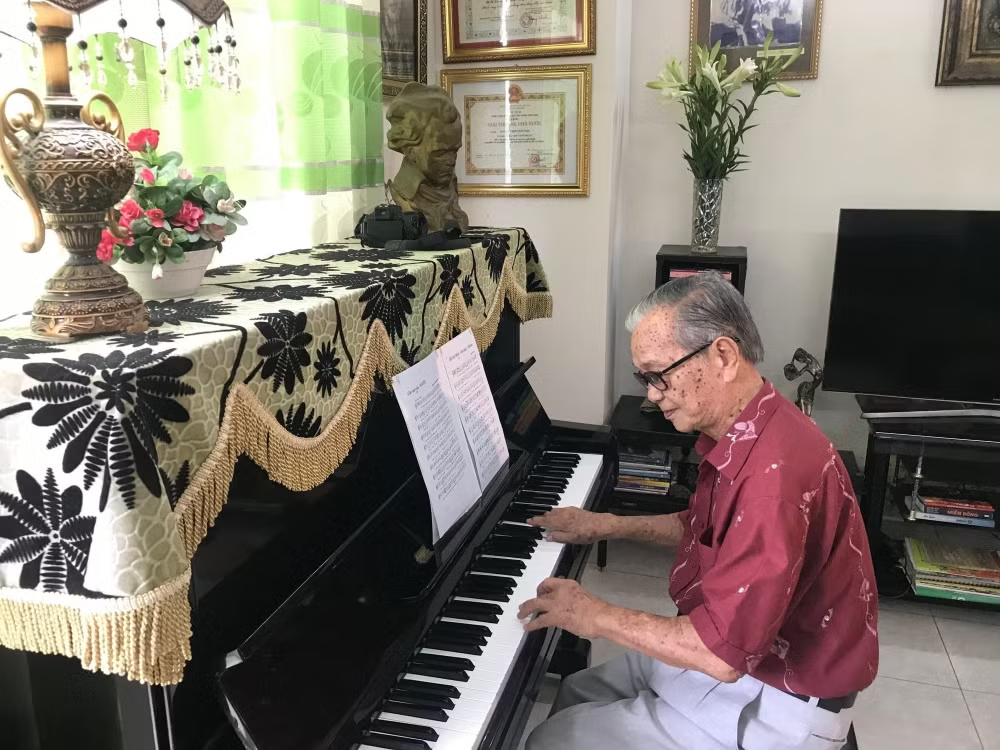
For musician Tran Viet Binh, who sang "Ai yeu Bac Ho Chi Minh hon thieu nien nhi dong" to the President when Binh was a 12-year-old in 1946, the experience left a lifelong impression. Later in life, Binh dedicated himself to children's music, including the award-winning "Chau ngoan Bac Ho" (Uncle Ho’s Good Child), reflecting his enduring inspiration from those formative meetings with the leader.

Many musicians agree that writing songs for children presents unique challenges—it requires not only simplicity but also sincerity. According to Binh, the best compositions manage to weave life lessons and values subtly into joyful melodies that resonate with young minds.
fbnv.jpg
Musician Tran Viet Binh is currently living in Dong Nai province. (Photo courtesy of the musician)

In schools across Vietnam, particularly in May when the nation celebrates President Ho Chi Minh’s birthday, these songs are brought to life anew. Children learn about the President’s five teachings, sing songs in school assemblies, and engage in activities that keep the memory and spirit of Uncle Ho alive.

As Vietnam continues to grow and change, these beloved compositions remain a cultural thread connecting generations. Their enduring popularity serves as both a tribute to the late President and a reminder of the values of love, humility, and patriotism he inspired in the hearts of children./.
VNA

See more

Deputy General Director of the Vietnam News Agency Doan Thi Tuyet Nhung (fifth, right) and representatives of regional news agencies and media organisations attend the launch of the Asia-Pacific Media Partnership Organising Committee at the Asia-Pacific Media Forum. (Photo: VNA)

VNA attends Asia-Pacific Media Forum in Shenzhen

Participants in the forum highlighted the need to increase coverage of the region's rapid opening-up and integration, provide comprehensive information on the progress and achievements of cooperation among economies across various fields, and help create a favourable environment for regional development.

Ngo Phuong Ly (right), the spouse of General Secretary of the Communist Party of Vietnam Central Committee and President To Lam, and Kyu Kyu Hla, the spouse of Myanmar President Min Aung Hlaing, visit Van Phuc silk village on September 5. (Photo: VNA)

First ladies of Vietnam, Myanmar visit Van Phuc silk village

Ngo Phuong Ly, the spouse of General Secretary of the Communist Party of Vietnam Central Committee and President To Lam, said the two countries share similarities in silk weaving and can enrich their cultural heritage through exchanges and experience sharing.

Prime Minister Le Minh Hung join students and teachers of the Muong Khuong Inter-level Primary and Secondary Boarding School, Lao Cai province, in the opening ceremony of the 2026–2027 academic year on September 5. (Photo: VNA)

PM urges substantive education reform in 2026–2027 school year

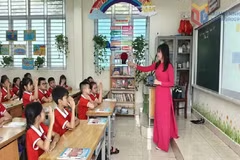
PM Le Minh Hung called on the education sector to continue making strong changes in management mindset and teaching methods, putting learners at the centre, and viewing schools as the foundation, teachers as the driving force, families as a source of support and society as a resource accompanying education development.

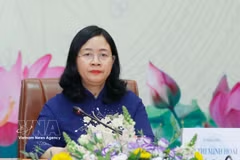
General Secretary of the Communist Party of Vietnam Central Committee and President To Lam (Photo: VNA)

Top leader extends message to education sector on new school year

Party General Secretary and President To Lam expressed confidence that with the nation’s traditional fondness for learning, the dedication of teachers and the aspirations of the younger generation, the 2026–2027 academic year will open a new chapter of progress for the country’s education sector.

Students attend the opening ceremony for the 2026–2027 academic year at the primary school campus of the Gia Quat Primary and Secondary School in Hanoi on September 5, 2026. (Photo: VNA)

Students across Vietnam begin 2026–2027 academic year

This milestone school year marks a pivotal transition from laying the groundwork for reform to delivering substantive changes as the country pushes ahead with implementing Politburo Resolution No. 71-NQ/TW on breakthroughs in education and training development.

Team K91 members depart to carry out their mission. (Photo: VNA)

Search efforts continue for Vietnamese fallen soldiers in Cambodia

During the 2026-2027 dry season, Teams K70, K71, K72 and K73 will continue their search and repatriation mission, striving to fulfil the target based on 185 pieces of information concerning 761 graves. Each team is expected to collect at least 100 sets of remains during each deployment.

Mai Nguyen Tuyet Hoa, First Secretary in charge of education affairs at the Vietnamese Embassy in Russia speaks at the closing ceremony (Phôt: VNA)

AI application boosts Russian language training in Vietnam

The programme introduced updated methods for teaching Russian as a foreign language while focusing on the application of digital technology and AI in lesson design to enhance the professional capacity and adaptability of Russian-language teachers amid changes in modern education.

A resident accesses the iHanoi app. (Photo: VNA)

Hanoi launches real-time flood and rainfall map on iHanoi

The map uses a standard colour scale to provide a visual assessment, enabling residents to gauge the level of danger within seconds. The application is expected to strengthen the capital’s disaster response capacity while helping residents plan safer routes during the rainy and stormy season.

Representatives of Naval Region 4 Command present 32 gift packages to the fishermen. (Photo published by VNA)

32 fishermen rescued at sea safely return home

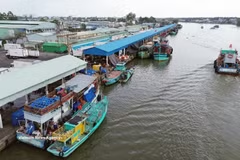
Thirty-two fishermen rescued after their fishing vessel, coded QNa 90859 TS, encountered an accident at sea, were safely brought back to their hometown in Nui Thanh commune, the central city of Da Nang.

Dr. Do Xuan Hoang, Chairman of the Union of Vietnamese Organisations in Russia. (Photo: VNA)

Resolution marks new policy approach toward overseas Vietnamese

Chairman of the Union of Vietnamese Organisations in Russia Dr. Do Xuan Hoang said the Politburo’s Resolution 23-NQ/TW on overseas Vietnamese (OV) affairs is timely and more comprehensive, better aligned with the rapid evolution of the Vietnamese community abroad after more than two decades under the Politburo’s Resolution 36-NQ/TW issued on March 26, 2004.

Vietnamese companies showcase tourism in Beijing (Photo: VNA)

Hanoi pitches tourism in Beijing to deepen travel ties

Deputy Director of the Beijing Municipal Bureau of Culture and Tourism Guo Zhuqing said Beijing and Hanoi are key gateways for bilateral cultural and tourism exchange, with conditions in place to boost visitor numbers, build trust and expand business cooperation, thus supporting people-to-people ties.

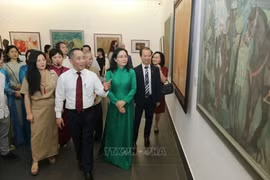
Students contemplate paintings at the exhibition (Photo: VNA)

Vietnamese in Laos, Singapore honour President Ho Chi Minh on National Day

The display features 50 paintings by the late overseas Vietnamese artist Dao Trong Ly created between 2018 and 2024. Co-hosted by the Vietnamese Embassy in Laos, the Vietnam Cultural Centre in Laos and the Vietnam Fine Arts Museum, it serves as both a cultural highlight for Vietnam’s 81st National Day (September 2) and a bridge for Vietnam-Laos special solidarity.

Standing Deputy Prime Minister Pham Gia Tuc offers incense in tribute to President Ho Chi Minh. (Photo: VNA)

President Ho Chi Minh’s hometown holds ceremony marking his 57th death anniversary

Speaking at the event, Secretary of the Nghe An provincial Party Committee Nguyen Khac Than said commemorating President Ho Chi Minh is not only an expression of gratitude to the beloved leader of the Vietnamese nation, but also an opportunity for officials, Party members and people to better understand their responsibility to carry out his wishes for the country.