Beijing (VNA) - The Old Town of Lijiang and Jade Dragon Snow Mountain in China’s Yunnan province are emerging as increasingly popular destinations among Vietnamese tourists, opening up new opportunities for tourism cooperation between Vietnam and Yunnan.
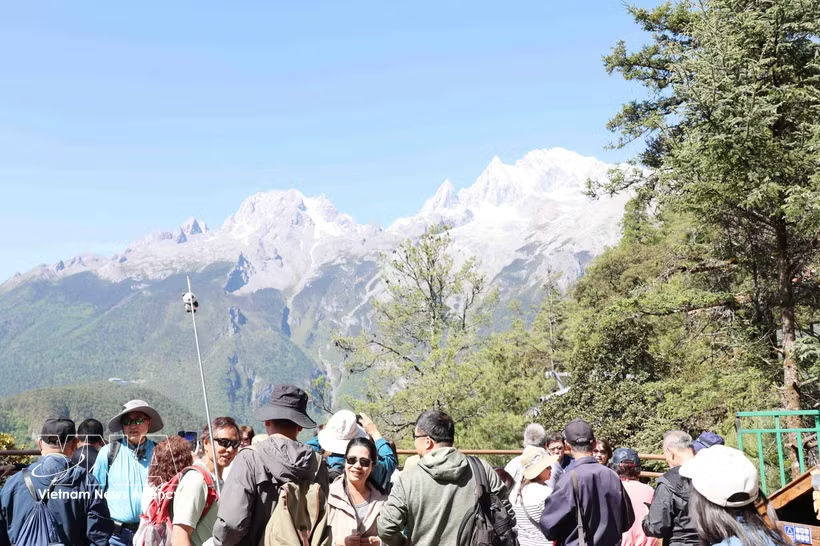
Located in Lijiang city, Jade Dragon Snow Mountain is one of the world’s highest mountain ranges, with the Fanzi Dou peak rising 5,596 metres above sea level and remaining snow-capped year-round. Beyond its dramatic landscape, the mountain holds deep spiritual significance for the Naxi ethnic community, symbolising vitality, strength and community spirit.
The area features a diverse ecosystem ranging from tropical forests and pine woods to alpine meadows and glaciers, offering varied experiences for visitors. The mountain is also home to valuable medicinal herbs such as cordyceps, snow tea and snow lotus, enriching its ecotourism appeal. The scenery changes constantly throughout the day, from bright sunshine and drifting clouds to cold mist and mountain winds. During spring and early summer, around 40 species of rhododendrons and other wildflowers bloom across the mountain, creating colourful landscapes popular with tourists and photographers.
One of the most visited spots is Yunshanping Meadow at an altitude of 3,205 metres, regarded by the Naxi people as a sacred place associated with love. Last year alone, the site welcomed more than 23,000 Vietnamese visitors, reflecting its growing popularity. Tourists can also explore glaciers, alpine grasslands and pine forests, while the outdoor show “Impression of Lijiang” introduces the cultures of 16 ethnic minority groups living in the region.
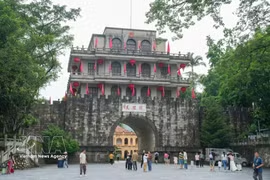
Alongside Jade Dragon Snow Mountain, the Old Town of Lijiang remains a major cultural and historical attraction. More than 800 years old, the town sits peacefully at the foot of the mountain and is recognised as one of China’s four most famous ancient towns.
The town’s architecture blends Han, Tibetan and Bai influences, featuring traditional courtyard houses and narrow waterways that form the core of its urban layout. Historically, Lijiang served as an important cultural and commercial crossroads linking Yunnan with Tibet, India and other parts of Asia.
")
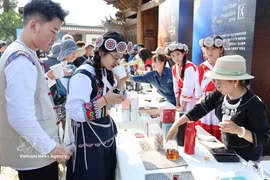
Vietnamese visitors are particularly drawn to activities such as forest trekking, trying on ethnic costumes, learning traditional songs and dances, and exploring Dongba pictographic script, an intangible cultural heritage of the Naxi people.
He Chenghong, Director of the Marketing Centre under the Jade Dragon Snow Mountain Scenic Area Administration, said Vietnamese tourists accounted for a growing share of international visitors, most of whom travelled on package tours with direct flights to Lijiang.
He highlighted strong potential for tourism cooperation between Vietnam and Yunnan, noting that both sides possess distinctive natural and cultural attractions that complement each other. While Vietnamese destinations attract visitors from Yunnan with their UNESCO-recognised natural heritage sites, Yunnan appeals to Vietnamese tourists through its ethnic traditions and historic towns such as Lijiang.
Vietnamese tourist Le Thi Thuy Ngan described her first visit to Jade Dragon Snow Mountain as a memorable experience, saying she was impressed by the snow-covered scenery, natural beauty and the mountain’s spiritual significance to the Naxi community.
With its majestic landscapes, rich ethnic cultures and immersive tourism experiences, Jade Dragon Snow Mountain and the Old Town of Lijiang are becoming increasingly attractive to Vietnamese travellers, while also contributing to stronger tourism and cultural exchanges between Vietnam and China’s Yunnan province./.