Current issues under debate at first Party Congress of Government

Mentioning the landmark 6th National Party Congress in 1986 with the launch of the “Doi moi” (Renewal) policy, the PM urged pushing ahead with renewal and reform, especially in science – technology, innovation and digital transformation, so as to make greater breakthroughs and enable the country to reach new heights.

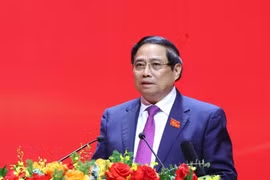
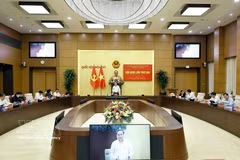
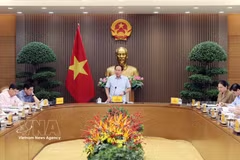
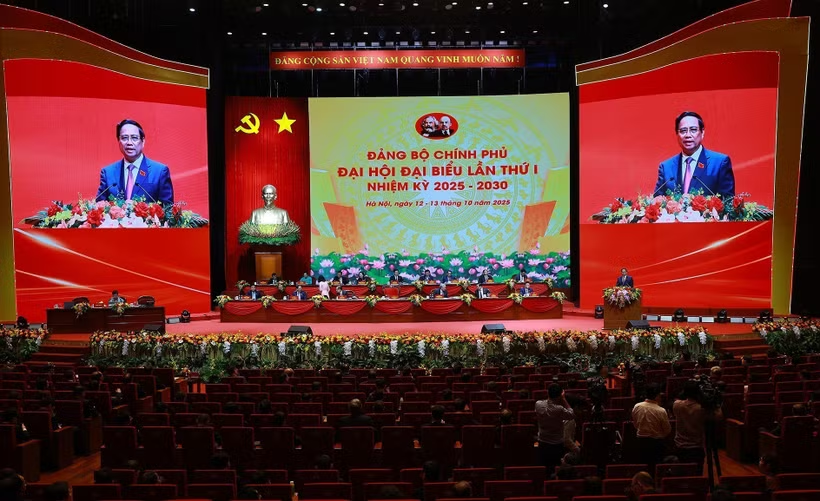
Prime Minister Pham Minh Chinh, who is also Politburo member and Secretary of the Government’s Party Committee, speaks at the first Party Congress of the Government on October 12. (Photo: VNA)

Hanoi (VNA) – Many current issues were scrutinised at a plenary discussion held as part of the first Party Congress of the Government, the 2025–2030 tenure, on October 12 afternoon.

The plenum, chaired by Politburo member, Secretary of the Government’s Party Committee and Prime Minister Pham Minh Chinh, followed group debates that looked into the documents of the congress and the drafts to be submitted to the 14th National Party Congress.

Discussing the socio-economic development results during 2020–2025, delegates shared the view that amid numerous difficulties, challenges, and unprecedented issues, thanks to efforts by the entire political system and the people under the Party’s leadership, the Government’s Party Organisation has led and directed the implementation of various measures.

As a result, the country is expected to reach and exceed 22 of the 26 main socio-economic targets for the period, including all the social targets, with all the 15 annual socio-economic targets surpassed in 2024 and 2025.

Speaking at the group discussion, PM Chinh said the draft documents to be submitted to the 14th National Party Congress feature many new points – more conciseness, more substantiveness, and more focus on efficiency and feasibility.

Mentioning the landmark 6th National Party Congress in 1986 with the launch of the “Doi moi” (Renewal) policy, he urged pushing ahead with renewal and reform, especially in science – technology, innovation and digital transformation, so as to make greater breakthroughs and enable the country to reach new heights.

The Government leader also underlined the importance of continuing to tackle institutional bottlenecks to mobilise resources and enhance national competitiveness.

During 2020–2025, about 1.57 quadrillion VND (59.6 billion USD) in revenue increase and spending cuts of the state budget has been recorded; some 1.1 quadrillion VND spent on social security; public debt reduced to 35% of GDP this year from 44.3% in 2020; total investment across society hit 17.3 quadrillion VND or 33.2% of GDP; and five-year public investment totalled 3.4 quadrillion VND, soaring 55% from the 2016–2020 term, he noted.

PM Chinh perceived that resources in society remain huge, and the important thing is how to mobilise them more strongly by comprehensive and effective measures. To do that, it is necessary to assign private businesses to invest in major infrastructure projects such as large sports complexes capable of hosting Olympics-level events or international airports.

At the plenary session, delegates listened to seven speeches, including those on enhancing the Party’s leadership over law making; promoting the role of cadres, civil servants, public employees, and workers in the nation’s new era of prosperity, civilisation, and happiness; and protecting the Party’s ideological foundation amid multidimensional information impacts on ethnic and religious affairs.

Other delegates delivered reports on making breakthroughs in institutional building to help improve public health care; the inspection, supervision, and enforcement of the Party’s discipline and the settlement of complaints and denunciations by the Government’s Party Organisation; the leadership by the Party Committee of the Vietnam Academy of Science and Technology over the development of sci-tech human resources, especially young scientists; and the Vietnam Railways Corporation’s experience in building a clean and strong Party organisation./.

VNA
See more

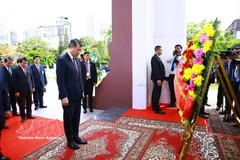
Prime Minister Le Minh Hung pays tribute to late Cambodian King Norodom Sihanouk (Photo: VNA)

PM pays tribute to King Norodom Sihanouk, lays wreaths at Cambodian monuments

Prime Minister Le Minh Hung’s official visit to Cambodia on October 9-10, at the invitation of Prime Minister Hun Manet, marks a particularly significant diplomatic milestone. It underscores the consistent priorities of Vietnam’s foreign policy in the new term, including proactive engagement, strengthened political trust and a stronger focus on translating bilateral commitments into tangible outcomes.

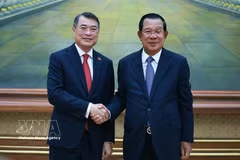
Prime Minister Le Minh Hung (left) and CPP President and President of the Cambodian Senate Hun Sen ( Photo: VNA)

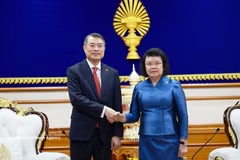
Prime Minister meets with Cambodian People's Party, Senate leader

To further advance bilateral ties in the new era, the two leaders agreed to continue making full use of existing cooperation mechanisms across all channels, including meetings between the two Parties, promote exchanges between young leaders and youth from both countries, and expand cooperation between their legislative, executive and judicial bodies, people’s organisations and localities.

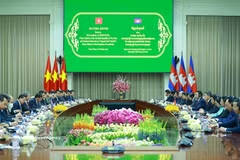
Prime Minister Le Minh Hung holds talks with his Cambodian counterpart Hun Manet in Phnom Penh on October 9. (Photo: VNA)

Vietnam, Cambodia seek to bolster all-round ties

The two PMs expressed their satisfaction with the positive development of Vietnam-Cambodia relations in recent years. Political ties have continued to be consolidated, with political trust strengthened through regular high-level visits and contacts.

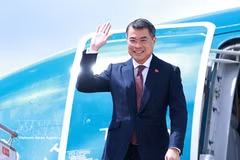
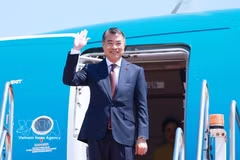
Prime Minister Le Minh Hung arrives at Techo International Airport in Phnom Penh on the afternoon of October 9, beginning an official visit to Cambodia at the invitation of Cambodian Prime Minister Hun Manet. (Photo: VNA)

PM arrives in Phnom Penh, starting official visit to Cambodia

This is PM Hung’s first official visit to Cambodia. It holds particular significance, demonstrating the high priority that the Party, State and Government of Vietnam attach to relations with Cambodia and contributing to further deepening the bilateral ties of “good neighbourliness, traditional friendship, comprehensive cooperation and long-term sustainability”.

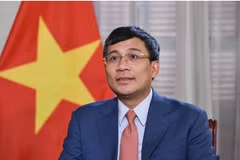
Standing Deputy Minister of Foreign Affairs Nguyen Minh Vu (Photo: The Ministry of Foreign Affairs)

Vietnam, China seek stronger substantive parliamentary cooperation

Stronger cooperation between the Vietnamese and Chinese legislatures will demonstrate their shared commitment to making parliamentary ties more practical and effective, while contributing to the sound development of bilateral relations and bringing tangible benefits to people and businesses in both countries, said Standing Deputy Minister of Foreign Affairs Nguyen Minh Vu.

Prime Minister Le Minh Hung leaves Wattay International Airport in Vientiane on October 9 noon. (Photo: VNA)

Vietnamese PM concludes official visit to Laos

The visit is expected to further deepen the great friendship, special solidarity, comprehensive cooperation and strategic cohesion between Vietnam and Laos, making bilateral ties more substantive and effective.

Deputy Prime Minister Le Tien Chau speaks at the meeting. (Photo: VNA)

Deputy PM urges removal of legal bottlenecks hindering development

Deputy Prime Minister Le Tien Chau has asked ministries, agencies and localities to identify and thoroughly analyse systemic legal bottlenecks hindering development, with priority given to removing regulations that obstruct investment, production and business activities.

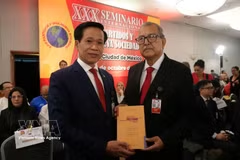
Assoc. Prof. Dr. Hoang Phuc Lam (right), Deputy Secretary of the Party Committee and Vice President of the Ho Chi Minh National Academy of Politics, presents the book “The Aspiration for a Strong and Prosperous Vietnam in the New Era” to Pedro Vazquez Gonzalez, Chairman of the Mexican Chamber of Deputies’ Foreign Affairs Committee. (Photo: VNA)

Vietnam promotes Party diplomacy at international conference in Mexico

Assoc. Prof. Dr. Hoang Phuc Lam, Deputy Secretary of the Party Committee and Vice President of the Ho Chi Minh National Academy of Politics briefed participants at an international conference themed "Political parties and a new society" in Mexico City from October 6-8 on Vietnam’s socio-economic development and its path towards socialism, and its efforts in promoting dialogue, solidarity and cooperation among progressive political forces worldwide.

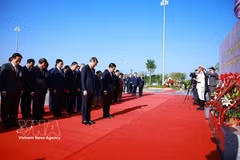
Vietnamese Prime Minister Le Minh Hung and his Lao counterpart Saleumxay Kommasith visit the Laos–Vietnam Friendship Park in Vientiane and lay flowers in tribute to the countries’ revered leaders on October 9, 2026. (Photo: VNA)

PMs pay tribute to late Vietnamese, Lao leaders in Vientiane

The two PMs, together with officials from both countries, paid tribute at the monuments to President Ho Chi Minh, President Kaysone Phomvihane and President Souphanouvong, expressing deep respect and gratitude for their contributions to the revolutionary causes of both nations and to the establishment and development of the special Vietnam–Laos relationship.

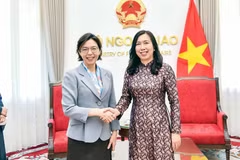
Deputy Minister of Foreign Affairs Le Thi Thu Hang (R) receives Korean Ambassador to Vietnam Lee Mi Yon on October 8, 2026. (Photo: baoquocte.vn)

Vietnam, RoK enhance coordination, experience-sharing in APEC Year organisation

Deputy Minister of Foreign Affairs Le Thi Thu Hang called on both sides to maintain close coordination in preparing for and successfully organising high-level visits and meetings in the coming time while increasing experience-sharing and mutual support at multilateral forums, particularly as Vietnam prepares to host APEC Year 2027.

At the working session with representatives of Austral University (Photo: VNA)

Vietnam, Argentina push for educational, academic cooperation

Vietnamese Ambassador to Argentina Ngo Minh Nguyet held a working session in Buenos Aires on October 8 with representatives of Austral University to exchange views on opportunities to strengthen bilateral cooperation in education, training, and academic research.