Hanoi (VNA) – Vietnam kept its economy steady throughout January 2026, with inflation under control, key economic balances ensured, and both State budget revenue and trade showing strong growth, according to Minister-Chairman of the Government Office Tran Van Son.
At the Government’s regular press conference for January held on February 4, Son, who is also spokesperson of the Government, said international organisations continued to express their confidence in Vietnam’s economic growth prospects.
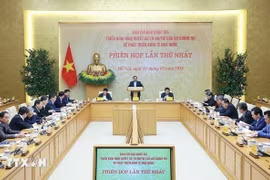
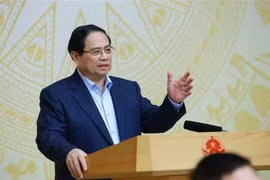
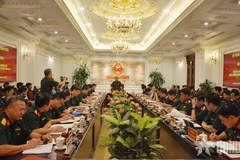
Earlier the same day, Prime Minister Pham Minh Chinh chaired an online government meeting with localities, during which participants agreed that socio-economic performance in January sustained a positive trajectory, delivering notable results across multiple sectors.
Macroeconomic fundamentals remained stable, inflation was effectively managed, and major economic balances were maintained. The consumer price index (CPI) rose about 2.6%, while monetary and foreign exchange markets stayed broadly steady. Public debt, government debt, and national external debt all remained within permitted limits.
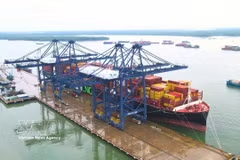
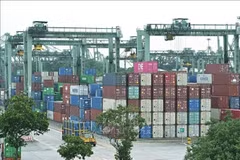
State budget revenue and import-export turnover posted encouraging gains, with total budget collections estimated to increase 13.1% year-on-year in January.
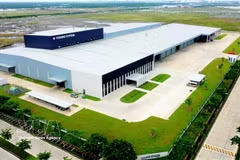
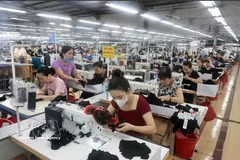
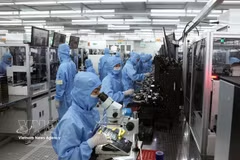
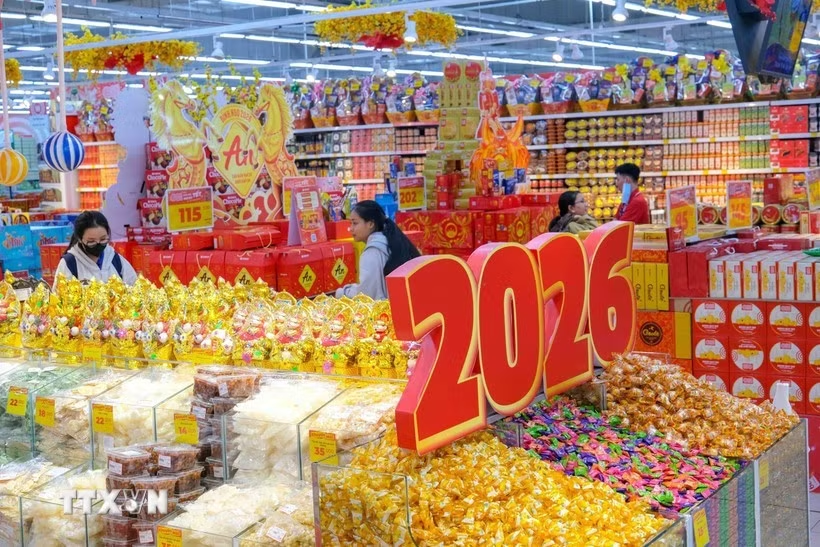
Key economic sectors also recorded strong momentum. The index of industrial production (IIP) surged 21%, while agriculture, forestry, and fisheries maintained stable growth. Trade and services remained vibrant, with total retail sales of goods and consumer service revenue rising 9%.
The tourism sector continued its robust recovery, welcoming more than 2 million international visitors, up 18% compared with the same period last year. Meanwhile, the Purchasing Managers’ Index (PMI) reached 52.5 points, signalling continued expansion in manufacturing and business activity.
Investment performance remained positive. Public investment disbursement reached an estimated 3.4% of the annual plan, higher both in value - up 23.7 trillion VND (899.8 million USD) - and by 2.2 percentage points year-on-year. Newly registered foreign direct investment (FDI) totalled nearly 1.5 billion USD, up 15.7%, while realised FDI rose 11.3% to 1.68 billion USD.
Nearly 48,700 enterprises joined the market or resumed operations in January, a 45.6% increase year-on-year. More than 110,000 household businesses were newly established, up nearly 222%.
The social and cultural sectors continued to receive attention, social welfare was ensured, and living standards improved. Major national events were successfully organised, while authorities ensured citizens enjoyed a safe, festive and economical Lunar New Year holiday.
The nationwide “Quang Trung Campaign” was completed ahead of schedule, repairing nearly 34,800 homes and building almost 1,600 new houses. About 95.3% of households reported stable or improved incomes compared with a year earlier, while 15,600 tonnes of rice were distributed to support disadvantaged people.
According to Son, socio-political stability was maintained, national defence and security were strengthened, and anti-corruption and anti-waste efforts continued to intensify, helping reinforce public confidence. External affairs and international integration were advanced more substantively, further enhancing Vietnam’s global standing.
However, the Government also acknowledged persistent challenges, including unpredictable global developments, mounting pressures on macroeconomic management related to inflation, exchange rates, and interest rates, as well as volatile gold prices and ongoing difficulties faced by some businesses. Smuggling, trade fraud, counterfeit goods, and intellectual property violations remain complex, while living conditions in remote and disadvantaged areas still require attention.
Looking ahead, the Government will prioritise effective implementation of the Resolution of the 14th National Party Congress, maintaining macroeconomic stability, controlling inflation and promoting growth while ensuring major economic balances.
Authorities will closely monitor the gold market’s developments and introduce stabilisation measures when necessary. Plans include launching a gold trading floor, piloting a digital asset exchange, and establishing real estate and land-use rights trading centres before February 10, 2026.
The Government will also ensure sufficient supplies of electricity, fuel, and essential goods, promote a safe and sustainable real estate market, and accelerate social housing development, aiming to complete more than 110,000 social housing units in 2026.
Efforts will focus on revitalising traditional growth drivers while fostering new growth engines to achieve double-digit economic growth this year. Priority actions also include removing bottlenecks for businesses, mobilising development resources more effectively, advancing administrative reforms, strengthening social welfare, and improving livelihoods.
National defence and security will continue to be reinforced, with particular attention paid to ensuring absolute safety for major political events, especially the election of deputies to the National Assembly and People’s Councils for the 2026–2031 tenure, alongside deeper international integration and strengthened public./.