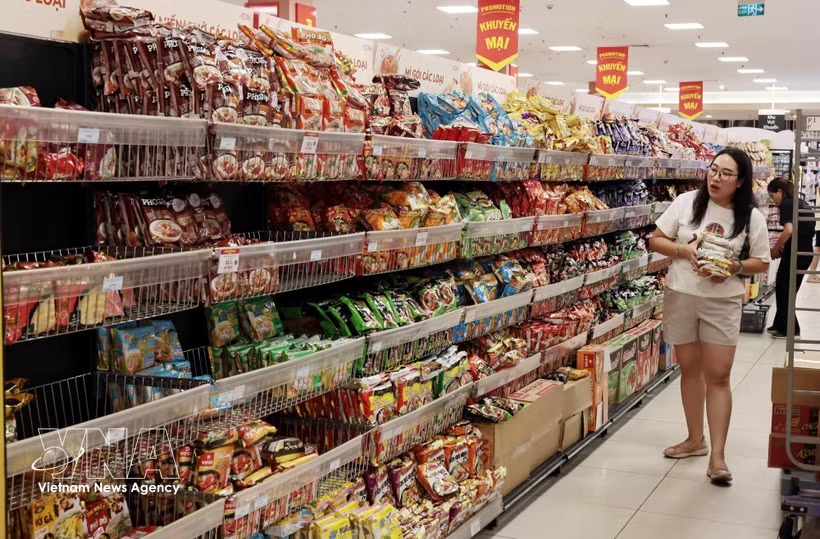
Hanoi (VNA) – Hanoi’s consumer price index (CPI) in September 2026 increased 0.81% compared to the previous month, 4.47% from December 2025 and 5.36% from a year earlier, according to the municipal Statistics Office.
The price index of food and catering services rose 0.80% month on month and 4.81% year on year. Vegetable prices soared during the month, mainly due to prolonged heavy rains in Hanoi and northern provinces, which flooded and damaged vegetable farming areas and reduced supplies.
Frequent rain also disrupted harvesting, transportation and the supply of vegetables to markets across the capital, putting upward pressure on prices.
Housing, electricity, water, fuel and construction materials recorded a 7.19% increase from September 2025. In the first nine months of 2026, the group’s average price index rose 7.44% year on year, driven by increases of 40.8% in kerosene prices, 43.09% in environmental sanitation services, 16.76% in construction materials, 8.57% in housing rents and 3.89% in household electricity prices.
The transport group rose 11.30% year on year. Its average index during the January–September period went up 6.9% from the same period last year, with diesel prices up 39.01% and petrol prices up 11.23%. Air passenger transport fares saw the sharpest hike, 80.63%.
During the first nine months, the average price index for household appliances and equipment climbed 3.22% year on year, while that for medicines and healthcare services rose 0.44%.
The city's nine-month average CPI went up 4.91% year on year.
Meanwhile, the average CPI in the third quarter expanded 5.14% from the same period last year.
Between July and September, the transport group posted the highest increase at 7.74%, followed by housing, electricity, water, fuel and construction materials at 7.17%, education at 5.32%, and food and catering services at 4.87%. Information and communications was the only to record a decline, falling 0.66%.
According to the municipal Statistics Office, price changes in the third quarter were largely linked to global fuel prices, which affected input costs. The nationwide rollout of E10 RON 95 biofuel helped ease pressure on prices during the quarter./.