
Hanoi (VNA) – Raising the total fertility rate (TFR) by an average of 2% annually and gradually restoring it to the replacement level is a key target under a Ministry of Health (MoH) plan implementing the programme on ensuring replacement-level fertility by 2030.
Vietnam’s fertility has dropped below replacement in recent years, from 2.11 children per woman in 2021 to 1.91 in 2024 and 1.93 in 2025, especially in major cities and more developed regions, prompting the need for coordinated measures to encourage childbirth.
Under the plan, more than 95% of couples of reproductive age will receive adequate information on marriage, childbirth and maintaining replacement-level fertility. All provinces and cities are required to roll out policies supporting childbirth and childrearing in line with local conditions.
To achieve these goals, the MoH emphasises the need to strengthen communications to raise public awareness of the benefits of timely marriage, having children at an appropriate age, and having two children. Policies supporting childbirth and childrearing will continue to be refined in a practical manner suited to real conditions while reproductive healthcare and family planning services will be expanded to improve accessibility and quality.
Efforts to raise fertility will go hand in hand with improving population quality, including better maternal and child healthcare and enhanced physical, intellectual and mental development of future generations, contributing to a high-quality workforce.
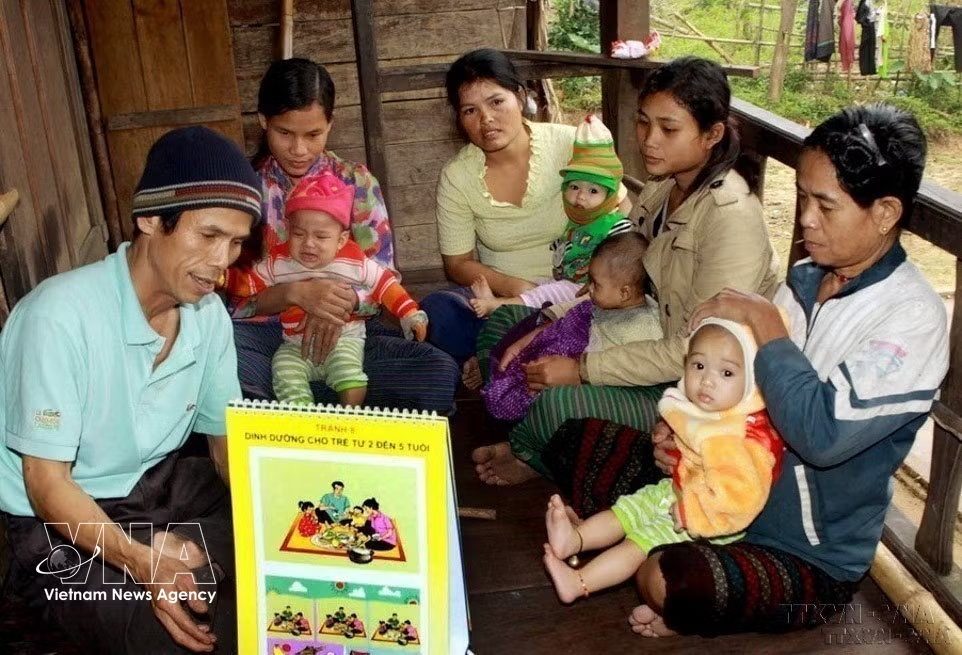
The ministry has called for a comprehensive review of population-related regulations to propose amendments or removal of outdated provisions. In particular, regulations on handling violations of population policies in the past will be reviewed and adjusted to suit the new context. Proposals have also been made to introduce regulations promoting the exemplary and pioneering role of officials and Party members in childbirth, childrearing, and building progressive and happy families to achieve and sustain replacement-level fertility.
Localities are encouraged to introduce suitable support policies based on their socio-economic conditions and budget capacity, prioritising areas with below-replacement fertility and ethnic minority groups with small populations.
Beneficiaries of existing policies will be expanded, with continued support for access to contraceptives and family planning services for disadvantaged groups, including those in remote, mountainous, coastal, island and border areas.
The plan also calls for the removal of regulations and criteria aimed at reducing fertility, including limits on having a third child or more. At the same time, further research will assess how policies on jobs, housing, education, healthcare and social welfare affect decisions on childbirth.
On that basis, the MoH will refine policies to encourage earlier marriage, discourage delayed childbirth and very low fertility, while piloting and expanding measures to support couples in having two children, including encouraging women to give birth before the age of 35.
Additional measures include developing marriage and family counselling services, building child-friendly environments, expanding childcare and worker support services, and easing the financial burden of raising children./.