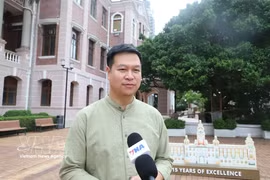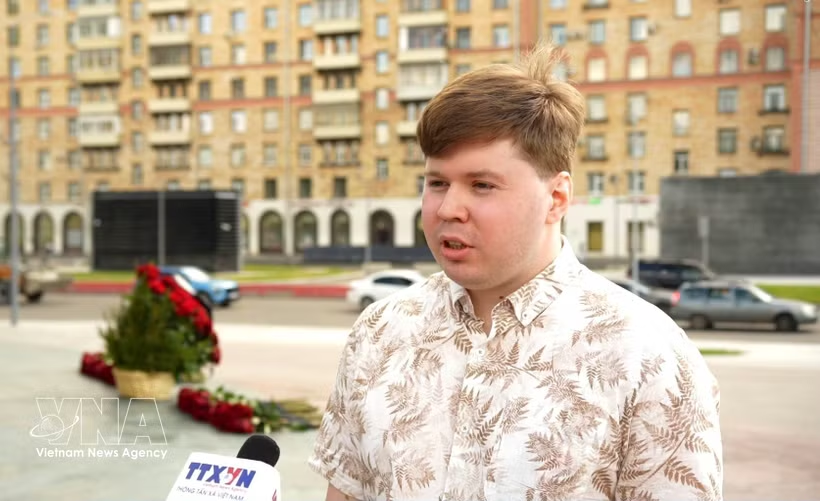
Moscow (VNA) – Although modern Russia and many other countries no longer share the same ideological bonds as in the past, the legacy of President Ho Chi Minh remains highly relevant, according to Russian scholar Nikita Lyshenko of the Institute of Asian and African Studies under Lomonosov Moscow State University.
Speaking to the Vietnam News Agency (VNA) correspondents in Moscow, Nikita said Ho Chi Minh fought for independence, freedom and happiness not only for Vietnam but also for oppressed peoples around the world, becoming a symbol of national liberation.
That was true in the past and remains true today, he said, stressing that the Vietnamese leader’s legacy continues to inspire people across generations.
Nikita cited Ho Chi Minh’s famous saying, “An ignorant nation is a weak nation,” and linked it to Soviet leader Vladimir I. Lenin’s call to “Study, study more, study forever,” noting that both emphasise the importance of lifelong learning and self-improvement.
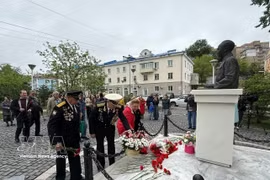
He highlighted that June 30 this year marks the 103rd anniversary of Ho Chi Minh’s first arrival in Russia, then the Soviet Union. The event laid the groundwork for future cooperation between the two countries, which officially established diplomatic relations in 1950.
According to Nikita, many prominent Russian scholars, including veteran historian and leading Vietnam expert Evgeny Kobelev, regard Ho Chi Minh’s arrival in the Soviet Union as a significant milestone in the development of bilateral ties.
Regarding current relations, he said Vietnam and Russia continue to maintain positive momentum and should further strengthen cooperation. To preserve the legacy of friendship between the two nations, he suggested expanding high-level exchanges and enhancing dialogue between younger generations.
Effective dialogue, he noted, helps overcome differences and serves as a foundation for people-to-people diplomacy and lasting friendship. He expressed confidence that the traditional relationship between Vietnam and Russia will continue to deepen in the years ahead.
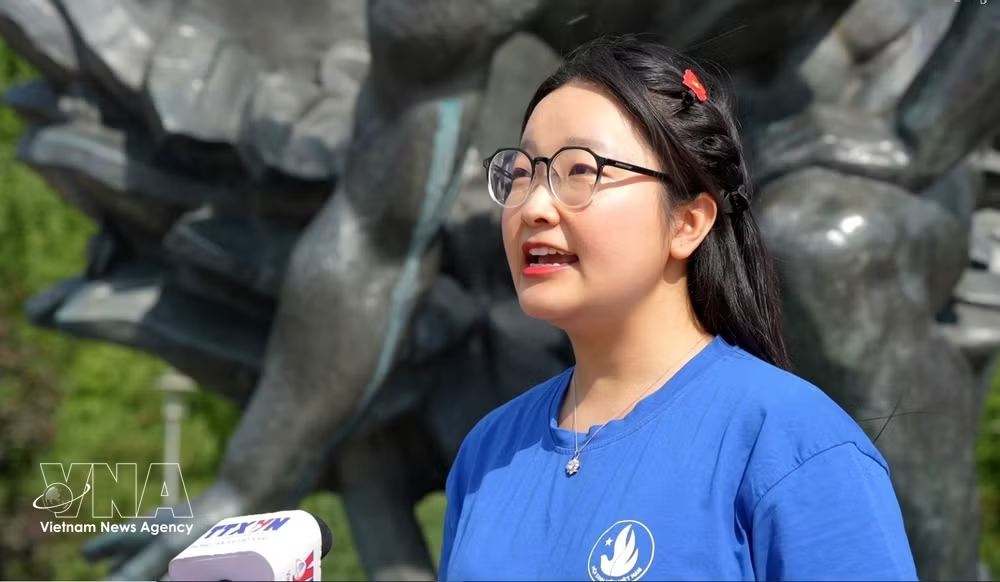
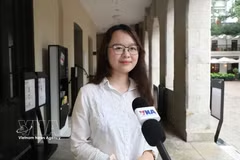
vMeanwhile, Tran Cong Tam Anh, a Vietnamese student pursuing a Master’s degree in Public Administration at the Peoples' Friendship University of Russia and Vice President of the Vietnamese Student Association in Russia, said studying in a country closely associated with President Ho Chi Minh is both a source of pride and a responsibility for Vietnamese students.
She said Vietnamese students in Russia increasingly recognise their role as young “people’s ambassadors” who can help strengthen traditional ties between the two countries through knowledge, cultural exchange and practical actions.
According to Tam Anh, academic excellence remains the foremost priority. Vietnamese students should strive to acquire Russia’s advanced scientific and technological knowledge and apply it to Vietnam’s development, thereby contributing to bilateral cooperation.
She also encouraged students to actively promote Vietnamese culture through activities such as cultural festivals, Ao Dai (traditional Vietnamese dress) shows and traditional cuisine programmes at Russian universities, helping introduce a peaceful, dynamic and culturally rich Vietnam to Russian and international audiences.
In addition, she called on Vietnamese students to participate more actively in youth forums, scientific exchanges and volunteer projects. By overcoming language barriers and building stronger connections with Russian peers, they can expand people-to-people exchanges and contribute to further strengthening the friendship and cooperation between Vietnam and Russia, she said./.