Jakarta (VNA) – Indonesia recorded around 107.34 million USD in transaction value through an online business matching programme for micro, small and medium-sized enterprises (MSMEs) in the first four months of 2026, highlighting the effectiveness of the country’s efforts to promote digitalised trade promotion.
The Indonesian Ministry of Trade’s Director of Export Development for Services and Creative Products Ari Satria was quoted by local media as saying that utilising digital platforms is a key strategy to expand market access for MSMEs.
He explained that the ministry deployed its network of 46 trade representatives across 33 countries to act as international facilitators.
In 2025, the ministry organised 662 online business matching sessions, generating nearly 135 million USD in actual and potential export transaction value. The results show that digital platforms are gradually becoming an effective trade promotion channel, particularly for small-scale enterprises with limited financial resources, personnel and access to international markets.
The expansion of online business matching also reflects Indonesia’s broader strategy to develop MSMEs into a driving force for export growth.
With their flexibility, adaptability and extensive presence across the economy, MSMEs are seen by Jakarta as capable of making greater contributions to regional and global supply chains if provided with appropriate support in technology, markets and logistics.
Amid increasingly competitive global trade, Indonesia is demonstrating a practical approach by leveraging digital platforms to reduce promotion costs, expand customer networks and strengthen the presence of domestic products in international markets.
The figure of more than 107 million USD in transactions in just four months is therefore not merely the outcome of a business matching programme, but also an indicator that digital transformation has become an important part of the export promotion strategy of Southeast Asia’s largest economy./.
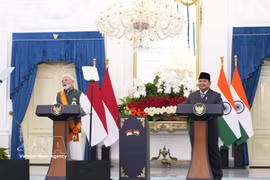
Indonesia, India expand cooperation across key strategic sectors
The two leaders agreed to intensify state visits and high-level talks, foster closer coordination through bilateral consultation mechanisms, and strengthen institutional cooperation involving think tanks and the newly formed interparliamentary friendship group.